Obviously with the riots and unrest in the United States, parents should take the opportunity to speak with their kids about race. Here are some resources to start that conversation Right now.
Below is a statement from the National Association of School Psychologists on a call for action to end racism.NASP STATEMENT
So you’ve realized your kids aren’t too young to talk about race, so now what? We’ve rounded up some resources for you to start.
I found this short podcast put together by NPR and the Sesame Street Workshop to be a great one for a primer and understanding on how to talk to young children about race:
The Children’s Community School in Philidelphia did all the research and legwork on this information. We adapted it. Check out their amazing resource page here:
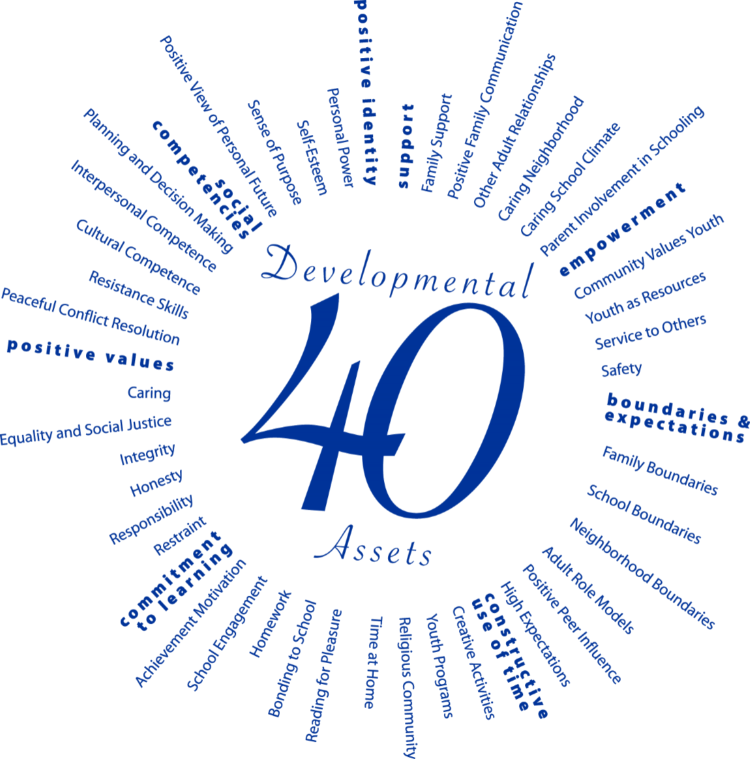
Developmental Assets help children grow into caring, engaged, and responsible adults. Developmental Assets include the internal character strengths and commitments young people need as well as the external supports and opportunities they need from their families, schools, organizations, and communities.
Search Institute introduced the framework in 1990 and, since then, has studied developmental assets in more that 5 million youth across North America and around the world. The approach focuses on young people’s strengths and working across the many parts of their lives to support their growth and successful development. Hundreds of schools, coalitions, and other organizations have used the developmental assets as a guiding framework for their youth development efforts. Source
Questions
WHAT IS IT?
Asset Building, Resiliency and Youth Development and are philosophies and strategies for creating youth-centered environments that prioritize the positive development of young people.
WHY USE IT?
Research and practitioner experience has proven that a positive school day and after school environment that intentionally develops youth’s assets and adopts a youth development approach can provide the experiences and skills that youth need to develop into healthy adults.
WHEN TO USE IT?
Utilizing an asset building, resiliency and youth development based approach is effective in planning and facilitating all aspects of school day and after school programs. The approach can be used:
As the foundation of your school’s philosophy to establish emotionally, physically safe and engaging learning environments; As a framework for creating engaging classroom, program structures and activities that offer meaningful participation, build skills and expose youth to new opportunities and resources; As an approach for increasing youth involvement and youth buy in to lesson and activity components; As a professional development component or part of a job orientation for all staff.
HOW IT IS USED:
Below are three philosophies of asset building, resiliency and youth development that are often referred to by school sites, local city agencies and community based organizations.
SFUSD- School Health Programs Department encourages the following Asset Building, Resiliency and Youth Development core principles for working with young people as measured by the California Healthy Kids Survey (CHKS):
Young people have the capacity to develop and transform as they move toward adulthood.
Young people are genetically intended to develop and are actively seeking to meet their own needs.
All young people need the same types of positive resources:
-Caring, Respectful Relationships
-High, Clear and Fair Expectations
-Meaningful Opportunities to Participate and Contribute
All young people need adults in their lives.
First, the kids take a pretest called the DAP (Link). The school gets the results to help direct efforts to support students at their school based on the needs represented by the child responses. The school chooses activities to carry out throughout the year to intervene with the needs. Finally, a posttest of the DAP is given to measure the growth of the schools’ efforts to address the needs identified in the pretest DAP.
DAP QUICK REFERENCE
Length: 58 questions
Average Completion Rate:10 minutes (Add at least 10 minutes for general instructions and collection.)
These documents are provided, compliments of the Search Institute. Click on the links to download PDF copies of 40 Developmental Assets lists for different developmental stages and in different languages.
Please note, these asset lists were compiled by Healthy Communities, Healthy Youth sites across the United States. They represent volunteer efforts. Assets lists in alternate stages for different developmental levels are not available for every language.
Classroom meetings are an effective way to help build classroom community, establish behavioral expectations and norms, as well as explore social issues that need tending to help continue supporting a thriving learning environment.
A growth mindset is a belief that your most basic abilities can be nurtured and developed though dedication and hard work. Talent is just the starting point. People with a positive growth mindset create a love of learning that is vital for doing great things. A positive growth mindset will also lend itself to being resilient in the face of setbacks. Failures are seen as learning opportunities to people with a positive growth mindset.
Verses
A fixed mindset is a belief that your basic qualities, like intelligence or talent, are fixed traits. People with a fixed mindset believe that talent makes people successful. Effort is secondary to brains and talent.
Programs that support developing positive learning environments
A promising program out of Yale University that helps supports Developing Classroom Culture is called RULER.
RULER is an evidence-based approach for integrating social and emotional learning into schools. RULER applies “hard science” to the teaching of what have historically been called “soft skills.” RULER teaches the skills of emotional intelligence — those associated with recognizing, understanding, labeling, expressing, and regulating emotion. Decades of research show that these skills are essential to effective teaching and learning, sound decision making, physical and mental health, and success in school and beyond.
The RULER Approach to Social and Emotional Learning (SEL) helps build the following skills:
Recognizing: Recognize the emotion of either yourself or of someone else in order to react in the most socially appropriate manner to help resolve the issue. This includes picking up on cues such as facial expression, words, tone, behavior, and one’s own thoughts.
Understanding: Emotions are often triggered by events that bring upon specific emotions and thoughts. When a child understands more about what is triggering specific emotions, they are more likely to be less reactive. Understanding of emotions helps young children see how emotions affect decisions, behavior and goals. Problem-solving skills are needed to learn how to cope, as well as develop empathy towards others.
Labeling: Labeling emotions is nothing more than connecting different scenarios with a specific emotions, and descriptive words. For example, a child with emotional literacy may use the words inspired, enthusiastic, and thrilled.
Expressing: practicing control, timing, and expression of emotions in appropriate ways helps with communication development for healthy relationships. Students who have difficulties in both labeling and expression tend to not have successful relationships.
Regulating Emotions: Regulation during emotional experiences means organizing and managing the thoughts, emotions and behavior that often develop. Successfully regulated emotions are often prevented, reduced, initiated, maintained, or enhanced (PRIME). Source
Positive Behavior Interventions and Supports (PBIS) is a proactive approach to establishing the behavioral supports and social culture and needed for all students in a school to achieve social, emotional and academic success. Attention is focused on creating and sustaining primary (school-wide), secondary (classroom), and tertiary (individual) systems of support that improve lifestyle results (personal, health, social, family, work, recreation) for all youth by making targeted misbehavior less effective, efficient, and relevant, and desired behavior more functional.
I opened my email today and saw an article that said, “Bite your lip today”. As I read further it went on to say don’t say anything negative today. I like to think that I am positive (most days), but I like the idea of hanging on to noticing the content of what I say and do. So for today I will definitely be taking inventory of my positive out put.
Modeling this behavior is important for kids to see especially at school. I know at home with my own kids when visiting the beach or park we try to pick up some trash while we are there to keep it a little cleaner than we found it. I think the same concept should be played out with the people we interact with as much as possible.
A popular book in school is “How to fill your bucket”. Many schools have adopted this metaphor for being a good citizen. Below is a kid friendly reading of the book.
After reading the book here are some classroom ready materials to use.





 Building Momentum in Schools