Kidpower a Great resource for keeping kids, parents, and educators informed about child safety

kidpower-logo-tagline-web-2016-100h

https://www.kidpower.org/

Kidpower is an excellent organization with a world-class reputation in supporting child safety. Their materials and training have helped many schools in our area and I can attest to their commitment to building safer communities.

Resource Library

Books

Training

Kidpower Teenpower Fullpower International is a global non-profit leader dedicated to child protection advocacy and empowering people of all ages, abilities, cultures, beliefs, and identities with life skills for safety and success. Our vision is to work together to create cultures of safety, respect, and kindness for everyone, everywhere.

Since 1989, Kidpower has protected nearly 5 million people, including those with special needs, from bullying, abuse, kidnapping, and other violence by empowering them with awareness, knowledge, and skills – and has prepared them to take charge of their safety and well being. Worldwide, thousands of educators, mental health experts, public safety officials, health care providers, community leaders, and parents recommend Kidpower for being effective, positive, hands-on, safe, trauma-informed, culturally competent, age-appropriate, and relevant.

Kidpower delivers services through:

  • Hands-on experiential workshops for families, schools, organizations, businesses, and agencies

  • Training for people wishing to learn how to use and teach our programs

  • Partnerships with groups that share our commitment to safety and respect

  • Consulting and coaching calls, for individuals and groups, to provide long-distance support

  • Extensive online educational resources including articles, handouts, posters, and videos

  • Cartoon-illustrated books for children, teens, and adults and other publications

  • Initiatives such as International Child Protection Advocacy Month in September
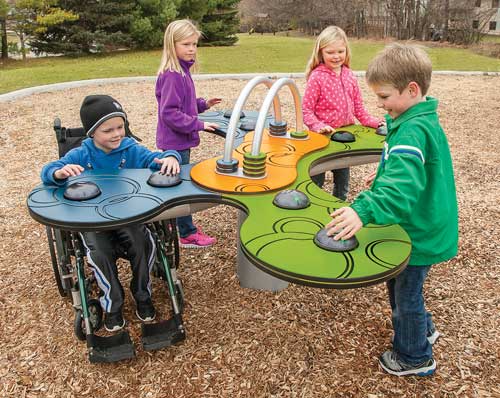
Inclusion on the Playground

lsi-pulse-table

WHAT IS AN INCLUSIVE PLAYGROUND?
An inclusive playground addresses the needs of all people including those who have autism, intellectual disabilities, hearing impairments, cerebral palsy, spina bifida and other disabilities. It also addresses the needs of typical children. An inclusive playground accommodates everyone and challenges them at their own developmental level. Source

After school how do I find an Inclusive Playground?

Playgrounds For Everyone A community-edited guide to accessible playgrounds. 

Resource list

(courtesy of AAA State of Play in the article “How-To Accommodate Special Needs Children on the Playground”)

Follow these links to learn more about accommodating special-needs children on the playground:

Gender Spectrum and School

transgender_child_support

In our schools, gender awareness and the fluidity of gender attitudes are evolving. The understanding and acceptance of this gender continuum can be a barrier to student learning. This post is to help illuminate concepts, tools, and strategies to help ensure students are supported on campus.

Big Reads

A Resource Guide to Families of Transgender Youth

Glossary of Terms – Transgender

Sex
The classification of a person as male or female. At birth, infants are assigned a sex, usually based on the appearance of their external anatomy. (This is what is written on the birth certificate.) A person’s sex, however, is actually a combination of bodily characteristics including: chromosomes, hormones, internal and external reproductive organs, and secondary sex characteristics.
Gender Identity
A person’s internal, deeply held sense of their gender. For transgender people, their own internal gender identity does not match the sex they were assigned at birth. Most people have a gender identity of man or woman (or boy or girl). For some people, their gender identity does not fit neatly into one of those two choices (see non-binary and/or genderqueer below.) Unlike gender expression (see below) gender identity is not visible to others.
Gender Expression
External manifestations of gender, expressed through a person’s name, pronouns, clothing, haircut, behavior, voice, and/or body characteristics. Society identifies these cues as masculine and feminine, although what is considered masculine or feminine changes over time and varies by culture. Typically, transgender people seek to align their gender expression with their gender identity, rather than the sex they were assigned at birth.
Sexual Orientation
Describes a person’s enduring physical, romantic, and/or emotional attraction to another person. Gender identity and sexual orientation are not the same. Transgender people may be straight, lesbian, gay, bisexual, or queer. For example, a person who transitions from male to female and is attracted solely to men would typically identify as a straight woman. 
Transgender (adj.)
An umbrella term for people whose gender identity and/or gender expression differs from what is typically associated with the sex they were assigned at birth. People under the transgender umbrella may describe themselves using one or more of a wide variety of terms – including transgender. Some of those terms are defined below. Use the descriptive term preferred by the person. Many transgender people are prescribed hormones by their doctors to bring their bodies into alignment with their gender identity. Some undergo surgery as well. But not all transgender people can or will take those steps, and a transgender identity is not dependent upon physical appearance or medical procedures.
Transsexual (adj.)
An older term that originated in the medical and psychological communities. Still preferred by some people who have permanently changed – or seek to change – their bodies through medical interventions, including but not limited to hormones and/or surgeries. Unlike transgender, transsexual is not an umbrella term. Many transgender people do not identify as transsexual and prefer the word transgender. It is best to ask which term a person prefers. If preferred, use as an adjective: transsexual woman or transsexual man.
Trans
Used as shorthand to mean transgender or transsexual – or sometimes to be inclusive of a wide variety of identities under the transgender umbrella. Because its meaning is not precise or widely understood, be careful when using it with audiences who may not understand what it means. Avoid unless used in a direct quote or in cases where you can clearly explain the term’s meaning in the context of your story.
Cross-dresser
While anyone may wear clothes associated with a different sex, the term cross-dresser is typically used to refer to men who occasionally wear clothes, makeup, and accessories culturally associated with women. Those men typically identify as heterosexual. This activity is a form of gender expression and not done for entertainment purposes. Cross-dressers do not wish to permanently change their sex or live full-time as women. Replaces the term “transvestite”.
Transition
Altering one’s birth sex is not a one-step procedure; it is a complex process that occurs over a long period of time. Transition can include some or all of the following personal, medical, and legal steps: telling one’s family, friends, and co-workers; using a different name and new pronouns; dressing differently; changing one’s name and/or sex on legal documents; hormone therapy; and possibly (though not always) one or more types of surgery. The exact steps involved in transition vary from person to person. Avoid the phrase “sex change”.
Sex Reassignment Surgery (SRS)
Also called Gender Confirmation Surgery (GCS). Refers to doctor-supervised surgical interventions, and is only one small part of transition (see transition above). Avoid the phrase “sex change operation.” Do not refer to someone as being “pre-op” or “post-op.” Not all transgender people choose to, or can afford to, undergo medical surgeries. Journalists should avoid overemphasizing the role of surgeries in the transition process.
Gender Identity Disorder (GID)
outdated, see Gender Dysphoria
Gender Dysphoria
In 2013, the American Psychiatric Association released the fifth edition of the Diagnostic and Statistical Manual of Mental Disorders (DSM-V) which replaced the outdated entry “Gender Identity Disorder” with Gender Dysphoria, and changed the criteria for diagnosis. The necessity of a psychiatric diagnosis remains controversial, as both psychiatric and medical authorities recommend individualized medical treatment through hormones and/or surgeries to treat gender dysphoria. Some transgender advocates believe the inclusion of Gender Dysphoria in the DSM is necessary in order to advocate for health insurance that covers the medically necessary treatment recommended for transgender people.


Transgender women are not cross-dressers or drag queens. Drag queens are men, typically gay men, who dress like women for the purpose of entertainment. Be aware of the differences between transgender women, cross-dressers, and drag queens. Use the term preferred by the person. Do not use the word “transvestite” at all, unless someone specifically self-identifies that way.

OTHER TERMS YOU MAY HEAR

You may hear the following terms when doing research on transgender issues or speaking to an interview subject. As they are not commonly known outside the LGBTQ community, they will require context and definition if used in mainstream media.

Cisgender
A term used by some to describe people who are not transgender. “Cis-” is a Latin prefix meaning “on the same side as,” and is therefore an antonym of “trans-.” A more widely understood way to describe people who are not transgender is simply to say non-transgender people.
Gender Non-Conforming
A term used to describe some people whose gender expression is different from conventional expectations of masculinity and femininity. Please note that not all gender non-conforming people identify as transgender; nor are all transgender people gender non-conforming. Many people have gender expressions that are not entirely conventional – that fact alone does not make them transgender. Many transgender men and women have gender expressions that are conventionally masculine or feminine. Simply being transgender does not make someone gender non-conforming. The term is not a synonym for transgender or transsexual and should only be used if someone self-identifies as gender non-conforming.
Non-binary and/or genderqueer
Terms used by some people who experience their gender identity and/or gender expression as falling outside the categories of man and woman. They may define their gender as falling somewhere in between man and woman, or they may define it as wholly different from these terms. The term is not a synonym for transgender or transsexual and should only be used if someone self-identifies as non-binary and/or genderqueer.

TRANSGENDER NAMES, PRONOUN USAGE & DESCRIPTIONS

In 2015, The Washington Post updated its style guide to include the singular they to describe people who “identify as neither male nor female.” It is increasingly common for people who have a nonbinary gender identity to use they/them as their pronoun.

Always use a transgender person’s chosen name.
Many transgender people are able to obtain a legal name change from a court. However, some transgender people cannot afford a legal name change or are not yet old enough to legally change their name. They should be afforded the same respect for their chosen name as anyone else who uses a name other than their birth name (e.g., celebrities).
Use the pronoun that matches the person’s authentic gender.
A person who identifies as a certain gender, whether or not that person has taken hormones or undergone surgery, should be referred to using the pronouns appropriate for that gender. If you are not certain which pronoun to use, ask the person, “What pronouns do you use?”
If it is not possible to ask a transgender person which pronoun they use, use the pronoun that is consistent with the person’s appearance and gender expression or use the singular they.
For example, if a person wears a dress and uses the name Susan, feminine pronouns are usually appropriate. Or it is also acceptable to use the singular they to describe someone when you don’t wish to assign a gender. For example: “Every individual should be able to express their gender in a way that is comfortable for them.”
Some people use the singular they to reflect their non-binary gender identity.
In 2015, The Washington Post updated its style guide to include the singular they to describe people who “identify as neither male nor female.” It is increasingly common for people who have a non-binary gender identity to use they/them as their pronoun. For example: “Jacob writes eloquently about their non-binary identity. They have also appeared frequently in the media to talk about their family’s reaction to their gender expression.”
 

It is never appropriate to put quotation marks around either a transgender person’s chosen name or the pronoun that reflects that person’s gender identity.”

Terms to Avoid

PROBLEMATIC

PREFERRED

“transgenders,” “a transgender”
Transgender should be used as an adjective, not as a noun. Do not say, “Tony is a transgender,” or “The parade included many transgenders.”
 
“transgender people”,”a transgender person”
For example, “Tony is a transgender man,” or “The parade included many transgender people.”
 
“transgendered”
The adjective transgender should never have an extraneous “-ed” tacked onto the end. An “-ed” suffix adds unnecessary length to the word and can cause tense confusion and grammatical errors. It also brings transgender into alignment with lesbian, gay, bisexual, and queer. You would not say that Elton John is “gayed” or Ellen DeGeneres is “lesbianed,” therefore you would not say Chaz Bono is “transgendered.”
 
“transgender”
 
 
“transgenderism”
This is not a term commonly used by transgender people. This is a term used by anti-transgender activists to dehumanize transgender people and reduce who they are to “a condition.”
“being transgender”
Refer to being transgender instead, or refer to the transgender community. You can also refer to the movement for transgender equality and acceptance.
“sex change,” “pre-operative,” “post-operative
Referring to a “sex-change operation,” or using terms such as “pre-operative” or “post-operative,” inaccurately suggests that a person must have surgery in order to transition. Avoid overemphasizing surgery when discussing transgender people or the process of transition.
“transition”
“biologically male,” “biologically female,” “genetically male,” “genetically female,” “born a man,” “born a woman”
Problematic phrases like those above are reductive and overly-simplify a very complex subject. As mentioned above, a person’s sex is determined by a number of factors – not simply genetics – and a person’s biology does not “trump” a person’s gender identity. Finally, people are born babies: they are not “born a man” or “born a woman.”
“assigned male at birth,” “assigned female at birth” or “designated male at birth,” “designated female at birth”
“passing” and “stealth”
While some transgender people may use these terms among themselves, it is not appropriate to repeat them in mainstream media unless it’s in a direct quote. The terms refer to a transgender person’s ability to go through daily life without others making an assumption that they are transgender. However, the terms themselves are problematic because “passing” implies “passing as something you’re not,” while “stealth” connotes deceit. When transgender people are living as their authentic selves, and are not perceived as transgender by others, that does not make them deceptive or misleading.
“visibly transgender,” “not visibly transgender”


Defamatory Language

Defamatory: “deceptive,” “fooling,” “pretending,” “posing,” “trap,” or “masquerading”
Gender identity is an integral part of a person’s identity. Do not characterize transgender people as “deceptive,” as “fooling” or “trapping” others, or as “pretending” to be, “posing” or “masquerading” as a man or a woman. Such descriptions are inaccurate, defamatory and insulting. (See “passing” and “stealth” as problematic terms above.)
Defamatory: “tranny,” “she-male,” “he/she,” “it,” “shim”
These words dehumanize transgender people and should not be used in mainstream media. The criteria for using these derogatory terms should be the same as those applied to vulgar epithets used to target other groups: they should not be used except in a direct quote that reveals the bias of the person quoted. So that such words are not given credibility in the media, it is preferred that reporters say, “The person used a derogatory word for a transgender person.” Please note that while some transgender people may use “tranny” to describe themselves, others find it extremely offensive.
Defamatory: “bathroom bill”
A term created and used by far-right extremists to oppose nondiscrimination laws that protect transgender people. The term is geared to incite fear and panic at the thought of encountering transgender people in public restrooms. Simply refer to the nondiscrimination law/ ordinance instead. For additional resources on how to fairly and accurately report on nondiscrimination laws and bathrooms, please see “Debunking the ‘Bathroom Bill’ Myth – Accurate reporting on LGBT nondiscrimination: A guide for journalists.”
Source

At School

transgender-statistics_t1024

Transgender rights at school

What Are My Rights at School?

General Resources

Gender Spectrum Resources for a variety of topics.


Childhood Cancer and School

childhood-cancer-awareness2-300x203

Fact Sheets/ Articles

Childhood Cancer and School – Fact Sheet

Types of Children’s Cancer

Educational Issues Following Treatment for Childhood Cancer

Collaborating With Physicians: A Guide for School Leaders (NASP)

Potential 504 Accommodations for a Student Undergoing Treatment for Childhood Cancer or a Hematologic Disorder (PDF)

Helping Schools Cope With Childhood Cancer Current Facts and Creative Solutions

Tips for Teachers: Helping the Child with Cancer

• If possible, visit or call the child in the hospital or at home. Let them know you are thinking of them.

• Children will benefit from talking with teachers, parents, or hospital personnel in preparation for the return to school. They will cope far better knowing what to expect, and how to respond. They also need a chance to express their worries and concerns and to know how these will be addressed.

• Be alert to rumours on the school yard and attempt to dispel them as soon as possible. It may be helpful to have a standard response to inquiries, with approval from the family (e.g., “He’s getting excellent care and we are hopeful he will get well.”).

• Work with families and hospital staff to develop an educational program that will meet the child’s needs. Let the child know that you will help them continue with their education and stay connected with their friends.

• When the child returns to school designate a person who the child knows well as a “go to” person. This individual can check in with the child regularly, and be available if the student needs to let someone know they are physically or emotionally uncomfortable.

• Most children who attend school report that they just want to be treated like everyone else. As hard as it may be, try not to be overprotective. Normalize the child’s school experience as much as possible, while adjusting expectations when needed.

• When the child cannot attend for longer periods of time, establish regular contact with the parents or a liaison from the treatment centre. Plan ways that classmates can maintain regular contact with the child.

• Encourage a supportive classroom environment

omaha_lf_3back-to-schooltipsforchildhoodcancerpatientsandsurvivors_1

CureSearch for Children’s Cancer Series-  Guidance for school personnel

When You First Learn a Child in Your School Has Been Diagnosed with Cancer

Supporting a Child During Treatment

Supporting a Child’s Return to School

Guidance for Parents

LIVESTRONG at School program

The LIVESTRONG at School program uses national standards-based lessons to teach your students about the realities of cancer. While it is a difficult subject to talk about with kids, it is important for students to understand what cancer is and how it can be treated. In addition, this program informs your students about ways that they can make a difference and help those with cancer. The downloadable lessons and printable worksheets below make it easy for you to share this valuable information with your class.  Questions and Answers about Cancer

 LIVESTRONG at School, Grades K-2

LIVESTRONG at School, Grades 3-6

LIVESTRONG at School, Grades 7-8

LIVESTRONG at School, Grades 9-12

6357767299064580401738267047_just_the_facts-791x1024

Lack of Student Motivation

motivation

Motivating all students can be a challenge. This post focuses on the issues and strategies to help support those pupils who need us as teachers to meet them where they are at and help them find their way to motivation.

Reading

Motivating Learning in Young Children- NASP

Motivation Matters: 40% Of High School Students Chronically Disengaged From School

The Motivation Equation: Understanding a Child’s Lack of Effort by Kenneth Barish, Ph.D.

Student Motivation, Engagement, and Achievement

Motivating Students to Learn By: Heather Voke

Classroom Applications of Cognitive Theories of Motivation By: Nona Tollefson

Motivation: The Key to Academic Success By: LD OnLine

How can parents help

Parents are central to student motivation. The beginning of a new school year is very important. Children with LD and ADHD often struggle with change. Parents can help get the year off to a good start.

  1. Provide a warm, accepting home environment.
  2. Give clear directions and feedback.
  3. Create a model for success
  4. Build on the student’s strengths
  5. Relate schoolwork to the student’s interests
  6. Help build a family structure that fosters consistent work towards the goal.
  7. Help the student to have some control over how and when he learns.
  8. Emphasize the child’s progress rather than his or her performance in comparison to the other students in the class or family.
  9. Remember to reinforce the behavior you want.
  10. Use reinforcers wisely. Recall that intrinsic motivation works best. Follow a child’s interests, when possible, rather than spending time building elaborate reward systems Source

Strategies

Students lack interest or motivation – Strategies

Using Motivational Interviewing to Help Your Students by Lisa A. Sheldon

Motivation — Helping Your Child Through Early Adolescence – U.S. Department of Education

Motivating Your Students

21 Simple Ideas To Improve Student Motivation

Enhancing Students’ Motivation By Annick M. Brennen

The Student Lacks Confidence that He or She Can Do the Work

What the Research Says: Students who believe that they have the ability to complete a particular academic task (self-efficacy) do better and have higher levels of motivation (Jacobs et al., 2002). Yet students often sabotage their academic performance by engaging in negative self-talk about their abilities and by making faulty attributions to explain poor academic performance (Linnenbrink & Pintrich, 2002). Source

Presentation Six Reasons Why Students Are Unmotivated (and What Teachers Can Do) Jim Wright

Reasons for Lack of Motivation
  Stipek
Why Students Are Not Motivated to Learn
Sternberg
Why Intelligent People Fail
Cognitive-Oriented
Reasons
  • Present activities not seen as related to important goals.
  • Do not have (or believe one does not have) the ability to do present activities or obtain future goals.
  • Distractibility and lack of concentration
  • Spreading oneself too thin or too thick
  • Inability or unwillingness to see the forest for the trees
  • Lack of balance between critical, analytic thinking and creative, synthetic thinking
  • Using the wrong abilities
Affective/Socially-
Oriented Reasons
  • Feelings/emotions about present activities are generally negative.
  • Satisfaction of achieving goals seems in distant future.
  • Personal problems interfere with present activities.
  • Misattribution of blame
  • Fear of failure
  • Excessive self-pity
  • Excessive dependency
  • Wallowing in personal difficulties
  • Too little or too much self-confidence
Conative/Volitionally-
Oriented Reasons
  • Do not have a written list of important goals that define success personally.
  • Believe that present goals or activities are wrong for individual.
  • Important goals conflict with present activities.
  • Failure to initiate
  • Lack of motivation
  • Lack of perservance and perseveration
  • Inability to complete tasks and to follow through
  • Lack of impulse control
  • Inability to translate thought into action
  • Procrastination
  • Lack of product orientation
  • Inability to delay gratification
Environmentally-Oriented Reasons
  • Extrinsic incentives are low.
 

Source


References

  • Sternberg, R. (1994). In search of the human mind (395-396). New York: Harcourt Brace.
  • Stipek, D. (1988). Motivation to learn: From theory to practice. Englewood Cliffs, NJ: Prentice Hall.

Motivational Interview

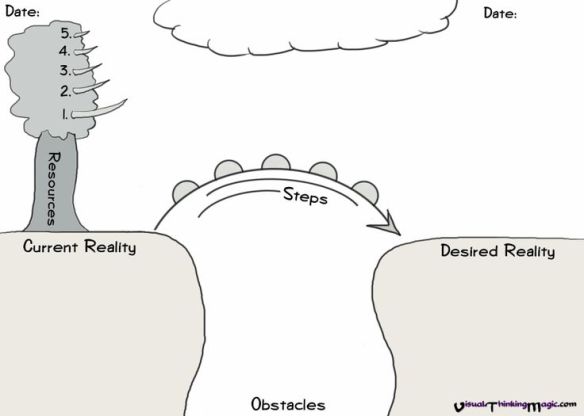
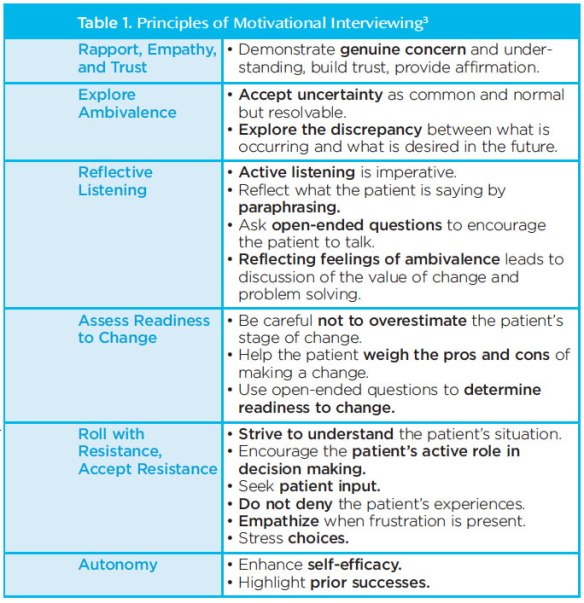
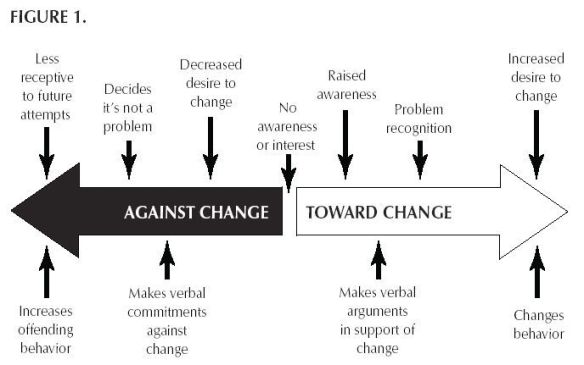
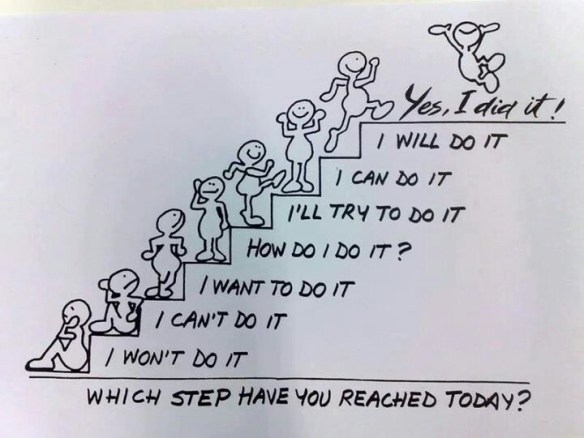
“Motivational Interviewing is a collaborative, goal-oriented style of communication with particular attention to the language of change. It is designed to strengthen personal motivation for and commitment to a specific goal by eliciting and exploring the person’s own reasons for change within an atmosphere of acceptance and compassion.” Miller and Rollnick (2012)

“When we think of failure; Failure will be ours.  If we remain undecided; Nothing will ever change.  All we need to do is want to achieve something great and then simply do it.  Never think of failure, for what we think, will come about.”    ~Maharishi Mahesh Yogi

MI Guide

3a11547d7927a2fa460e1fd130e00cb2

Motivational Interviewing Strategies and Techniques: Rationales and Examples

20x1

75bdc4cf0d9765ddf9df3595f96515f7

b631060395e9f26786a706a5fb4614f6


The Alert Program-Self Regulation

enginechart

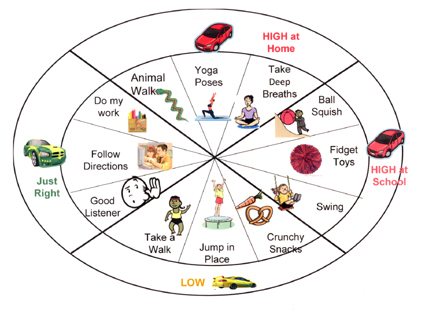
An Occupational Therapist recently provided this program for a student that had trouble with having too much energy in the classroom. The Alert Program provided a system for the student to recognize his energy and do activities to help him calm down to be ready for learning. Below are some of the concepts around the Alert Program to address self regulation.

Official Site: Here

Online Training: Here

How Does Your Engine Run?

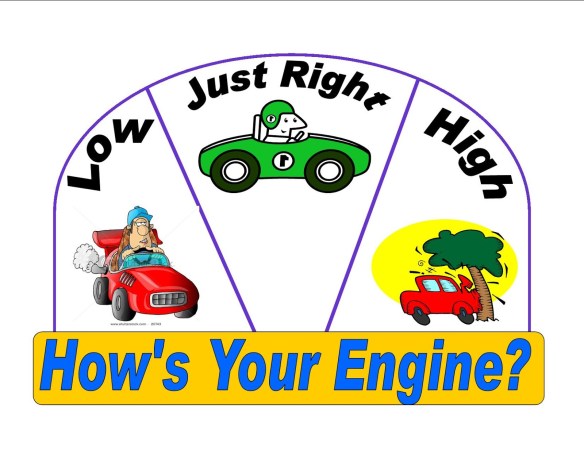
How Does Your Engine Run, or The Alert Program (AP), is a specifically designed program for pre-school aged children and up that addresses self-regulation of arousal states. It uses the analogy of an automobile to introduce its concepts i.e. “If your body is like a car engine, sometime it runs on high, sometimes it runs on low, and sometime it runs just right”. The program is implemented in three stages: identifying engine speeds, experimenting with methods to change engine speeds, and regulating engine speeds. Visual aids along with practical instruction are used to enhance the learning experience. Many benefits are seen from using this program including enhanced abilities to learn, improved interactions, improved self-esteem, improved self confidence, and improved self-monitoring skills. The AP can be done in individual or group treatment settings. Source

Information

Self Regulation Mini Guide

Self-Regulation: Calm, Alert, and Learning*

Sensory Diet vs. The Alert Program (“How Does Your Engine Run”) What’s The Difference And How Can They Help MY Child?

Self Regulation and Sensory Integration How Does your Engine Run? Christal K. Peters, MS OTR/L PPT presentation

self-regulation-poster

So the idea is to get your engine running just right.


ot_chart2

Chart EXAMPLE

dec392c3febad566dbbd200c6a969756

Activities that are typically alerting, to “speed up engines”


In general:

  • rapidly changing/irregular inputs
  • quick tempos
  • music — lower frequencies will elicit movement (drums), while higher frequencies can engage attention (flutes, singing, cymbals)
  • cold temperatures (including foods)
  • light, brushing touch
  • fast movement, especially spinning/rotational
  • sour or spicy flavors
  • fast-moving, bright, unpredictable visuals
  • using muscles for “heavy work” of pushing, pulling, against resistance (tends to be both alerting and organizing, so can help lower “too fast engines” and raise “too slow engines”)

Activities/Strategies:

Swinging quickly on playground swing, especially with sudden changes of direction
Spinning on a swing or other equipment (can quickly become over-stimulating – use caution!)
Rocking quickly in a rocking chair
Running, skipping, galloping for at least 1-2 minutes (any type of aerobic exercise, really)
Rapid rocking/bouncing side to side
Jumping in place (trampoline, jumping jacks, jumping rope, etc.)
Motor breaks during school – stand and stretch, run an errand for teacher, walk to bathroom, etc.
Push on wall as if to move wall
Lean on desk for “desk push-up”
Do “chair push-up” in sitting by lifting bottom off floor or chair, holding self up with arms
Weight-bearing through arms via wheelbarrow walk, crabwalk, bearwalk, etc.
Ride a bike up hills (pedal against resistance)
Pushing or pulling heavy furniture; putting chairs on desks & taking down
Climbing playground equipment; crossing monkey bars
Carrying a stack of books, laundry, groceries, or something else approx. 5% of body weight
Drinking grapefruit, cranberry or other tart juice – try partially freezing it
Popsicles or frozen grapes or orange sections. Try frozen pickle chunks!
Pretzels, carrots, apples, granola, and other crunchy foods
Drinking through a long, thin straw, or reg. straw w/thick liquids (stimulates deeper breathing)
Blowing bubbles, whistle or other blown instrument (harmonica)
Move cotton balls by blowing through a straw (race cotton balls or play “soccer” on table)
Play with “fidget toy” for hands, such as small koosh ball
Dancing to rock, jazz, rap, or fast kids music
Cold shower or cold water on face or arms
Strobe light effects, fireworks, sometimes computer or video games or T.V.
Brightly lit room (full spectrum or natural light)
Walls decorated with bright, contrasting colors
Safe crashing: jump or fall into pile of pillows or mats; pillow fighting


Typically calming activities to “slow down” engines
In general:

  • slow, steady, rhythmic, repeated, predictable input
  • slow and rhythmic music
  • firm, steady, pressure touch or squeezing (think massage or a big hug)
  • using muscles for “heavy work” (see note above under alerting activities)
  • bland or sweet-tasting flavors
  • slow-moving, dim, deep-colors for visuals
  • neutral warmth
  • slow linear movements forward-and-back or head-to-toe

Activities and Strategies:

Rhythmic bouncing on a hippety-hop ball or seated on therapy ball
Steady, slow forward/back movement on swing or rocking chair
Rocking horse or see-saw; pushing off hard with legs
Listening to classical music, steady drums, or nature sounds (water, birds, waves)
Jumping on a trampoline, doing jumping jacks, or jumping rope
Riding a bike up hills (pedaling against resistance)
Pushing or pulling heavy furniture; putting chairs on desks & taking down
Carrying a stack of books, laundry, groceries, or something else approx. 5% of body weight
Carry backpack or “fanny pack” with some weight to it (not more than 5% of body weight)
Push on wall as if to move wall
Lean on desk for “desk push-up”
Hold self above chair seat, weight-bearing through arms, hands to side of seat for “chair push-up”
Weight-bearing through arms via wheelbarrow walk, crabwalk, bearwalk, etc.
Isometrics: push hands together, hook hands and pull apart, push knee against hand, etc.
Tug’o’war, “indian wrestling,” push’o’war back to back
Push with feet against something (push’o’war with a pillow between 2 peoples’ feet, no shoes)
Push or pull open and hold open heavy doors
Erase or wash chalkboards
Look at fish tank, snow globes, lava lamp, campfire, or other slow-moving visual
Dimly lit room, and sparsely-decorated walls (“cool” colors)
Eat chewy foods (send fruit roll-ups, bagels, dried fruit, cheese, gummy candy with lunch)
Chew on Chewy Tubes or Chewelry (avail. in some catalogs) or Theratubing
Wear spandex clothing, like bike shorts or long underwear (can wear either under regular clothes)
While in circle time or listening in seat, hold a lap weight (such as a large beanbag animal)
Use a heavy/weighted blanket; read or work lying on floor with pillows stacked on top
Wrap or roll-up in blanket or rug
Crawl through a tunnel of about 3 yards of 18” cotton T-shirt ribbing (avail in fabric stores)
Have an adult roll a therapy ball over body while lying on mat or rug
Squeeze stress ball or other resistive “fidget toy” (putty, beeswax, art erasers)
Put hands into container of beans or rice
Inflatable seat cushion (Move’n’sit or camping pillow) or sit on therapy ball for listening times
Safe crashing: jump or fall into pile of pillows or mats; pillow fighting

Spelling Strategies

spelling

Spelling can be an area of difficulty for students.

Tried and True

FERNALD METHOD FOR SPELLING INSTRUCTION

Purpose

This spelling method is appropriate for students who have difficulty retaining spelling words and learning to spell exception words. Select words that the student uses frequently in writing.

Procedure

1. Write the word to be learned on the chalkboard or on paper.

2. Pronounce the word clearly and distinctly. Ask the student to look at the word and pronounce the word with emphasis on correct pronunciation.

3. Allow time for the student to study the word to develop an image of it. Depending upon the learning style of the student, different senses are emphasized. A student who learns visually tries to picture the word; a student who learns auditorially says the word; and the student who learns kinesthetically traces the word with a finger. The student studies the word until a picture of the word can be formed in his/her mind.

4. When the student indicates that he/she is sure of the word, erase the word and have the student attempt to write the word from memory.

5. Turn the paper over and ask the student to write the word a second time from memory. In daily writing, any misspelled words are marked out entirely and the correct form is written in its place. When a student asks how to spell a word, the teacher writes the word, while pronouncing it. Students are encouraged to make their own dictionaries from words they have learned or words that are especially difficult for them.

Adapted from: Fernald, G. (1943). Remedial techniques in basic school subjects. New York: McGraw-Hill.

Mather, N., & Jaffe, L. (2002). Woodcock-Johnson III: Reports, Recommendations, and Strategies. New York: John Wiley & Sons.

Source-Information

Spelling Article Links

Five Guidelines for Learning Spelling and Six Ways for Practicing Spelling By: Susan Jones

How to Study Spelling Words: A Spelling Strategy for Students By: Bruce Murray

Computer Assisted Instruction

Spelling City ($30 USD per year)

Sight words apps

Dolch sight word spelling Game

Look, Say, Cover, Write, Check

1. Write the list words in first column.

2. Begin with one word, LOOK closely at the letters to notice the visual details.

3. SAY it and notice the parts to remember.

4. COVER the word and think about how the word looks (visualize it).

5. Say the word softly. WRITE it from memory in the next column.

6. Uncover and CHECK it with the word in the first column.

7. Repeat the process in the last column.

8. If it is spelled wrong in the last column, add the word to the first column again and repeat the process.

literacy-focus-spelling-strategies

For Teachers

Why Teach Spelling?

Printable Dolch Word Lists K-3

Dolch Sight Word Checklist

An Alternative Spelling Assessment For Students With Learning Disabilities

Assessments

Dolch Sight Word Assessment

Diagnostic Spelling Scale

General Principles of Spelling Instruction Even though research and clinical experience indicate that students with reading problems will have a very difficult time learning to spell, it is also clear that instruction can have a significant impact on the development of reading skills. Even though many poor readers may never fully master spelling skills at the highest levels, most can become good enough spellers to make effective use of technology and other spelling aids. In order to provide effective spelling instruction, teachers must have a firm understanding of the ways in which spelling skills develop as well as a strong knowledge of phonology, phonics, orthography, morphology, syntax, semantics.

COORDINATE SPELLING WITH WORD IDENTIFICATION INSTRUCTION. Teach students to spell (encode) the phonetically regular words they are learning to decode in a structured and systematic manner. Teach spelling rules and patterns in coordination with the decoding skills (e.g., teach the rule for doubling s, f, l & z and the -ck for the /k/ sound when closed syllable words are taught).

TEACH SPELLING DIRECTLY WITH GUIDED PRACTICE. Teach spelling patterns, rules, letter-sound associations directly, one skill at a time, with opportunities for guided practice in numerous settings until the skill is well learned.

TEACH ALL LEVELS OF WORD ANALYSIS. Begin with phonemic awareness and include letter sound associations, spelling patterns, onset-rime, rules and morphology.

DISTINGUISH BETWEEN REGULAR AND IRREGULAR WORDS. Always differentiate between regular and irregular words using clear procedures for practicing each. Regular words may be divided into those that can be spelled as they sound (REGULAR) and those that require the application of a rule (RULE WORDS). Students should practice fewer irregular words each lesson than regular. Both should be taught using multisensory strategies.

USE CUES AND MNEMONIC DEVICES. Facilitate recall of skills such as letter formation, letter sound associations, and rules with cues such as pictures, stories, rhymes, gestures, etc.

USE DISCOVERY TEACHING. Use discovery teaching techniques for spelling patterns and rules.

PROVIDE ERROR CORRECTION. Students should be given direct and immediate error correction for spelling errors. The ultimate goal is for the student to independently correct their own errors.

Source

For Parents

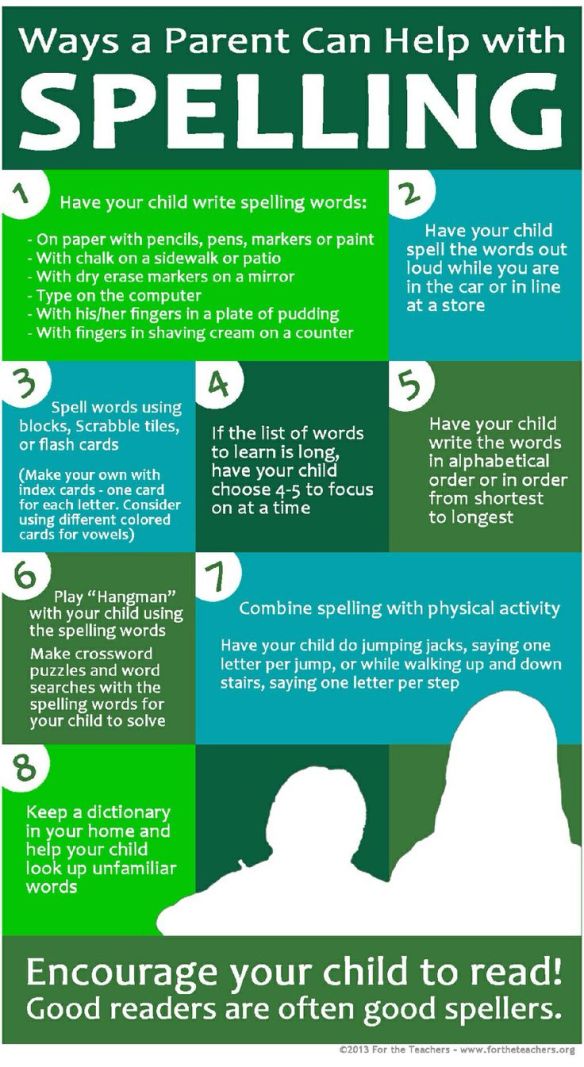
Helping Your Child With Spelling

3869259d2e7055c069a153281befc225

Trichotillomania (Hair Pulling )

371411910_ee7ae30319

Trichotillomania (trik-o-til-o-MAY-nee-uh), also called hair-pulling disorder, is a mental disorder that involves recurrent, irresistible urges to pull out hair from your scalp, eyebrows or other areas of your body, despite trying to stop.

Hair pulling from the scalp often leaves patchy bald spots, which causes significant distress and can interfere with social or work functioning. People with trichotillomania may go to great lengths to disguise the loss of hair.

For some people, trichotillomania may be mild and generally manageable. For others, the compulsive urge to pull hair is overwhelming. Some treatment options have helped many people reduce their hair pulling or stop entirely. Source


Resources

Step by step guide for parents and teachers: Trichotillomania Basics

Q&A from the Berkeley Parents Network

About Trichotillomania or Hair Pulling Disorder- Easy read

Treatment Guidelines-Expert Consensus Treatment Guidelines Body-Focused Repetitive Behaviors Hair Pulling, Skin Picking, and Related Disorders

Parent Support Resources from The TLC Foundation: For Parents

Teen Guide: What Is Trichotillomania?

School Based article: Trichotillomania: Dealing With Hair-Pulling Disorder

Article- Child Trichsters And School

50 Ways to Stop Pulling Your Hair

Comprehensive PPT

Classroom meetings

high school students with hands up in classroom

Classroom meetings are an effective way to help build classroom community, establish behavioral expectations and norms, as well as explore social issues that need tending to help continue supporting a thriving learning environment.

Class Meeting Guides

CREATING POSITIVE ENVIRONMENTS THROUGH CLASS MEETINGS– Diana Browning Wright

Class Meetings Creating a Safe School Starting in Your Classroom– Ophelia Project

The Classroom Meeting-PowerPoint

Articles

The Power of the Morning Meeting: 5 Steps Toward Changing Your Classroom and School Culture

Promoting Learning by Dr. Marvin Marshall – Classroom Meetings

Class Meetings-Positive Discipline

Practical Activities

Idea Title Grade Description
Weekly Agenda

2-6

An agenda where everyone has a say!
Class Meetings with a Stopwatch

K-6

An easy tip for “keeping things moving” in class meetings.
Speak Up with a Microphone

K-6

A quick idea to encourage only one speaker at a time!
Character Trait Spotlight

K-6

Focusing on positive character traits at class meetings.
“Some Things Are Scary”

2-6

This picture book is an excellent springboard for discussion in a class meeting!
Class Meeting Sign

K-6

An easy sign so that everyone knows when the class meeting is!
A Time to Spotlight Students

K-6

Spotlighting students at class meetings

Source

Visuals to Support Learning

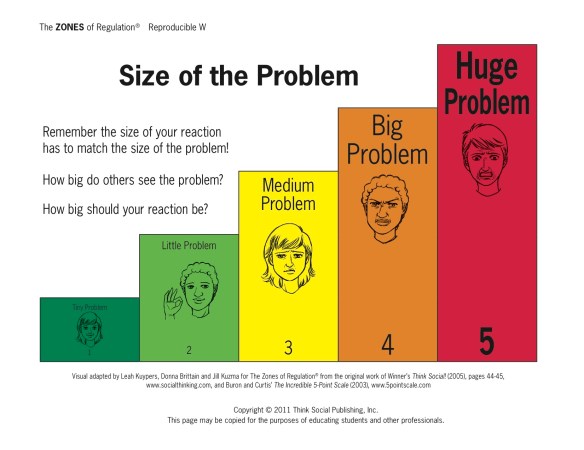
size-of-the-problem

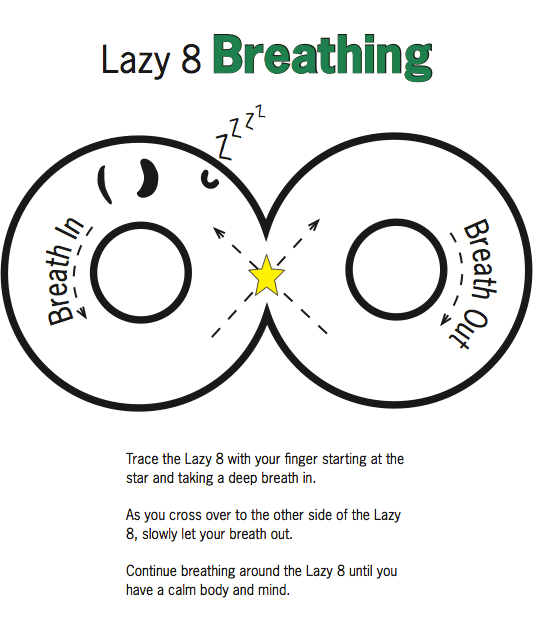
341749_orig

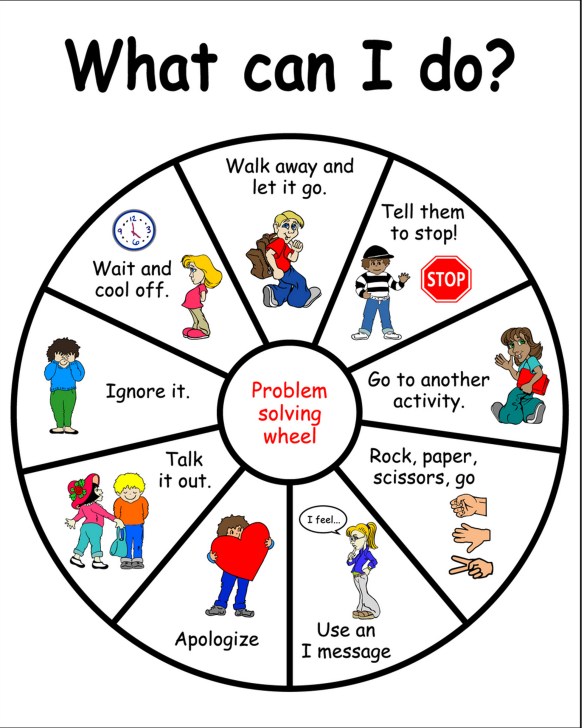
what-can-i-do-conflict-resolution

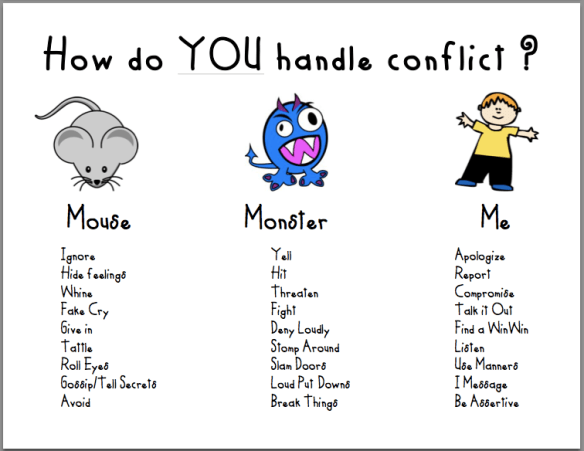
screen-shot-2014-05-20-at-1-15-45-pm

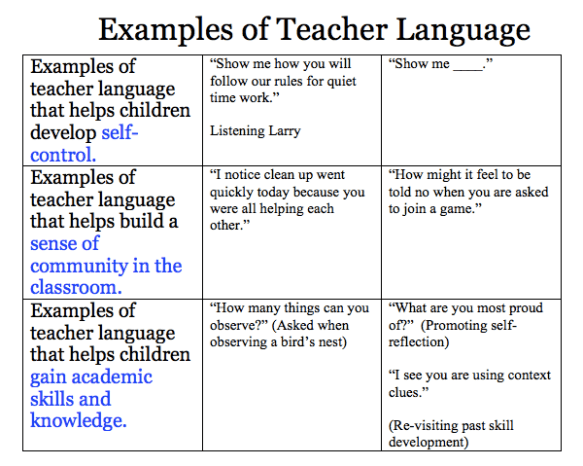
Positive words and intentions are crucial in building a thriving learning community.

“Language actually shapes thoughts, feelings, and experiences.  It produces fundamentally new forms of behavior.”                -Lev Vygotsky

Before you continue reading this post take a minute to read this article: The Power of Our Words by Paula Denton.

Example from the book:

957062_orig

Laughter

Using Humor in the Classroom Laughter has the power to fuel engagement and help students learn By Robert McNeely

Choice

Classroom of Choice by Jonathan C. Erwin Chapter 4. Power in the Classroom: Creating the Environment

Empathy

Building Empathy in Classrooms and Schools

Body Language

Good Body Language Improves Classroom Management Successful Teachers Blend both Verbal and Nonverbal Communication

Teacher Relationships

Improving Students’ Relationships with Teachers to Provide Essential Supports for Learning Positive relationships can also help a student develop socially Sara Rimm-Kaufman, PhD, and Lia Sandilos, PhD, University of Virginia

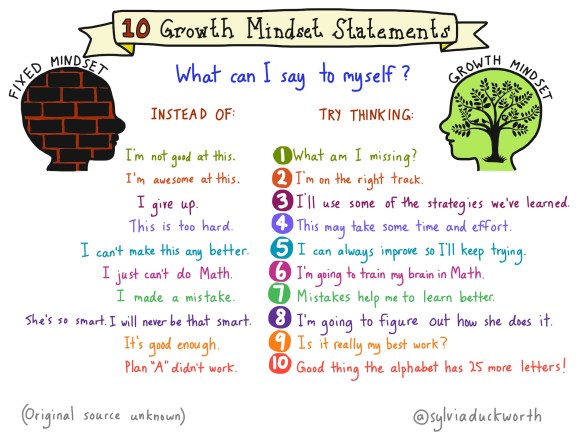
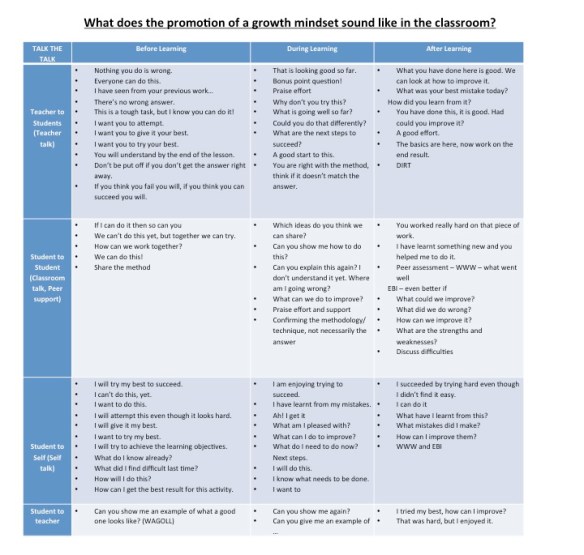
Growth Mindset – Reframing Negative Self Talk

A growth mindset is a belief that your most basic abilities can be nurtured and developed though dedication and hard work. Talent is just the starting point. People with a positive growth mindset create a love of learning that is vital for doing great things. A positive growth mindset will also lend itself to being resilient in the face of setbacks. Failures are seen as learning opportunities to people with a positive growth mindset.

Verses

A fixed mindset is a belief that your basic qualities, like intelligence or talent, are fixed traits. People with a fixed mindset believe that talent makes people successful. Effort is secondary to brains and talent.

4 Ways to Encourage a Growth Mindset in the Classroom

10-growth-mindset-statements

slide04

Programs that support developing positive learning environments

A promising program out of Yale University that helps supports Developing Classroom Culture is called RULER.

RULER is an evidence-based approach for integrating social and emotional learning into schools. RULER applies “hard science” to the teaching of what have historically been called “soft skills.” RULER teaches the skills of emotional intelligence — those associated with recognizing, understanding, labeling, expressing, and regulating emotion. Decades of research show that these skills are essential to effective teaching and learning, sound decision making, physical and mental health, and success in school and beyond.

The RULER Approach to Social and Emotional Learning (SEL) helps build the following skills:

Recognizing: Recognize the emotion of either yourself or of someone else in order to react in the most socially appropriate manner to help resolve the issue. This includes picking up on cues such as facial expression, words, tone, behavior, and one’s own thoughts.

Understanding:  Emotions are often triggered by events that bring upon specific emotions and thoughts. When a child understands more about what is triggering specific emotions, they are more likely to be less reactive. Understanding of emotions helps young children see how emotions affect decisions, behavior and goals. Problem-solving skills are needed to learn how to cope, as well as develop empathy towards others.

Labeling: Labeling emotions is nothing more than connecting different scenarios with a specific emotions, and descriptive words. For example, a child with emotional literacy may use the words inspired, enthusiastic, and thrilled.

Expressing: practicing control, timing, and expression of emotions in appropriate ways helps with communication development for healthy relationships. Students who have difficulties in both labeling and expression tend to not have successful relationships.

Regulating Emotions: Regulation during emotional experiences means organizing and managing the thoughts, emotions and behavior that often develop. Successfully regulated emotions are often prevented, reduced, initiated, maintained, or enhanced (PRIME). Source

PBIS

Positive Behavior Interventions and Supports (PBIS) is a proactive approach to establishing the behavioral supports and social culture and needed for all students in a school to achieve social, emotional and academic success. Attention is focused on creating and sustaining primary (school-wide), secondary (classroom), and tertiary (individual) systems of support that improve lifestyle results (personal, health, social, family, work, recreation) for all youth by making targeted misbehavior less effective, efficient, and relevant, and desired behavior more functional.

Practical Strategies for Common Classroom Issues

Positive Behavior Support in the Classroom: Facilitating Behaviorally Inclusive Learning Environments Terrance M. Scott, Kristy Lee Park, Jessica Swain-Bradway & Eric Landers