
Joel Shaul’s Autism Spectrum Resources

autism_awareness_ribbon_20051114

Recently, I ran across a treasure trove of resources from  http://autismteachingstrategies.com/. It was designed and published by Joel Shaul.  In this blog post I will provide links to his content.

Joel Shaul specializes in mental health services for children and teens at the autism spectrum.

In his work with children on the autism spectrum in various settings, Joel has noticed a need for more engaging social skills curricula, stronger visual components and more compelling social skills learning activities.  He first created the World of Ryuu with Rebecca Klaw, another Pittsburgh-based professional working with children with Asperger’s or other autism spectrum disorders.  His  two illustrated children’s books, The Conversation Train and The Green Zone Conversation Book, are published by Jessica Kingsley Publishers.  Joel provides dozens of free social skills downloads on this website.

Through Autism Teaching Strategies, Joel provides trainings nationwide on the topics of social skills teaching and effective counseling for children with high functioning autism.

Joel provides individual and group services, in schools and clinical settings, at The Watson Institute in Sewickley, Pa.

He received a master’s degree in social work from the University of Louisville in 1986 and a bachelor’s degree in psychology from the University of Michigan in 1979.  Joel was a community organizer with the Peace Corps in Sierra Leone where he helped to build a midwife clinic and develop a health education curriculum for primary schools.

Source

Videos

Upset Feelings Video for Kids: CBT Video One

Upset Feelings Video for Kids: CBT Video Two

Upset Feelings Video for Kids: CBT Video Three

Upset Feelings Video for Kids: CBT Video Four

Upset Feelings Video for Kids: CBT Video Five

Upset Feelings Video for Kids:  CBT Video Six

Upset Feeling Video for Kids: CBT Video Seven

Upset Feelings Video for Kids: CBT Video Eight

Materials and Strategies

CBT Thought Bubbles: How to Download and Use Them

Simple CBT Worksheets: How to Download and Use Them

Brief descriptions of the free download resources on social communication

Brief descriptions of the free download resources on emotional regulation

Brief descriptions of the free download resources combining relationships/emotions/communication

Using visual word prompts and a song to teach showing interest to kids with ASD

Using picture prompts for non-verbal communication for children with ASD

Using chain and girder pictures to teach conversation skills to kids with ASD

Using a balance to teach relationship reciprocity to children with ASD

Using a balance to teach conversation reciprocity to children with ASD

Using a flip camera for social skills training for kids with ASD

How to make social-skills training game-like and fun for children with ASD

Social-skills training technique for ASD, using tokens

Hello songs to reinforce greetings for kids with ASD

Goodbye song for teaching goodbye to kids with ASD

Social-skills song to promote eye contact for kids with ASD

Social Skills

FREE SOCIAL SKILLS DOWNLOADS

Card Game

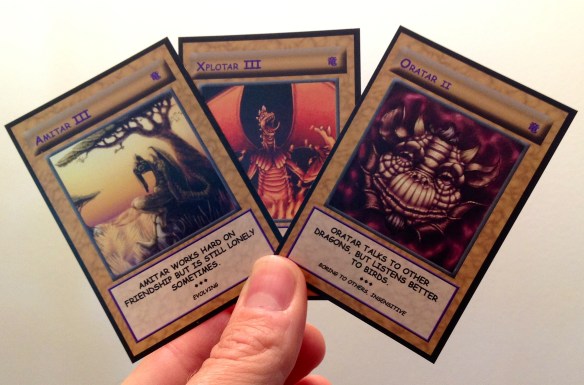
The World of Ryuu*

3-ryuu-cards

Using a fantasy world of dragons to build social skills in humans.
Ryuu products are a collection of teaching and therapy aids based on a fantasy world of dragons. Ryuu  activities teach social and emotional skills to children and teens with autism, Asperger Syndrome, and other autism spectrum disorders. These products are designed to teach social, emotional and communication skills by combining fantasy worlds, card collecting, and role play.


*Sold at www.ryuuworld.com.

Building Empathy in the Classroom

6_1_16_listen


Empathy: The Art of Listening
We generally want to respond when people speak to us. For example, someone says, “I’m so tired, I couldn’t get any work done.” Some typical responses listed below are often said with the best of intentions, but can unknowingly create distance and disconnection.
We call these empathy blockers.
• One-upping
“I’m so tired myself. I couldn’t get any work done either.”
• Advising / Fixing
“Maybe you should get more sleep.”
“Maybe you should get some vitamins.”
“Maybe you should…”
• Educating
“There’s a good book you should get on sleep and productivity.”
• Analyzing
“You know, this seems to be a pattern of yours.”
• Consoling
“That’s too bad. I’m sure things will go better tomorrow.”
• Discounting
“Okay, but shouldn’t you just be glad you have a job?”
Some things we can say to express empathy
• “I hear you.” Said with sincerity, meets a person’s need to be heard.
• “Tell me more.” Said with sincerity, shows you are really interested.
• “I don’t even know what to say right now, I’m just grateful you told me.”
When someone is in a difficult place, this may be all you have to say.
– Empathy is Being Interested Rather Than Being Interesting –

Source

Upset feelings typically are attributed to a need not being met. Here is a handy cheat sheet for Feelings Associated with Met and Unmet Needs.

happify-empathy

Activities and Worksheets

40 Kindness Activities & Empathy Worksheets for Students and Adults

Empathy in Your Classroom TRY THESE ACTIVITIES TO BUILD EMPATHY AND COMMUNITY (High School)

Emotional Intelligence Activities For Teens

A Quick-Guide To Teaching Empathy In The Classroom

A Toolkit for Promoting Empathy in Schools

Articles

Empathy in the Classroom: Why Should I Care?

Principal Connection / Building Empathy in Schools -Thomas R. Hoerr

Building Empathy in Classrooms and Schools

how to build project making caring empathy and strengthen your school community

Books

13 kids books to spark conversations about empathy Via Tinybop

10 Children’s Books That Teach Empathy  Via Self-Sufficient Kids

Hearing Loss in School

audiogram

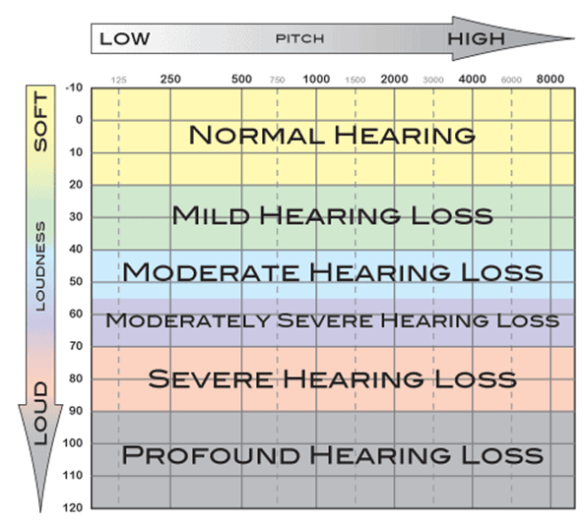
The National Dissemination Center for Children with Disabilities (NICHCY) explains that hearing loss falls into four subcategories: conductive, sensorineural, mixed and central. These identify the location in the body in which the hearing impairment occurs. Hearing aids and other sound amplifying assistive technologies (AT) often work for students with conductive hearing loss, as their impairments stem from the outer or middle ear. Such does not hold true with sensorineural, mixed and central hearing losses, as these impairments stem from the inner ear, the central nervous system or a combination of the two. Typically, hearing loss is categorized as slight, mild, moderate, severe or profound, depending on how well an individual can hear the frequencies that are commonly associated with speech.

Educational Challenges

Educational obstacles related to hearing impairments stem around communication. A student with a hearing impairment may experience difficulty in:

  • the subjects of grammar, spelling and vocabulary
  • taking notes while listening to lectures
  • participating in classroom discussions
  • watching educational videos
  • presenting oral reports

Underscoring the difficulty that students with hearing impairments may have in presenting oral reports are the potential language development problems linked to hearing impairments. Arizona’s Department of Education’s Parent Information Network notes that, “Since children with hearing impairments are unable to receive some sounds accurately, they often cannot articulate words clearly.”

Source

Hearing Impairment Topic Categories via-

 The National Association of Special Education Teachers (NASET)

Accommodations Adults with Hearing Impairments
Advocacy Assessment
Assistive Technology Audio/Video Tapes
Books and Publications Causes
Characteristics Classifications
Classroom Management Definition
Diagnosis Frequently Asked Questions
History of the Field Medical Issues/Medication
Organizations Overview
Parent Information Prevalence
Transition Services

Resources

Accessibility Considerations Worksheet For Students with Hearing Loss

Article- The Cascading Impact of Hearing Loss on Access to School Communication Fragmented Hearing -> Effort -> Listening Comprehension -> Fatigue -> Pace of Learning It’s About Access, Not Hearing Loss

Causes of Hearing Loss in Children

Students with Hearing Impairment in the School Setting ASHA Practice Policy documents


Epilepsy in Schools

epilepsy

Epilepsy is a common disorder of the brain that causes recurring seizures.  Epilepsy affects people of all ages, but children and older adults are more likely to have epilepsy. Seizures are the main sign of epilepsy and most people can control this with treatment. Some seizures can look like staring spells while other seizures can cause a person to collapse, stiffen or shake, and become unaware of what’s going on around them. Many times the cause is unknown.

About 0.6% of children ages 0-17 years have epilepsy in the United States. 2 That is about 460,000 children in 2013.1 Picture a school with 1,000 students—that means about 6 students would have epilepsy. For many children, epilepsy is easily controlled with medication and they can do what all the other kids can do, and perform as well academically.  For others, it can be more challenging.

Compared with students with other health concerns, a CDC study shows that students aged 6–17 years with epilepsy were more likely to miss 11 or more days of school in the past year. Also, students with epilepsy were more likely to have difficulties in school, use special education services, and have activity limitations such as less participation in sports or clubs compared with students with other medical conditions. CDC also found that a larger percentage of children with epilepsy than those without the disorder lived in very low income households (below 200% of the federal poverty level). This suggests other unmet needs for families of children with epilepsy.

Source CDC

Generalized Seizures
(Produced by the entire brain)
Symptoms
1. “Grand Mal” or Generalized tonic-clonic Unconsciousness, convulsions, muscle rigidity
2. Absence Brief loss of consciousness
3. Myoclonic Sporadic (isolated), jerking movements
4. Clonic Repetitive, jerking movements
5. Tonic Muscle stiffness, rigidity
6. Atonic Loss of muscle tone

General Resources

MANAGING CHILDREN WITH EPILEPSY SCHOOL NURSE GUIDE

Plans

SEIZURE ACTION PLAN FOR SCHOOL (Fill in PDF form)

Seizure Action Plan with Emergency Seizure Care Instructions

MODEL SECTION 504 PLAN FOR A STUDENT WITH EPILEPSY (Sample)

For professionals

Epilepsy Foundation – Managing Students with Seizures for School Nurses

Epilepsy Foundation – Seizure Training for School Personnel

Epilepsy Foundation – Seizure Training for Child Care Personnel

For Students and Families

CDC – You Are Not Alone Parent Toolkit

Epilepsy Foundation – Take Charge of the Storm for middle school students

Epilepsy Foundation – Take Charge of the Facts for high school students

Kid Books

BVSD Universal Screeners for Elementary Math

BVSD Universal Screeners for Elementary Math

The BVSD Universal Screeners for Elementary Mathematics are a set of number sense assessments. The series consists of fall interview assessments for kindergarten through fifth grade, and mid-year and spring assessments for grades k – 4 that combine an interview with paper and pencil tasks.
 
Follow these links to access everything that you need.
These screening measures are being made available for free.

The information that teachers, schools, and districts gathered from these Screeners is intended to provide formative assessment information and:

1.       Alert teachers to students at risk of struggling and who would benefit from additional, diagnostic assessment and intervention.

2.       Help teachers with to form a strategic grouping of struggling students

3.       Inform RtI Tiers 1 and 2.  Are there skills and concepts will need to be retaught to the whole class?  Which prerequisite skills and concepts that will need to be addressed quickly?

4.       Inform district-level professional development and planning.  How do our students perform on these assessments?  Where skills do our students show more success in?  Are there skills and concepts where they seem to struggle?  How do we intervene for students who need additional support?  Etc.

5.      Alert districts regarding concentrations of struggling students.  How can we compensate proactively to respond to those concentrations?

Online data collection tools are available from forefrontmath.com to support districts, schools, and teachers in the systematic collection of data.   

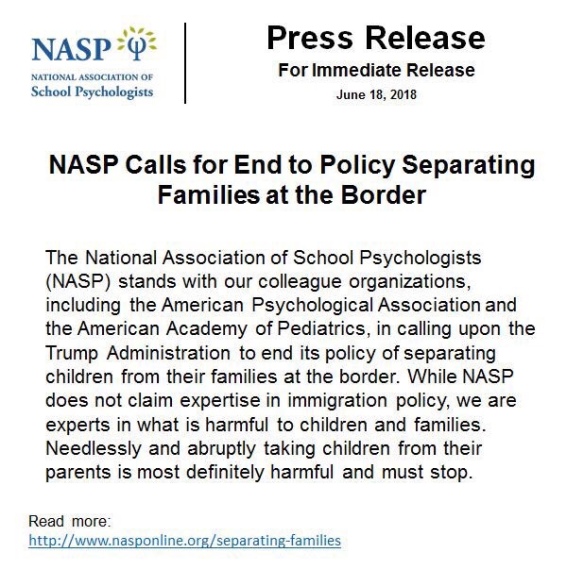
NASP and ASCA call for US policy change to stop separating families at the border

NASP full statement pdf

ASCA Issues Statement Condemning the Separation of Children and Families at U.S. Borders

Write a letter

Urge Congress to End Policies that Separate Families at the Border

Write your elected officials and ask them to urge the Trump Administration to end its policy of separating children from their families at the border.

Read

The Role of Schools in Supporting Traumatized Students

By Eric Rossen and Katherine Cowan

ADEPT (Autism Distance Education Parent Training) Interactive Learning

adept

ADEPT (Autism Distance Education Parent Training) Interactive Learning

An original MIND Institute/CEDD 10-lesson interactive, self-paced, online learning module providing parents with tools and training to more effectively teach their child with autism and other related neurodevelopmental disorders functional skills using applied behavior analysis (ABA) techniques.


Resources

Autism Distance Education Parent Training (ADEPT) PPT Presented By: Patricia Schetter, MA, BCBA

Fountas & Pinnell Reading Levels

Fountas & Pinnell reading levels (commonly referred to as “Fountas & Pinnell”) are a system of reading levels developed by Irene Fountas and Gay Su Pinnell to support their guided reading method.[1] Reading text is classified according to various parameters, such as word count, number of different words, number of high-frequency words, sentence length, sentence complexity, word repetitions, illustration support, etc. While classification is guided by these parameters, syllable type, an important consideration in beginning reading, is not considered as part of the leveling system. Small books containing a combination of text and illustrations are then provided to educators for each level.[2]

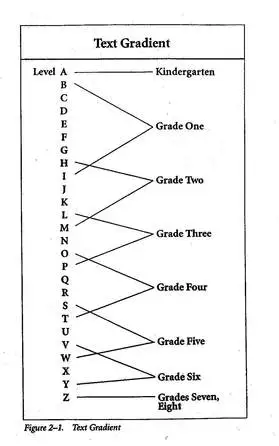
While young children display a wide distribution of reading skills, each level is tentatively associated with a school grade. Some schools adopt target reading levels for their pupils. This is the grade-level equivalence chart recommended by Fountas & Pinnell.[3]

Recommended grade Fountas and Pinnell level
K A, B, C
1 C, D, E, F, G, H, I
2 I, J, K, L, M
3 M, N, O, P
4 P, Q, R, S
5 S, T, U, V
6 V, W, X, Y
7 Y, Z
8 and above Z

Alternative classifications of reading difficulties have been developed by various authors (Reading Recovery levels, DRA levels, Basal Levels, Lexile Levels, etc.).


f-and-p-chart

Fountas and Pinnell Reading Level Characteristics

Instructional Level:  With teaching and support, the child can read the text.

Independent Level:  Text the child can easily read and understand on his/her own.

f-p-level-expectations_orig

The Fountas and Pinnell Assessment System in one way our district identifies a student’s reading level.  The assessment provides valuable information about reading accuracy, comprehension, fluency, and more.  This is just one tool used to determine your child’s strengths and weaknesses. They read a combination of fiction and nonfiction books, mistakes are recorded, and questions are asked to gauge understanding of the text.  Students must be able to verbalize their thoughts for this type of assessment.  An expected 1 year growth may be 3-4 levels; therefore, if they are unable to make these gains each year they will have extreme difficulty reaching the grade level expectation.
The assessments are done at…

  • Beginning of the year (August-September)
  • Mid-year (November-December)
  • End of the year (April-May)

The assessment can…

  • Determine your child’s “independent” and “instructional” reading level
    • INDEPENDENT-Read with 95-99% accuracy with satisfactory comprehension
    • INSTRUCTIONAL-Read with 90-94% accuracy with satisfactory comprehension
  • Determine reading placement levels and group students for instruction
  • Identify students who need interventions
  • Assess the outcomes of teaching strategies
  • Document student progress during a school year and over several years
  • Inform parents of progress over a period of time


If your child is reading below grade level at this time, it’s not uncommon for them to score lower on classroom assessments. These levels have been tracked for several years; therefore, it’s unrealistic to think they can catch up to grade level in one year if they begin the year reading several levels below grade level.

The comprehension portion includes 3 types of questions, and students can score from a 1-3 in each area:

  • Within the Text-Retell or summarize the story and identify the problem.
  • Beyond the Text-Indicates your child’s ability to connect to their own experiences with the story and draw conclusions about characters or events.
  • About the Text-Indicates your child’s ability to think about the author’s purpose, style of writing, or how the text is organized. 

Self-Correction

  • A self-correction rate of 1:4 means that the student corrects approximately 1 out of every 4 errors made during the reading. If a student has a rate of 1:4 or less, this indicates that he/she is self-monitoring or self-correcting his/her reading.  It lets you know that they are very aware of their reading abilities. 

Fluency

  • Fluency is how smoothly your child reads with expression and meaning. 


Accuracy Rate

  • This is the percentage of words read correctly or accurately.  An instructional level accuracy rate may fall between 90-100%. 


Grade Level Expectations 5th Grade
Beginning of Year-Level S/T
End of Year-Level V

Anne Arundel County Public School Parents Guide to Guided Reading Levels
The site contains very valuable information regarding your child’s reading level including the characteristics of this level and strategies for helping improve your child’s reading level.  

 F&P Parent Resources F&P Recursos de los Padres
Parent Guide for Levels A and B Guia de padres para los niveles A y B
Parent Guide for Levels C, D, and E Guia de padres para los niveles C, D, y E
Parent Guide for Levels F and G Guia de padres para los niveles F y G
Parent Guide for Level H and I Guia de padres para los niveles H y I
Parent Guide for J and K Guia de padres para los niveles J y K
Parent Guide for Levels L and M Guia de padres para los niveles L 7 M
Parent Guide for Levels N, O, P, and Q Guia de padres para los niveles N, O, P, y Q
Parent Guide for Levels R, S, and T Guia de padres para los niveles R, S, and T
Parent Guide for Levels U and V Guia de padres para los niveles U y V
Parent Guide for Levels W, X, Y, and Z Guia de padres para los niveles W, X, Y, y Z


https://www.aacps.org/Page/2447

Book

The Fountas & Pinnell Literacy Continuum, Expanded Edition

A Tool for Assessment, Planning, and Teaching, PreK-8

9780325060781

Hearing Loss in School

audiogram

The National Dissemination Center for Children with Disabilities (NICHCY) explains that hearing loss falls into four subcategories: conductive, sensorineural, mixed and central. These identify the location in the body in which the hearing impairment occurs. Hearing aids and other sound amplifying assistive technologies (AT) often work for students with conductive hearing loss, as their impairments stem from the outer or middle ear. Such does not hold true with sensorineural, mixed and central hearing losses, as these impairments stem from the inner ear, the central nervous system or a combination of the two. Typically, hearing loss is categorized as slight, mild, moderate, severe or profound, depending on how well an individual can hear the frequencies that are commonly associated with speech.

Educational Challenges

Educational obstacles related to hearing impairments stem around communication. A student with a hearing impairment may experience difficulty in:

  • the subjects of grammar, spelling and vocabulary
  • taking notes while listening to lectures
  • participating in classroom discussions
  • watching educational videos
  • presenting oral reports

Underscoring the difficulty that students with hearing impairments may have in presenting oral reports are the potential language development problems linked to hearing impairments. Arizona’s Department of Education’s Parent Information Network notes that, “Since children with hearing impairments are unable to receive some sounds accurately, they often cannot articulate words clearly.”

Source

Hearing Impairment Topic Categories via-

The National Association of Special Education Teachers (NASET)

Accommodations Adults with Hearing Impairments
Advocacy Assessment
Assistive Technology Audio/Video Tapes
Books and Publications Causes
Characteristics Classifications
Classroom Management Definition
Diagnosis Frequently Asked Questions
History of the Field Medical Issues/Medication
Organizations Overview
Parent Information Prevalence
Transition Services

Hearing Loss in Children Links via ASHA

Audiologic Treatment/Habilitation

Causes of Hearing Loss in Children

Cochlear Implants

Hearing Aids for Children

Hearing Assistive Technology for Children

Hearing Screening

Ototoxic Medications

Types of Hearing Loss

Types of Tests Used to Evaluate Hearing in Children and Adults

Resources

Accessibility Considerations Worksheet For Students with Hearing Loss

Article- The Cascading Impact of Hearing Loss on Access to School Communication Fragmented Hearing -> Effort -> Listening Comprehension -> Fatigue -> Pace of Learning It’s About Access, Not Hearing Loss

Causes of Hearing Loss in Children

How to Read an Audiogram and Determine Degrees of Hearing Loss

Students with Hearing Impairment in the School Setting ASHA Practice Policy documents

The Los Angeles Unified School District’s Position Paper Deaf and Hard of Hearing Services

GUIDE TO EDUCATION OF CHILDREN WHO ARE DEAF OR HARD OF HEARING

Ideal Classrooms

Sonoma County’s DHH procedures for deaf and hard of hearing (ZIP file with forms)

SUPPORTING STUDENTS WHO ARE DEAF/HARD OF HEARING IN WI PUBLIC SCHOOLS Information for public school administrators and pupil services personnel about educating students with hearing loss (PPT)

Assistive Technology in the Classroom For Deaf and Hard of Hearing

Assistive Technologies for Individuals Who are Deaf or Hard of Hearing  (from Gallaudet University)

IEP/504 CHECKLIST: ACCOMMODATIONS AND MODIFICATIONS FOR STUDENTS WHO ARE DEAF AND HARD OF HEARING (One Sheet Wonder!)

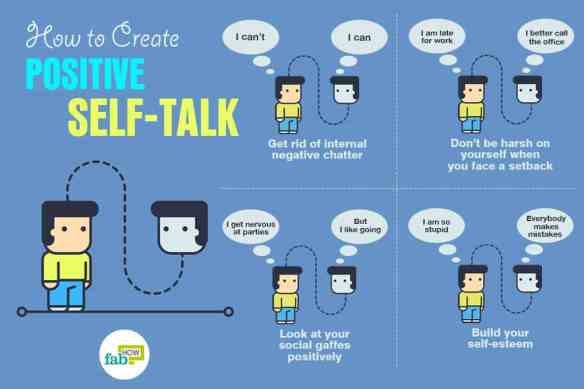
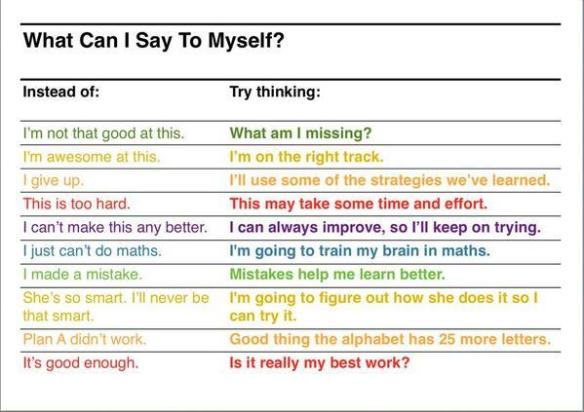
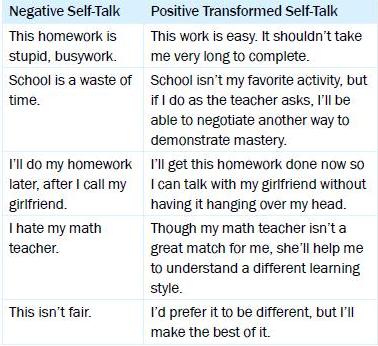
Developing Positive Self Talk in School Age Children

I can do it

There has been a lot of recent buzz around the idea of the “Growth Mindset” from Carol S. Dweck. A piece of the “Growth Mindset” is developing in inner monologue of “I can”. Which ends up being how to tame the invading negative thoughts. This post is dedicated to developing the “I can” in school-age kids.

epictetus1-2x

General

how-to-practice-positive-self-talk

Improving Achievement Through Self-Talk – Trish Spencer

Five Key Points

In What Students Say to Themselves: Internal Dialogue and School Success (Thousand Oaks, CA: Corwin Press, 2000), William Watson Purkey suggests the following five points to keep in mind as you try to shape students’ self-talk:

  1. What significant people think about students and how they act toward students influences how students define themselves.
  2. How students define themselves in their internal dialogue influences their academic success and failure.
  3. Everything the school does and the way things are done influences what students say to themselves.
  4. Altering how students define themselves involves altering the total school environment.
  5. The task of the school is to structure experiences that reduce crippling self-talk while inviting students to define themselves in essentially positive and realistic ways. (p. 77)

Research of Positive Self Talk

Coping Thoughts

 Stop, and breathe, I can do this
 This will pass
 I can be anxious/angry/sad and still deal with this
 I have done this before, and I can do it again
 This feels bad, it’s a normal body reaction – it will pass
 This feels bad, and feelings are very often wrong
 These are just feelings, they will go away
 This won’t last forever
 Short-term pain for long-term gain
 I can feel bad and still choose to take a new and healthy direction
 I don’t need to rush, I can take things slowly
 I have survived before, I will survive now
 I feel this way because of my past experiences, but I am safe right now
 It’s okay to feel this way, it’s a normal reaction
 Right now, I am not in danger. Right now, I’m safe
 My mind is not always my friend
 Thoughts are just thoughts – they’re not necessarily true or factual
 This is difficult and uncomfortable, but it’s only temporary
 I can use my coping skills and get through this
 I can learn from this and it will be easier next time

Source

instead-of-saying

10661_1

Specific Strategies

Help your learner see the positive by Reframing their Thoughts in a positive light.

cbtthinkingprocess-dreamstime_xs_36181364-200x300

STOP Plan

Scared?
Thoughts?
Other helpful thoughts?
Praise and Plan!

 Developing and Using Cognitive Coping Cards

Example of Coping Card-

My Coping Card to Beat Anxiety!
1. Anxiety is not dangerous. It can’t hurt me! It’s just a bully!
2. I can boss back my anxiety. I have done it before!
3. If my heart is racing, I get sweaty, and my tummy hurts. That means that my anxiety
is acting up. I’m not in danger.
4. I could do some relaxation now.

My Coping Card to Beat Anxiety!
1. My face is getting hot and my head is getting dizzy! My anxiety is acting up again!
2. Maybe I need to use the STOP plan now! *
3. If I’m feeling anxious, I could do some calm breathing to calm down.
4. I have lots of friends at school, and they like me even when I get anxious. They told
me so.

coping tool box

Source

power-of-positivity-workshopPOWER OF POSITIVITY PRINTABLE WORKSHOP

This is a printable workshop with a selection of activities, worksheets and craft ideas plus 30 exercises to help you develop a positive mindset.  To be used at home or in the classroom; for kids and/or adults. Cost 9.99