Child Sexual Abuse

enough-abuse-logo-3

So as many of you may know, I write my blog posts in conjunction with events that occur at my school sites. This post has been the most difficult to date. The size and scope of an incident like this occurring on an elementary campus is devastating. I really encourage that parents, teachers, and community members at large help to teach our kids the tools and skills to stay safe.

Fact Sheets

Child Sexual Abuse Fact Sheet

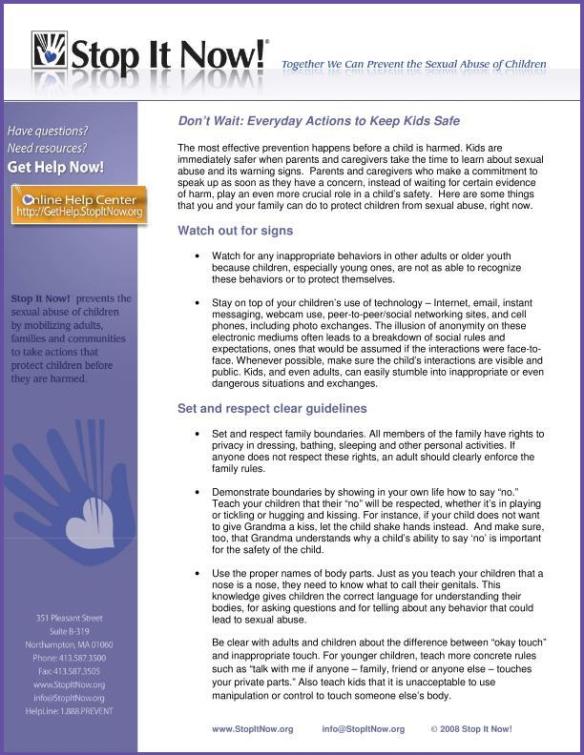
Child Sexual Abuse: YOU CAN PREVENT, RECOGNIZE AND REACT

Brochure English

Straight Talk About Child Sexual Abuse: A Prevention Guide for Parents

Spanish Resources

Abuso Sexual de Niños: UD. PUEDE PREVENIRLO, RECONOCERLO Y REACCIONAR

Hablando Claro Acerca Del Abuso Sexual Infantil: Una Guía Preventiva Para Los Padres

Brochure Spanish 

30a8c45201fb8bd678130d72dccb8d6f

Adult education is key to preventing child sexual abuse.

1 out of 10 children will be sexually abused before they turn 18. Chances are, someone you know has been impacted. Research shows that people who are sexually violated as children are far more likely to experience psychological problems often lasting into adulthood, including post-traumatic stress syndrome, depression, suicide, substance abuse, teen pregnancy, school dropout and relationship problems. (Source)

Parent Education

5 STEPS TO PROTECTING OUR CHILDREN  (PDF One Sheet)

Child Sexual Abuse Prevention FACTS:


Resources for recognizing sexual abuse:

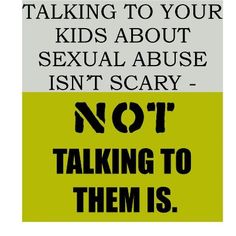
Talking to your child about sexual abuse.

Talking to Children About Sexual Abuse Great sections on ages 4-8, 9-13, and 14-18. Explicitly lays out “What to do?” What to Say?”

By: Sean Brotherson, Ph.D., Family Science Specialist, NDSU Extension Service

10 WAYS TO TEACH YOUR CHILD BODY SAFETY: PREVENTING SEXUAL ABUSE

TALKING TO YOUR CHILD ABOUT MOLESTATION

How To Talk About Sexual Abuse Safety Webpage with more information

KidsPower Resources

7 Kidpower Strategies for Keeping Your Child Safe – Video Series

Four Strategies for Protecting Kids from Sexual Predators

Touch in Healthy Relationships

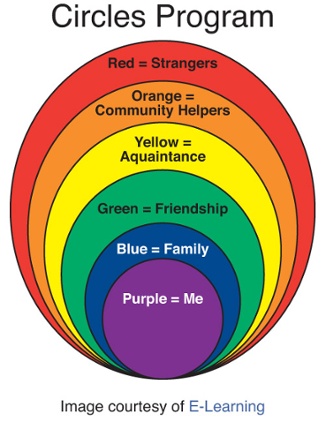
Circles of Intimacy

Circles of Intimacy-PDF

c10e354fbcaf24e601077e0f173e0fc01

Phone Apps

Stewards of Children Prevention Toolkit

Circles of Intimacy

Radio Show

LISTEN TO THE PARENTING TODAY RADIO SHOW: PREVENTING CHILD SEXUAL ABUSE

12951e1794ea8774b13f73ae3511b286

Books

bodysafetybook

Body Smart, Body Safe: Talking with Young Children about their Bodies- Blog List of Books from A Mighty Girl

Books To Educate Children About Preventing Sexual Abuse

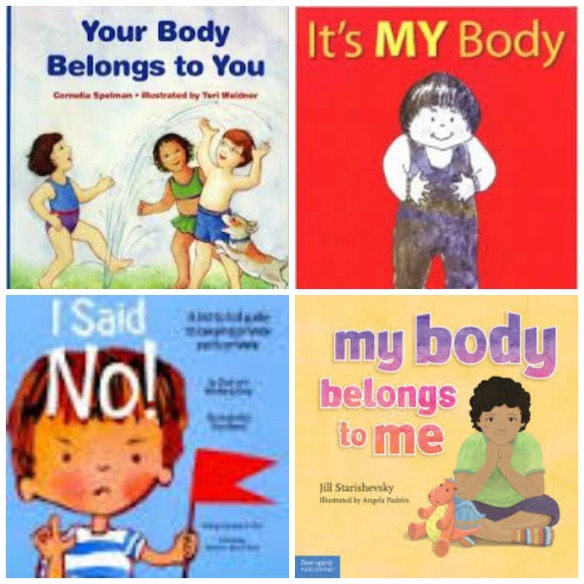
It’s My Body
by Lory Freeman (Parenting Press, 1984)

Keeping Kids Safe: A Child Sexual Abuse Prevention Manual
by Pnina Tobin, Sue Levinson Kessner (Hunter House Publishers; 2nd edition, 2002)

The Most Important Rule of All
by Pam Church
(Prevention And Motivation Programs, Inc., 1997) This book is a read-aloud storybook about child sexual abuse and protection skills for use with children ages 4-8 years.

Order here

My Body is Private
by Linda Walvoord Girard and Rodney Pate (Albert Whitman & Co., 1992)

The Right Touch: A Read-Aloud Book to Help Prevent Child Sexual Abuse
by Sandy Kleven (Illumination Arts Publishing, 1998)

Telling Isn’t Tattling
by Kathryn Hammerseng (Parenting Press, 1996)

Those are MY Private Parts
by Diane Hansen (Empowerment Productions, 2005)
Parents and care-givers can use this read-aloud rhyme as a tool to teach children sexual abuse prevention and empower their young children to say NO. Appropriate for ages 4-8.

Your Body Belongs To You
by Cornelia Spelman (Albert Whitman & Co., 2000)

When I Was Little Like You
by Jane Porett (CWLA Press, 2000)

Hotline

RAINN-The National Sexual Assault Online Hotline

Tackling Challenging Behaviors on the Playground/ Recess

untitled-design-42

Wow Statistics!

Problem behavior in non-classroom settings (hallways, cafeteria, playground, common areas) accounts for 50% of all problem behavior in schools.                Colvin, Sugai, Good, & Lee (1997)

A study of four-year-old girls and boys revealed that attention to classroom tasks was greater following sustained outdoor play periods.
Holmes, R. M., Pellegrini, A. D., & Schmidt, S. L. (2006).

The results of one two-year study found that providing a safe play space (with
attendants to ensure safety) for inner-city schoolchildren resulted in 84% more
physically active children compared to children in a comparable neighborhood.
Parley, T. A., Meriwether, R. A., Baker, E. T., Watkins, L. T., Johnson, C. C., &
Webber, L. S. (2007).

A play program for 10- and 11-year old students consisting of a weekly two-hour, adult-guided session yielded significant increases in the students’ verbal creativity and graphic–figural creativity.
Garaigordobil, M. (2006).

Big Idea

Structuring playground or area-specific interventions should center around the development of pro-social skills not just reducing challenging behavior.                         Lewis, Powers, Kelk, & Newcomer (2002)

The Big Picture Articles/ Activities on Recess

A Comprehensive Guide to Effective Recess Implementation

Playground- Make recess a time of joy and learning

Recess Tool Kit

MAXIMIZING RECESS PHYSICAL ACTIVITY Written by: Aaron Beighle, Ph.D.

Teaching Transition Techniques for Promoting Success Between Lessons (Includes going and returning from recess)

Free Recess Related Webinars from Peaceful Playgrounds

Play and Recess -Prepared by – Jeffrey L. Charvat, PhD

A Recess Before Lunch Policy Implementation Guide

Playworks Lesson Plans 390 pages!

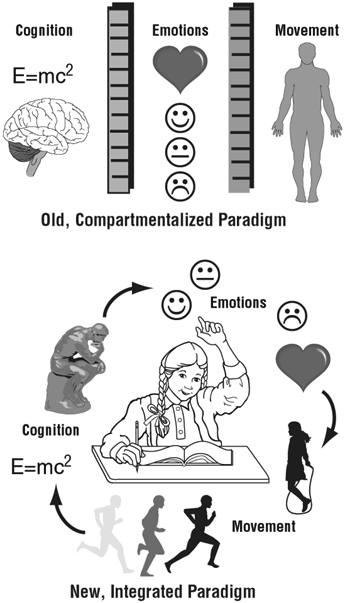
*Teaching with the Brain in Mind, 2nd Edition by Eric Jensen Chapter 4. Movement and Learning (Great read with research annotations – ASCD)*

jensen2005_fig4-2

Make Zones

zoning-graphic-2-550x397

Zone Resources

Fit & Fun Playscapes games stencils

School Playground Stencils

SCHOOL RECESS PARTNERS

Playworks – Why

PBIS Strategies

Whole School Lesson Plan on Recess Respect Lesson Plan

Teaching Recess

Good Example of expectations in different areas of the school

elemroar

Power Point

Success at Recess and Other Unstructured Times

RECESS TOOLS

RECESS PLANNING IN SCHOOLS A Guide to Putting Strategies for Recess into Practice – January 2017 CDC

Supervision Self-Assessment (PDF)f423bbff22619f1b8ce86b9f150c5ed8

Social Stories

Tons of Social Stories

Social Story (Source)

RECESS

After lunch we go to recess.

Sometimes recess is on the playground.

A lot of the children play on the playground equipment.

It is fun to play on the playground equipment.

Everyone should play safely.

When the whistle blows that means it is time to line up and go inside.

I will try to line up as soon as the whistle blows.

This will make my teachers happy.

After I line up I will try to stay in line.

Everyone will be proud of me!

Obsessive Compulsive Disorder in School Aged Children

childpsychiatristdenver-ocd-300x225

Definition

Obsessive-compulsive disorder (OCD) is an anxiety disorder in which people have unwanted and repeated thoughts, feelings, ideas, sensations (obsessions), or behaviors that make them feel driven to do something (compulsions).Often the person carries out the behaviors to get rid of the obsessive thoughts, but this only provides temporary relief. Not performing the obsessive rituals can cause great anxiety. A person’s level of OCD can be anywhere from mild to severe, but if severe and left untreated, it can destroy a person’s capacity to function at work, at school or even to lead a comfortable existence in the home.

OCD affects about 2.2 million American adults, and the problem can be accompanied by eating disorders, other anxiety disorders, or depression. It strikes men and women in roughly equal numbers and usually appears in childhood, adolescence, or early adulthood. One-third of adults with OCD develop symptoms as children, and research indicates that OCD might run in families.

Although OCD symptoms typically begin during the teen years or early adulthood, research shows that some children may even develop the illness during preschool. Studies indicate that at least one-third of cases of adult OCD began in childhood. Suffering from OCD during early stages of a child’s development can cause severe problems for the child. It is important that the child receive evaluation and treatment as soon as possible to prevent the child from missing important opportunities because of this disorder. Source

SYMPTOMS OR BEHAVIORS

  • Unproductive time retracing the same word or touching the same objects over and over
  • Erasing sentences or problems repeatedly
  • Counting and recounting objects, or arranging and rearranging objects at their desk
  • Frequent trips to the bathroom
  • Poor concentration
  • Falling grades
  • School avoidance
  • Anxiety or depressed mood

Reading

OCD At School – AADA of America

Teachers Guide to OCD in the Classroom

Managing OCD Symptoms in School: Strategies for parents and educators – With Great “My Anti -Worry Plan” Activity

OBSESSIVE-COMPULSIVE DISORDER (OCD): RECOMMENDATIONS FOR TEACHERS (2)

Obsessive Compulsive Disorder – NASP

Movie

OCD Kids Movie

For Parents

Helping Children and Youth with Obsessive-Compulsive Disorder (OCD): Information for Parents and Caregivers

Home Management Strategies for OCD

Obsessive Compulsive Disorder in Children and Teenagers

Talking Back to OCD Learn More 

When a Family Member has OCD Learn More

The MIGHTY Visit Site

Freeing your Child from OCD Learn More

Worried No More Learn More


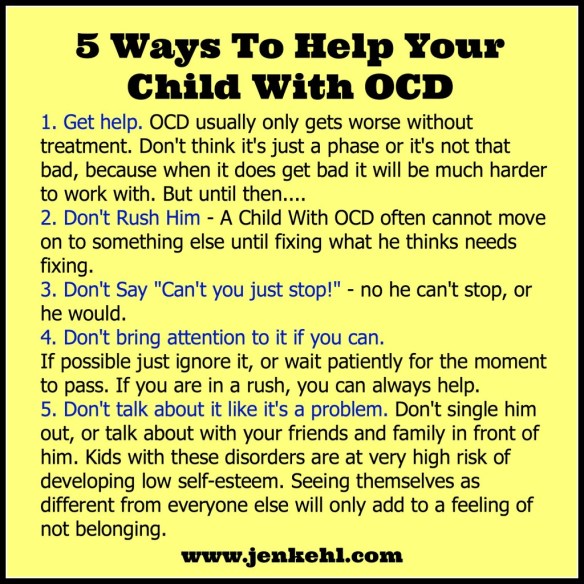
my-son-has-ocd-graphic-1024x1024


More Helpful Links for Kids and Families

The International OCD Foundation Visit iOCDF

Project UROK Visit Site

OCD Education Station Visit Site

Find a Therapist or Clinic Search Now

Online Support Groups

OCD and Parenting Join Up

OCD Support Join Up

OCD Support For Teens Join Up

Everything OCD Visit Facebook Page

Suggested Reading for Kids

Up And Down Worry Hill Learn More

Mr. Worry Learn More

Blink, Blink, Clop, Clop Learn More

What To Do When Your Brain Gets Stuck Learn More


Additional Resources

Wisdo Visit

The OCD Stories Visit

The Secret Illness Visit

Intrusive Thoughts Visit


Self regulation for Kindergarteners

Preschool

Read

Developing Self-Regulation in Kindergarten Can We Keep All the Crickets in the Basket?

Building the Brain’s “Air Traffic Control” System: How Early Experiences Shape the Development of Executive Function

Activities

Refocusing

Clapping Exercise
Refocus the class with a series of claps with a certain pattern. The routine with capture student’s attention and create a shared focus. This exercise can be enhanced with stomps, hand movements focused on fine motor skill development, or increasingly complex rules, depending on the students’ age.

Conducting an Orchestra
This activity requires the use of musical instruments. The teacher will have a long stick or ruler that and will act like an orchestra leader, conducting when they will play their instruments. The teacher will wave the conductors wand quickly or slowly and have students play according to her movements. Then, the teacher will have students override their automatic response by indicating that students should play slowly when she waves the conductors wand quickly, and vice versa.

Drum Beats
For this activity, the students will use drum cues from the teacher to do certain body movements. For example, “When the drums plays, clap or stomp” “When the drum plays slowly, walk around the room slowly” “When the drum plays quickly, walk around quickly”. The teacher will then invert the response instructing “When the drum plays quickly, walk around slowly” When the drum plays slowly, walk around quickly.

Elephant Stampede
The class will get to stamp their feet and make lots of noise in this one, but it is all regulated by the teacher. The teacher
Puts a hand to his ear and says “What’s that I hear?” The class responds by saying “Elephant Stampede!” The teacher then says where are the elephants? I can barely hear them!” The class responds with “Far away!” and begins quietly stamping their feet on the floor to mimic the sound of elephants in the distance. The teacher repeats his lines, adjusting for how close the elephants are, until the herd arrives in the classroom. Now the students can make elephant trumpets and stamp their feet as hard as they can until the teacher begins to quiet them down by saying “Oh good, they’re going away!” The children respond by stamping their feet more softly, and continue to respond to the teacher until the elephant herd has left the building.

Relaxation

Sinking Activity
Tell students to lie on their backs on the floor, their arms by their sides and legs uncrossed, and eyes closed. Tell them (in a soft gentle voice) to imagine that their bodies are very heavy and sinking to the floor. Start to mention different body parts: toes, ankles, wrists, necks, eyelids. Then tell them to imagine that they are laying on a warm beach on a sunny day and that they can hear waves, seagulls, then once they have calmed down they may only sit up and open their eyes. This will help students calm their emotional and refocus.

Count to Ten
The teacher stands at the front of the class and raises both hands above her head, spread open and facing the class. The students raise their hands over their heads, fingers spread, and facing the teacher. The teacher begins counting slowly from one to ten, and at ten lowers her hands to her sides. The class follows until everyone is back in the position they started in.

Drawing
Drawing a picture helps to relax children. Try giving your students a prompt! For example, “draw how you feel right now.” This helps children to recognize their emotions whether good or bad and process them in a healthy manner. Part of self regulation is learning to deal with your emotions in the appropriate manners and this activity sets up a calming environment for kids to learn to do this. Aside from processing emotions, drawing helps children and adults process any circumstance and is very calming to the mind!

Emotion Regulation

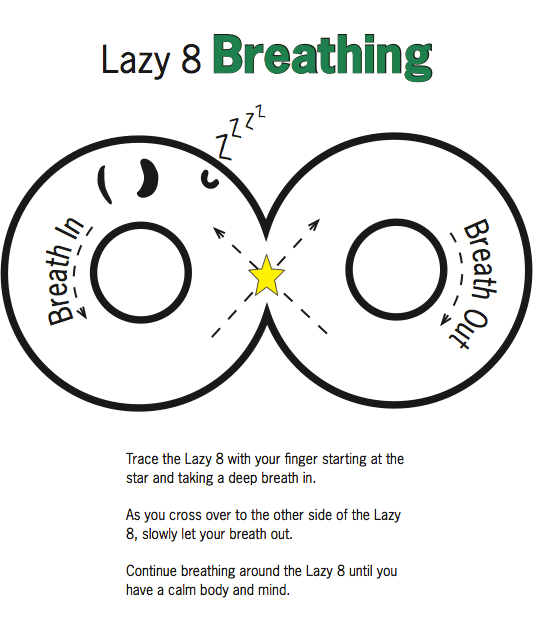
Breathing Square
Have students decorate a square piece of paper that they then glue to a popsicle stick. Explain that this square is to be used when the student feels overwhelmed or frustrated. The square will be divided up into 4 sections representing 4 different steps they are to follow.
1st step: Breathe in while counting to 4
2nd step: Hold breath for four seconds
3rd step: Breathe out for four seconds
4th step: repeat three times

Emotion Regulation Swing-O-Meter
This craft could accompany a lesson aimed at helping students understand, and therefore control, their emotions Swing-O-Meter.

Faces
A craft that will increase students’ understanding of their own emotions, and create opportunities within the classroom for them to evaluate their emotions. Popsicle faces / Other emotion faces

Paper Plate Emotions
Another craft aimed increasing students’ Emotion Regulation Paper Plate Emotions

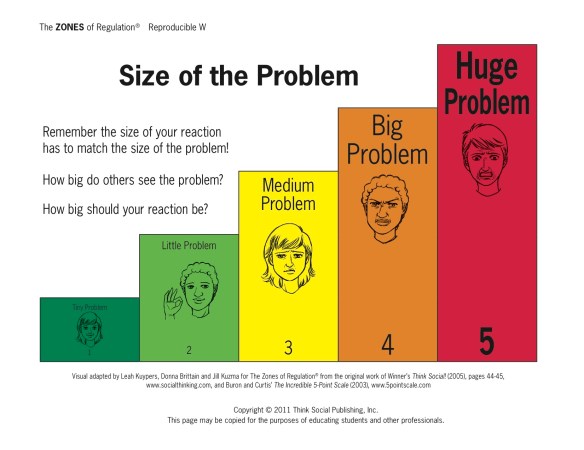
How Big Is My Problem Chart
Post a chart in the classroom that is numbered from zero to five, with zero at the bottom and five at the top. Each number will be colored along a gradient staing at green for level one, and moving to red for level five.
Level Five is red, and labelled Emergency” and refers to only true emergencies such as tornadoes or earthquakes. A grimacing frowny face is drawn next to the description.
Level Four is orange and labeled “Gigantic Problem” and describes something that needs immediate attention from a teacher and can’t be fixed by the student such as getting lost or being injured on the playground. A crying forwny face is drawn next to the descrition.
Level Three is yellow and labelled “Big Problem” and describes something that definitely needs the teacher’s attention such as a fight. A “Charlie Brown” frowny face is drawn next to the description.
Level Two is blue and labeled “Medium Problem” and describes something more important that probably needs a response from the teacher such as not feeling well or lost homework. A somber smiley face is drawn next to the description.
Level One is light green and labeled “Little Problem” and describes a bigger issue such as needing to sharpen a pencil or needing to go to the restroom. A normal smiley face is drawn next to the description.
Level Zero is dark green and labeled “No Big Deal” and describes very small issues such as dropping a pen or a shoelace coming untied. A grinning smiley face is drawn next to the description.
Teachers can ask students to describe the problem level when they have a problem and work towards an appropriate response to it. Students should be reminded that they can use this chart for all of their problems in life to help judge what they should do when trouble occurs.

Further Resources:

  • The Emotional Regulation page on the Kid’s Relaxation website provides a multitude of emotion regulation activities for children.
  • This link will connect you to the blog of a psychologist and mother who specializes in play therapy. She shares activities which help children to become more aware of their emotions.

Impulsivity Reduction

Think or Say?
The teacher will create a list of potential student comments to present to the students. Students will then determine if the comment should be said aloud simply thought. Examples:This exercise is aimed at reducing impulsivity and increasing students’ private speech.
“One of your classmates is having a bad hair day, do you think you should tell them, or keep it to yourself?”
“One of your classmates hurt your feelings, but they do not know that they did this, should you talk to them about it kindly or keep it to yourself?”

Private Speech
Encourage the students to partake in private speech. This is when they think about a situation privately and quietly to themselves. Ask them to think about outcomes that could possibly happen if they make certain choices. Encourage them to really think before speaking and acting.

Follow the Birdie
Two children partner up. One picks up an object such as an erasor and holds it eighteen inches in front of the other student’s eyes. The first student then begins to move the object from left to right and back again. The watching student must follow the object with his eyes only and count slowly. If he turns his head to follow the object he loses his turn and must move the object for the otehr student, who has to follow it himself. Alternatives to left and right can be in an arc, or a figure eight, or a circle. The object must move relatively slowly so that the watcher’s eyes are not strained. Whoever lasts the longest during the time period given wins the game.

Response Regulation

Red Light, Purple Light
This game follows the same concept as “red light, green light”. Using different colors for stop and requires children to regulate their responses and adapt to the change. First assign “go” and “stop” to non-sequential colors (ex: purple and orange). Use construction paper as a visual. Alternate the “stop” and “go” colors. Once the children grow accustomed to the colors and their corresponding meanin, make changes so that children must once again regulate their responses. they have developed the appropriate self regulation for this game.

Head-Toes-Knees-Shoulders
This activities requires that students override an automatic response, and therefore exhibit self-regulation. Begin by having students point to their head, shoulders, knees and toes. Have students touch each body part in a variety of sequences to get accustomed to the game. Then have students override their automatic response by asking students to point to incongruent body parts. For example, tell students “when I say to touch your head, touch your TOES!!” or “When I say touch your tummy, touch your EARS.”
HTKS YouTube clip

The Freeze Game
This game requires music! The teacher will play the music and then when she stops the music the children must freeze and be still as statues in whatever position the froze in. Then the teacher will play a variety of different music. The children must dance quickly to upbeat and fast songs, and they must dance slowly and gracefully to the slow songs. Then when they have gotten the hang of that, switch it up and have them dance slowly to the fast songs and quickly to the slow songs.

The Color Matching Freeze Game
There will be 4 pieces of construction for each student taped to the ground in a square. The teacher will play music and the students will dance—quickly or slowly according to the music. When the music stops playing, the teacher will hold up a piece of colored construction paper and the students have to sit on the same color on the ground.

Stance Contest
2 students stand and face each other in a specific pose (any pose that they choose). When the teacher says “GO” neither student may move, talk, or change facial expression. The first student to do so loses. The teacher can also come up with the poses if she wants so that they have someone to mimic.

Starting Gun
Students will all line up on a starting line. Instructor says “Ready, Set….” and she might say “go” OR another word that sounds like go OR starts with a “g”. EXAMPLE: green! gorilla! snow! crow! blow! grape! gate! The students that make a false start will have to take a penalty step backwards from the starting line. When instructor does say “go” all will run to the finish line

Freeze Pattern Game
Have students get into a certain pattern (ex: circle, square, heart) and have them standing next to a certain person. Then, signal for students change to a different pattern and stand next to a different person. Use different signals for each pattern.

Mirror Game
Kids partner up and take turns making different faces and their partners must imitate them. For an added challenge, students can imitate one another’s’ body movements.

Red Light, Green Light. One child is the stoplight, the other children are the cars. When the stoplight yells “Green light!” the children run towards the stoplight. When the stoplight yells “Red light!” all the children must stop. If a child doesn’t stop, they must go back to the starting line. A popular variation is to include a “Yellow light!” where children must walk instead of run. Excellent for developing self-regulation skills because children must learn to pay attention, follow directions, and wait their turn.

Simon Says. When Simon says, “Simon says jump!” the children must jump. But if Simon only says, “Jump!” and somebody jumps, that person must sit out for the rest of the game. The last person standing becomes the new Simon. Another excellent game for developing self-regulation because children must listen carefully, pay attention, and follow directions.

Dance Dance Dance
The teacher puts on some fun music and then starts to dance. The students have to follow her routine exactly, no matter how wacky. After 30 seconds or so the teacher calls out a students name and that student begins to make up his own dance moves that the rest of the class must follow. The teacher then becomes the judge. Any student she catches not follow the moves exactly has to sit down. Each student should get thirty seconds or a minute to lead the dance before the teacher calls another student to lead.

Peanut Butter Jelly Game
Have the children sit on the floor in a large circle. Choose one ball to be the peanut butter and the other ball will be the jelly. The object of the game is to always throw the peanut butter ball and roll the jelly ball. On start, the child holding the peanut butter ball throws it to anyone in the circle, and the child holding the jelly ball rolls it to anyone in the circle. Whoever receives the peanut butter ball must continue to throw it to someone else, whereas the jelly ball must be rolled. If a player makes a mistake and rolls the peanut butter ball, throws the jelly ball, of if both balls are in front of one player at the same time, then that player is either out of the game or play starts over. Here for original page

Games and excercises adapted from the following resources:
Theatre Games for Young Performers by Maria C. Novelly
Self-Regulation: The Key to Successful Students? Todd Hoffman
101 pep-up games for children by Allison Bartl

Transitions

(From scholastic.com)

When it is time to line up, use this song to help your class remember what to do. Teach them at the beginning of the year, and then just say “Kindergarten, please line up”, and they will begin to sing the song on their own.

Kindergarten Please Line Up (to the tune of Mary Had a Little Lamb)
Kindergarten, please line up,
please line up,
please line up.
Kindergarten please line up
Get ready for the hall.

I will not shove
I will not push.
Will not talk,
Will not pass.
Will not lag behind the rest,
I’ll line up with my class.

One hand on my hip and lip
hip and lip,
hip and lip,
One hand on my hip and lip
I’m ready for a trip.

Busy Bee Transitions
by Alexandra Ziemann

I made a wand and wrapped yellow curling ribbon up the wand. At the top I have yellow ribbon curls coming down, coiled up black pipe cleaners and jingle bells. During transition times I always take out “Busy Bee” and sing our busy bee song. The students know to get on task because if they are they will be touched on the head by busy bees’ magic (the curly ribbon hanging down). They love that they can participate and have fun all the while staying on task. It’s also very easy to remember to take out the wand because during transitions they are always looking for “busy bee.”
Song:
Oh what fun it is to see
A teeny tiny busy bee
Staying on task
Moving right along
And having fun singing this song!

Walking in the Hallways
by Becky Pate

Kindergarten classes make several transitions from place to place each day. To help my students walk quietly and stay focused forward, we sign the alphabet continually until we reach our destination. We use the American Sign Language form.

We also like to play, Monkey See, Monkey Do while walking in the hallways. We whisper this rhyme: Monkey see, monkey do, can you do what I do?I then do some motions with my hands, arms, and or face for the students to copy. The students stay focused and have fun being silly, but quiet as we walk. Note* this also works in other situations such as times we have to wait in line, or anywhere you have a minute or two to fill.

Source

Spelling Strategies

spelling

Spelling can be an area of difficulty for students.

Tried and True

FERNALD METHOD FOR SPELLING INSTRUCTION

Purpose

This spelling method is appropriate for students who have difficulty retaining spelling words and learning to spell exception words. Select words that the student uses frequently in writing.

Procedure

1. Write the word to be learned on the chalkboard or on paper.

2. Pronounce the word clearly and distinctly. Ask the student to look at the word and pronounce the word with emphasis on correct pronunciation.

3. Allow time for the student to study the word to develop an image of it. Depending upon the learning style of the student, different senses are emphasized. A student who learns visually tries to picture the word; a student who learns auditorially says the word; and the student who learns kinesthetically traces the word with a finger. The student studies the word until a picture of the word can be formed in his/her mind.

4. When the student indicates that he/she is sure of the word, erase the word and have the student attempt to write the word from memory.

5. Turn the paper over and ask the student to write the word a second time from memory. In daily writing, any misspelled words are marked out entirely and the correct form is written in its place. When a student asks how to spell a word, the teacher writes the word, while pronouncing it. Students are encouraged to make their own dictionaries from words they have learned or words that are especially difficult for them.

Adapted from: Fernald, G. (1943). Remedial techniques in basic school subjects. New York: McGraw-Hill.

Mather, N., & Jaffe, L. (2002). Woodcock-Johnson III: Reports, Recommendations, and Strategies. New York: John Wiley & Sons.

Source-Information

Spelling Article Links

Five Guidelines for Learning Spelling and Six Ways for Practicing Spelling By: Susan Jones

How to Study Spelling Words: A Spelling Strategy for Students By: Bruce Murray

Computer Assisted Instruction

Spelling City ($30 USD per year)

Sight words apps

Dolch sight word spelling Game

Look, Say, Cover, Write, Check

1. Write the list words in first column.

2. Begin with one word, LOOK closely at the letters to notice the visual details.

3. SAY it and notice the parts to remember.

4. COVER the word and think about how the word looks (visualize it).

5. Say the word softly. WRITE it from memory in the next column.

6. Uncover and CHECK it with the word in the first column.

7. Repeat the process in the last column.

8. If it is spelled wrong in the last column, add the word to the first column again and repeat the process.

literacy-focus-spelling-strategies

For Teachers

Why Teach Spelling?

Printable Dolch Word Lists K-3

Dolch Sight Word Checklist

An Alternative Spelling Assessment For Students With Learning Disabilities

Assessments

Dolch Sight Word Assessment

Diagnostic Spelling Scale

General Principles of Spelling Instruction Even though research and clinical experience indicate that students with reading problems will have a very difficult time learning to spell, it is also clear that instruction can have a significant impact on the development of reading skills. Even though many poor readers may never fully master spelling skills at the highest levels, most can become good enough spellers to make effective use of technology and other spelling aids. In order to provide effective spelling instruction, teachers must have a firm understanding of the ways in which spelling skills develop as well as a strong knowledge of phonology, phonics, orthography, morphology, syntax, semantics.

COORDINATE SPELLING WITH WORD IDENTIFICATION INSTRUCTION. Teach students to spell (encode) the phonetically regular words they are learning to decode in a structured and systematic manner. Teach spelling rules and patterns in coordination with the decoding skills (e.g., teach the rule for doubling s, f, l & z and the -ck for the /k/ sound when closed syllable words are taught).

TEACH SPELLING DIRECTLY WITH GUIDED PRACTICE. Teach spelling patterns, rules, letter-sound associations directly, one skill at a time, with opportunities for guided practice in numerous settings until the skill is well learned.

TEACH ALL LEVELS OF WORD ANALYSIS. Begin with phonemic awareness and include letter sound associations, spelling patterns, onset-rime, rules and morphology.

DISTINGUISH BETWEEN REGULAR AND IRREGULAR WORDS. Always differentiate between regular and irregular words using clear procedures for practicing each. Regular words may be divided into those that can be spelled as they sound (REGULAR) and those that require the application of a rule (RULE WORDS). Students should practice fewer irregular words each lesson than regular. Both should be taught using multisensory strategies.

USE CUES AND MNEMONIC DEVICES. Facilitate recall of skills such as letter formation, letter sound associations, and rules with cues such as pictures, stories, rhymes, gestures, etc.

USE DISCOVERY TEACHING. Use discovery teaching techniques for spelling patterns and rules.

PROVIDE ERROR CORRECTION. Students should be given direct and immediate error correction for spelling errors. The ultimate goal is for the student to independently correct their own errors.

Source
For Parents

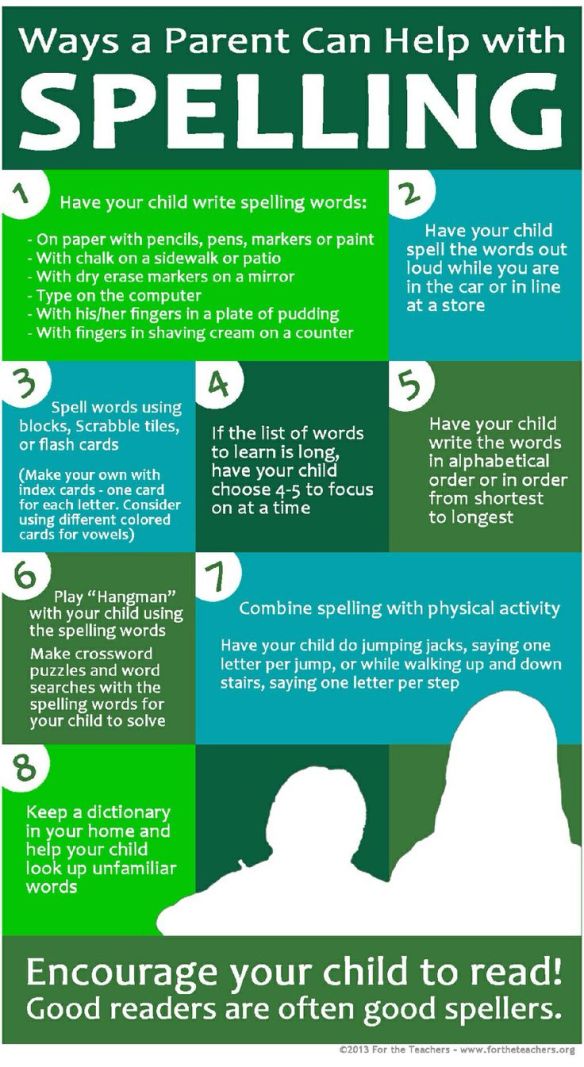
Helping Your Child With Spelling

3869259d2e7055c069a153281befc225

Classroom meetings

high school students with hands up in classroom

Classroom meetings are an effective way to help build classroom community, establish behavioral expectations and norms, as well as explore social issues that need tending to help continue supporting a thriving learning environment.

Class Meeting Guides

CREATING POSITIVE ENVIRONMENTS THROUGH CLASS MEETINGS– Diana Browning Wright

Class Meetings Creating a Safe School Starting in Your Classroom– Ophelia Project

The Classroom Meeting-PowerPoint

Articles

The Power of the Morning Meeting: 5 Steps Toward Changing Your Classroom and School Culture

Promoting Learning by Dr. Marvin Marshall – Classroom Meetings

Class Meetings-Positive Discipline

Practical Activities

Idea Title Grade Description
Weekly Agenda

2-6

An agenda where everyone has a say!
Class Meetings with a Stopwatch

K-6

An easy tip for “keeping things moving” in class meetings.
Speak Up with a Microphone

K-6

A quick idea to encourage only one speaker at a time!
Character Trait Spotlight

K-6

Focusing on positive character traits at class meetings.
“Some Things Are Scary”

2-6

This picture book is an excellent springboard for discussion in a class meeting!
Class Meeting Sign

K-6

An easy sign so that everyone knows when the class meeting is!
A Time to Spotlight Students

K-6

Spotlighting students at class meetings

Source
Visuals to Support Learning

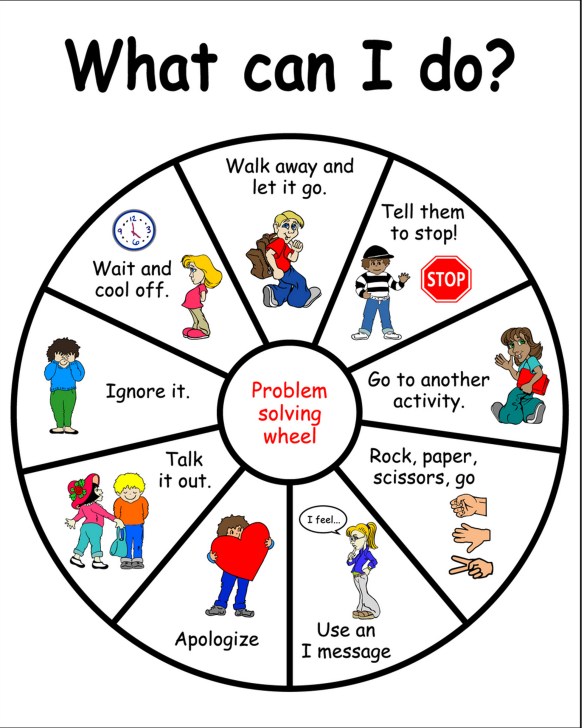
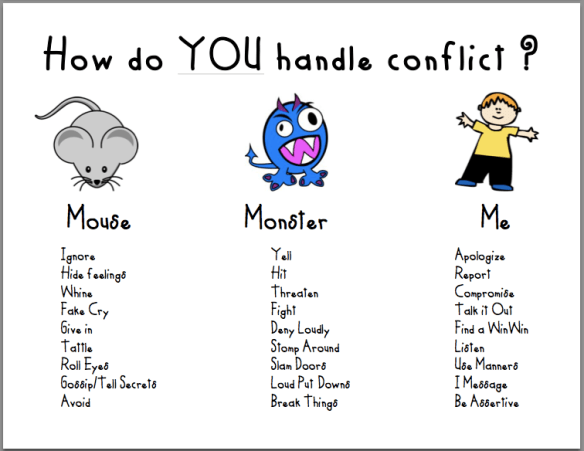
size-of-the-problem

341749_orig

what-can-i-do-conflict-resolution

screen-shot-2014-05-20-at-1-15-45-pm

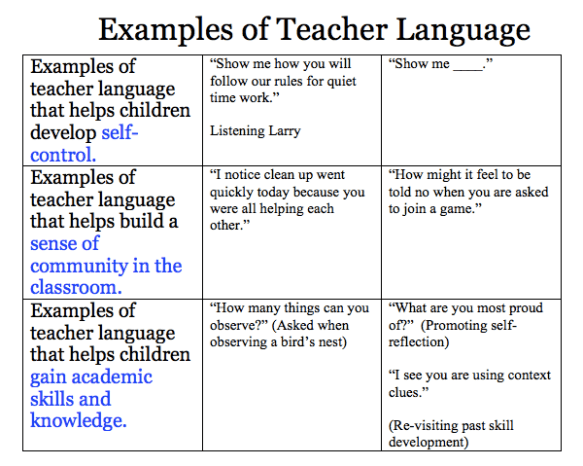
Positive words and intentions are crucial in building a thriving learning community.

“Language actually shapes thoughts, feelings, and experiences.  It produces fundamentally new forms of behavior.”                -Lev Vygotsky

Before you continue reading this post take a minute to read this article: The Power of Our Words by Paula Denton.

Example from the book:

957062_orig

Laughter

Using Humor in the Classroom Laughter has the power to fuel engagement and help students learn By Robert McNeely

Choice

Classroom of Choice by Jonathan C. Erwin Chapter 4. Power in the Classroom: Creating the Environment

Empathy

Building Empathy in Classrooms and Schools

Body Language

Good Body Language Improves Classroom Management Successful Teachers Blend both Verbal and Nonverbal Communication

Teacher Relationships

Improving Students’ Relationships with Teachers to Provide Essential Supports for Learning Positive relationships can also help a student develop socially Sara Rimm-Kaufman, PhD, and Lia Sandilos, PhD, University of Virginia

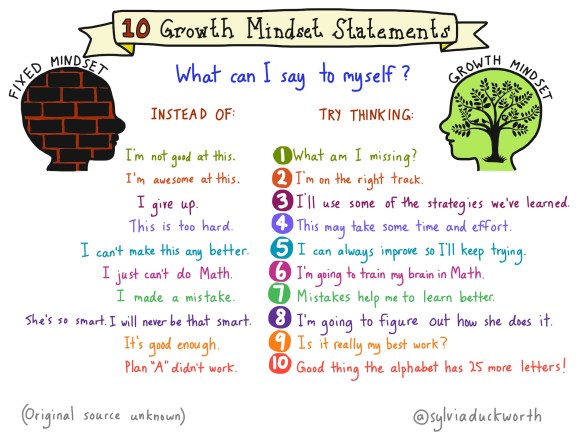
Growth Mindset – Reframing Negative Self Talk

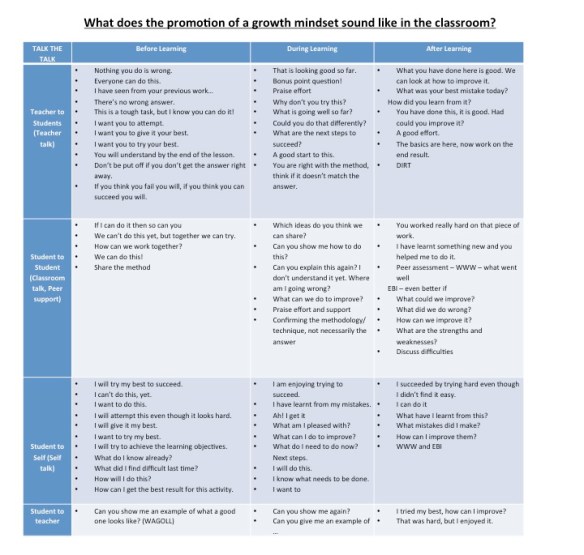
A growth mindset is a belief that your most basic abilities can be nurtured and developed though dedication and hard work. Talent is just the starting point. People with a positive growth mindset create a love of learning that is vital for doing great things. A positive growth mindset will also lend itself to being resilient in the face of setbacks. Failures are seen as learning opportunities to people with a positive growth mindset.

Verses

A fixed mindset is a belief that your basic qualities, like intelligence or talent, are fixed traits. People with a fixed mindset believe that talent makes people successful. Effort is secondary to brains and talent.

4 Ways to Encourage a Growth Mindset in the Classroom

10-growth-mindset-statements

slide04

Programs that support developing positive learning environments

A promising program out of Yale University that helps supports Developing Classroom Culture is called RULER.

RULER is an evidence-based approach for integrating social and emotional learning into schools. RULER applies “hard science” to the teaching of what have historically been called “soft skills.” RULER teaches the skills of emotional intelligence — those associated with recognizing, understanding, labeling, expressing, and regulating emotion. Decades of research show that these skills are essential to effective teaching and learning, sound decision making, physical and mental health, and success in school and beyond.

The RULER Approach to Social and Emotional Learning (SEL) helps build the following skills:

Recognizing: Recognize the emotion of either yourself or of someone else in order to react in the most socially appropriate manner to help resolve the issue. This includes picking up on cues such as facial expression, words, tone, behavior, and one’s own thoughts.

Understanding:  Emotions are often triggered by events that bring upon specific emotions and thoughts. When a child understands more about what is triggering specific emotions, they are more likely to be less reactive. Understanding of emotions helps young children see how emotions affect decisions, behavior and goals. Problem-solving skills are needed to learn how to cope, as well as develop empathy towards others.

Labeling: Labeling emotions is nothing more than connecting different scenarios with a specific emotions, and descriptive words. For example, a child with emotional literacy may use the words inspired, enthusiastic, and thrilled.

Expressing: practicing control, timing, and expression of emotions in appropriate ways helps with communication development for healthy relationships. Students who have difficulties in both labeling and expression tend to not have successful relationships.

Regulating Emotions: Regulation during emotional experiences means organizing and managing the thoughts, emotions and behavior that often develop. Successfully regulated emotions are often prevented, reduced, initiated, maintained, or enhanced (PRIME). Source
PBIS

Positive Behavior Interventions and Supports (PBIS) is a proactive approach to establishing the behavioral supports and social culture and needed for all students in a school to achieve social, emotional and academic success. Attention is focused on creating and sustaining primary (school-wide), secondary (classroom), and tertiary (individual) systems of support that improve lifestyle results (personal, health, social, family, work, recreation) for all youth by making targeted misbehavior less effective, efficient, and relevant, and desired behavior more functional.

Practical Strategies for Common Classroom Issues

Positive Behavior Support in the Classroom: Facilitating Behaviorally Inclusive Learning Environments Terrance M. Scott, Kristy Lee Park, Jessica Swain-Bradway & Eric Landers

Disability Awareness Activities

templequoteforbday_forstory

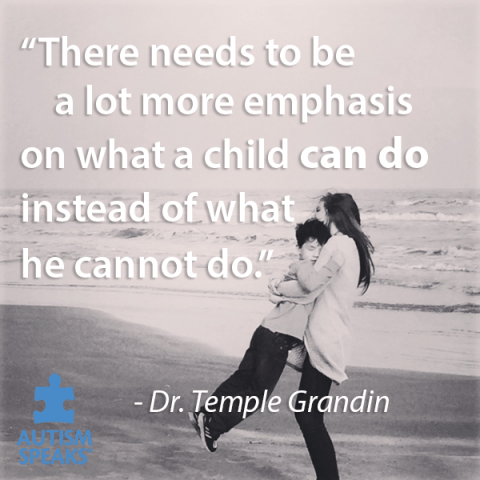
Building awareness with all kids to help them better understand the world around them is a should be a priority for schools. It is quite normal for kids to be curious about other children who may use special materials / equipment or behave/ learn differently. It is our role as parents, teachers, and citizens to support the kids in their understanding of these differences. Social Emotional Learning under the guidelines of CASEL should be a pillar in your school plan.

Philosophy

Special Education: Promoting More Inclusion at Your School

Disability Awareness- Resources

CASEL guide

Materials

Disability Awareness Activity Packet-Activities and Resources for Teaching Students About Disabilities

Understanding Disabilities

Disabilities Awareness Teacher Toolkit

DISABILITY 101: Increasing Disability Awareness and Sensitivity

Teacher’s Reference Book – Special Stories for Disability Awareness: Stories and Activities for Teachers

by Mal Leicester, Jane Dover (Contributions by)

Parenting resources

Disability Awareness: 10 Things Parents Should Teach Their Kids About Disabilities

Teaching Your Child About Peers With Special Needs

walk a mile in their shoes (Bullying Awareness)

Books

The AUTISM ACCEPTANCE BOOK

STARABELLA NARRATED PICTURE BOOKS WITH MUSIC (Ages 2-8)

Elementary Books

“Andy and His Yellow Frisbee”  by  Mary Thompson   Pre-k -3rd
“Be Good to Eddie Lee ” by Virginia Filling   Pre-k -3rd
“Arnie & the New Kid ” by Nancy Carlson   Pre-k -3rd
“Danny and the Merry-go-Round” by Nan Holcomb   Pre-k -3rd
“Let’s Talk about It” by Jennifer Moore-Mallinos   Pre-K – 3rd
“Leo the Late Bloomer” by Robert Kraus   Pre-k -3rd
“Fair and Square” by Nan Holcomb   1st – 2nd
“I’m like You, You’re like Me” by Cindy Gainer   1st – 2nd
“We can do it!  by Laura Dwight   1st – 2nd
“Rolling Along: The story of Taylor and his Wheelchair”  by Jamee Heelan   1st – 5th
“Adam and the Magic Marble”  by Adam and Carol Buehrens   2nd – 6th

Middle and High School Disability Awareness Book Review

are you alone on purpose?” By Nancy Werlin. Allison and Adam are twins but Adam has Autism and Allison is gifted. Their parents start going to synagogue and there they meet Harry, the Rabbi’s son, who is a bully and very mean to Adam. When Harry is injured and ends up in a wheelchair he becomes more vulnerable and Allison and Harry become friends. This is a moving story about learning about disabilities but toward the end there are a few cuss words. The story itself is marvelous, but due to some harsh language it is more for high school students.

Don’t Stop The Music by Robert Perske. This novel is exciting and a fun adventure that teaches about physical disabilities and perceptions of able-bodied individuals toward people with disabilities. It has a crime mystery imbedded in a disability awareness book. This book would be wonderful for middle school students as well as young high school students.

head above water”  by S.L. Rottman. This novel is about a 16-year-old girl with an 18-year-old brother with Down Syndrome. Their mother works two jobs to make ends meet and therefore Skye takes on most of the caretaking activities with Sunny. This story highlights how it is having a sibling with a disability. Skye has her first boyfriend and having a brother who she needs to take care of gets in the way of her teenage life. There is some serious storyline as her new boyfriend pressures her to have sex and almost rapes her. It is wonderful how Skye defends herself and sticks up for what she believes in, however, this book would be appropriate for high school only due to the mature storyline.

Petey” by Ben Mikaelsen. This novel examines the notion that people with physical disabilities are often assumed to have cognitive disabilities when they often do not. This story starts in the early part of the 1900s and follows Petey Corbin though living in an institution and then a nursing home. It is a delightful journey that clearly shows how non-disabled people often are frightened of people with disabilities until they get to know them. It is a particularly good book for boys and is appropriate for both middle and high school students.

Rules” by Cynthia Lord. This is a Newbery Honor Book and Schneider Family Book Award winner. The story follows a brother with autism and a sister who shares a lot of responsibility for teaching her bother the rules of getting along in a world that does not always have compassion and understanding for someone with autism. Catherine creates rules to help David understand how to live in the world. Catherine also learns a few lessons about other disabilities. This is an excellent book for middle and high school alike.

Views from our Shoes” Edited by Donald Meyer. This is a compilation of forty-five (45) short narratives of siblings of children with disabilities and how they view living with their siblings.
It is a nice view from children as young as four to as old as eighteen. This book is appropriate for middle and high school students.

Wish on a Unicorn” by Karen Hesse. This novel uses imagination and wishes to explore the dreams of children living in poverty with a sibling with a disability. The relationship between the children and how protective they are of their sister with a cognitive disability is heart warming. It would be an easy novel to do writing activities with. What would you wish for if you found a unicorn? How would you handle a bully? This story lends itself to middle and high school students.

The Summer of the Swans” by Betsy Byars. Newberry Award Winner. This novel tells the story of a family that includes a boy with a cognitive disability. This is a short book that easily shows the family dynamics and how it is to be a sibling of a child with a disability. This is a good book for middle school level.

SOURCE

Loose Things and Play

d91eeecb01866513988fd0969251ee13

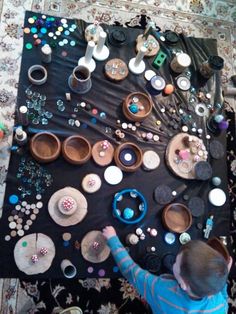
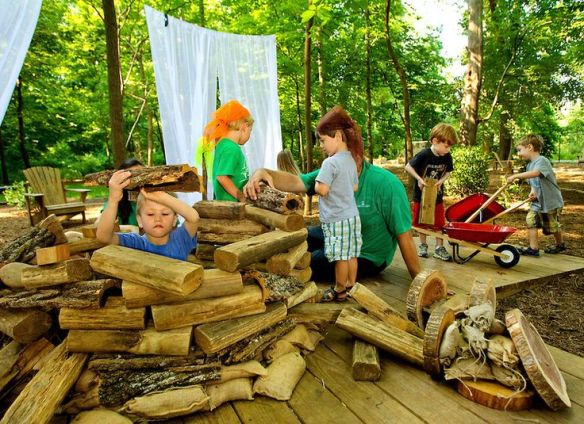
I have always noticed when my kids have a novel nondescript object (stick, box)  to play with it tends to capture  their imaginative states for longer periods of time. Living by the beach both my kids seem to find driftwood, shells, sticks and existing sand castle, holes, and sand mounds to play in and around for hours on end. This is what perked my interest in the idea of what I would later find to be labeled as the “Theory of loose parts”.

Read this Article First- the-theory-of-loose-parts

Then this more serious article by Ruth Wilson, Ph.D.

Why Children Play Under the Bushes

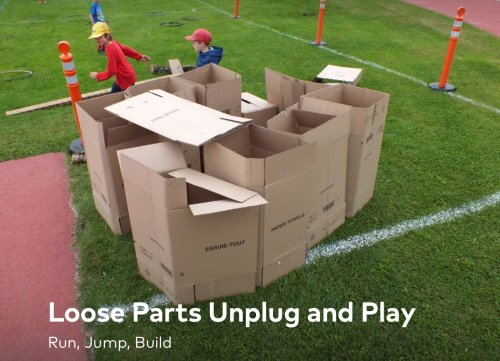
The theory of “loose parts” first proposed by architect Simon Nicholson in the 1970’s has begun to influence child-play experts and the people who design playspaces for children in a big way. Nicholson believed that it is the ‘loose parts’ in our environment that will empower our creativity.

loose-parts

Blogs reviewing the power and scope of Loose Parts.

THE THEORY OF LOOSE PARTS

Loose Parts Outside for Adventurous Play!

10 Reasons to Love Loose Parts

Loose parts storage for playgrounds

theory of loose parts

THE THEORY OF LOOSE PARTS: THE RIGHT TO BE CREATIVE


homemade-playdough-recipe-and-play

Resource materials/ readings

loose-parts-manualloose-parts-by-schemaloose-parts-manual

loose-parts-by-schema

Book- Loose Parts: Inspiring Play in Young Children

Article- Children’s Outdoor Play & Learning Environments: Returning to Nature

7b1261ffe8c268533d10f8b84a38c718


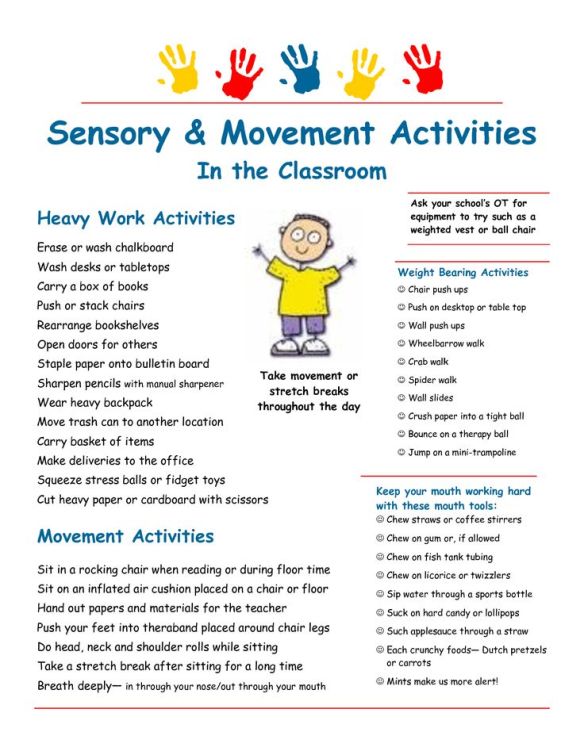
Occupational Therapy Strategies

https://youtu.be/k76ETm50sCM

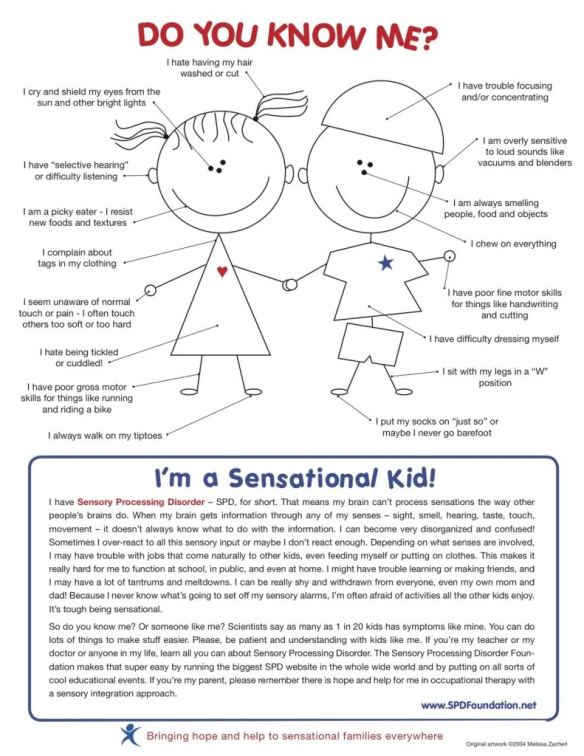
Some kids need extra practice and strategies to access the learning environment. Occupational Therapists have shown me a multitude of these tips to help with student learning. Here are some resources:

Strategy Links:

Parent-Teacher Intervention Checklists

Parent/ Teacher Checklist/ Screening:

Manuals:

1164f06308387345f61dfa7f392160d8

shoes-for-kids-with-sensory-processing-disorder-wherever-you-go-go-with-all-your-heart-the-seeds-of-3