Bullying is characterized by aggression used within a relationship where the aggressor(s) has more real or perceived power than the target, and the aggression is repeated, or has the potential to be repeated, over time. Bullying can involve overt physical behavior or verbal, emotional, or social behaviors (e.g., excluding someone from social activities, making threats, withdrawing attention, destroying someone’s reputation) and can range from blatant aggression to far more subtle and covert behaviors. Cyberbullying, or bullying through electronic technology (e.g., cell phones, computers, online/social media), can include offensive text messages or e-mails, rumors or embarrassing photos posted on social networking sites, or fake online profiles.
Source: Dear Colleague Letter: MS Word (91KB) | PDF (1.4MB)
As people come in go I am reminded of how alike we really are in so many different ways. This feel good post will walk you through Gratitude, Compliments, and Commonality of People by the good folks at Soul Pancake.
SoulPancake is the world’s most recognized positive and inspiring media and entertainment company. We create smart, uplifting, meaningful, shareable content targeted to the Optimistic Millennial. In the past three years, our digital, television, and branded entertainment teams have created 85+ hours of content amassing 200M+ video views. SoulPancake was recently named one of Fast Company’s Top 10 Most Innovative Video Companies of 2015.
Students can be motivated to improve classroom behaviors if they have both a clear road-map of the teacher’s behavioral expectations and incentives to work toward those behavioral goals. This modified version of Check-In/Check-Out (CI/CO) is a simple behavioral intervention package designed for use during a single 30- to 90-minute classroom period (Dart, Cook, Collins, Gresham & Chenier, 2012). The teacher checks in with the student to set behavioral goals at the start of the period, then checks out with the student at the close of the period to rate that student’s conduct and award points or other incentives earned for attaining behavioral goal(s).
First Step: Make a behavior report card for your student needing extra TLC.
Procedure. During any class session or other evaluation period when CI/CO is in effect, the teacher follows these 3 steps:
Check-In. At the start of the class session, the teacher meets briefly with the student to review the behavioral goals on the Behavior Report Card and to provide encouragement. The teacher also prompts the student to set a behavioral goal on at least one of the target behaviors (e.g., “Today I will not leave my seat once without permission.”).
Monitoring/Evaluation. During the session, the teacher observes the student’s behaviors. At the end of the session, the teacher rates the student’s behaviors on the Behavior Report Card.
Check-Out. At the end of the class session, the teacher again meets briefly with the student. The student reports out on whether he or she was able to attain the behavioral goal(s) discussed at check-in. The teacher then shares the BRC ratings. If the student has earned a reward/incentive, the teacher awards that reward and praises the student. If the student fails to earn the reward, the teacher provides encouragement about success in a future session.
Homework usually falls into one of three categories: practice, preparation, or extension. The purpose usually varies by grade. Individualized assignments that tap into students’ existing skills or interests can be motivating. At the elementary school level, homework can help students develop study skills and habits and can keep families informed about their child’s learning. At the secondary school level, student homework is associated with greater academic achievement. (Review of Educational Research, 2006)
How Much Homework Per Day is Optimal? What the Research Says…
Kids do what we model for them. This commercial is an extreme representation of bad role modeling called “Children See. Children Do.” It does represent how our behavior as adults model behavior for our children. (VIDEO is not for the squeamish).
Resilience is a dynamic process wherein individuals display positive adaptation despite experiences of significant adversity or trauma. This term does not represent a personality trait or an attribute of the individual (Luthar et al., 2000; Masten, 1999; Rutter, 1999, 2000). Rather, it is a two-dimensional construct that implies exposure to adversity and the manifestation of positive adjustment outcomes. Source
Life can be challenging and may include many stressful situations. Parents and children can feel overwhelmed by different things at different times like:
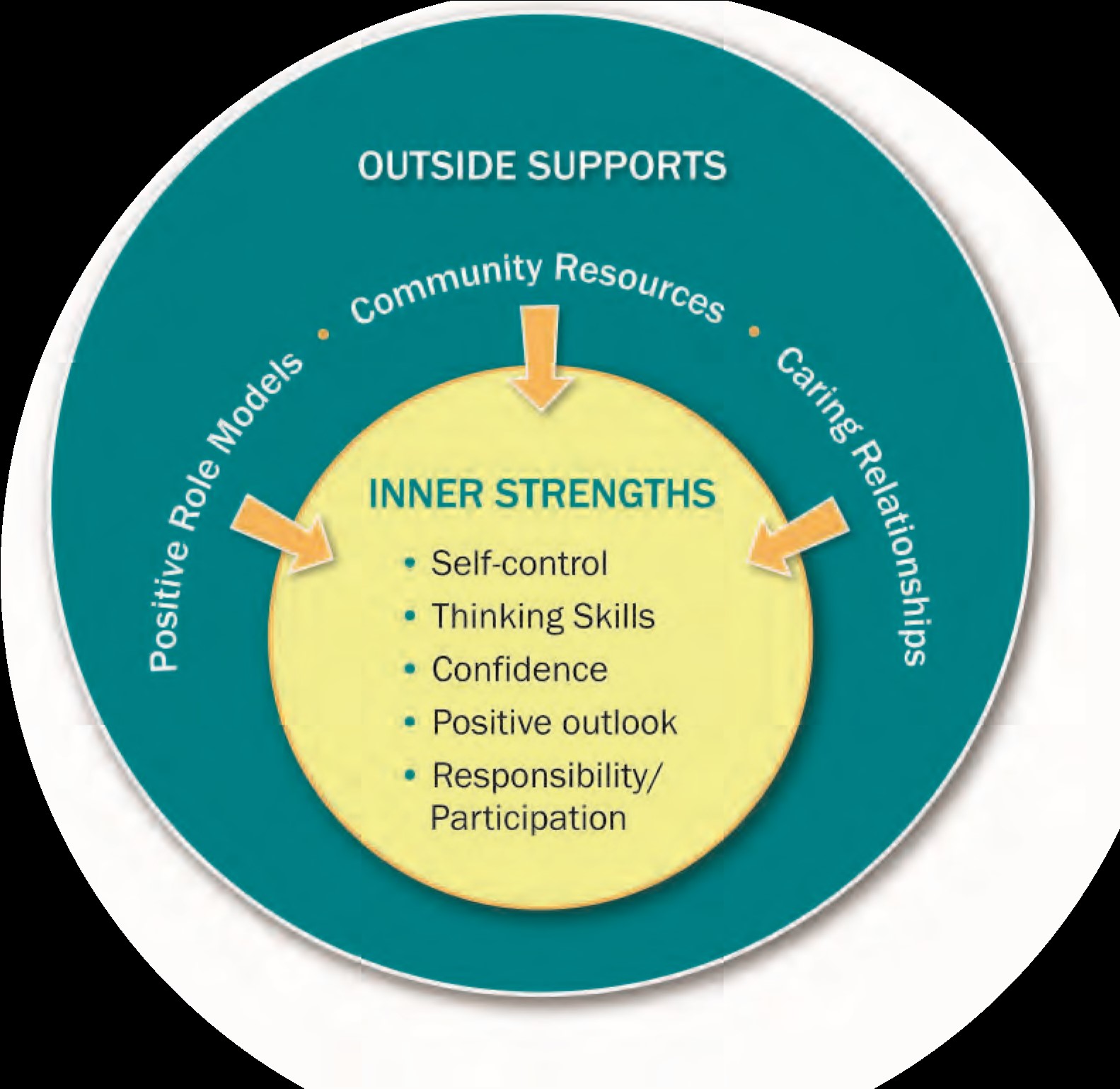
In times of need kids may need outside and inside supports:
Focus on developing multiple facets of developing a child’s sense of self in the world.
Wanting to be a good father, I try to keep my awareness about my kids’ feelings in the forefront of my thoughts. My son had a tantrum the other day and we started talking about how he felt to work through why he was upset. Afterward I started thinking about different experiences I had growing up with feelings. How I might have benefited more from a better coping skills in difficult situations with a more indepth understanding of feelings and what to do when adversity strikes.
Reflective practices and teaching go hand in hand. Teachers/ educators are very aware of their strengths and areas to improve. Kids tend to help us realize these areas in real time as we work through our day. The best strategy oftentimes is to address, adjust and move on. In that spirit, I have collected a few articles to read.
The following Carl Rogers quote is for my counseling and school psychologist colleagues.
Can I be strong enough as a person to be separate from the other? Can I be a sturdy respecter of my own feelings, my own needs, as well as his? Can I own and, if need be, express my own feelings as something belonging to me and separate from his feelings? Am I strong enough in my own separateness that I will not be downcast by his depression, frightened by his fear, nor engulfed by his dependency? Is my inner self hardy enough to realise that I am not destroyed by his anger, taken over by his need for dependence, nor enslaved by his love, but that I exist separate from him with feelings and rights of my own? When I can freely feel this strength of being a separate person, then I find that I can let myself go much more deeply in understanding and accepting him because I am not fearful of losing myself. (1961, p.52.)
Rogers, C. R. (1961), On Becoming a Person. Boston: Houghton Mifflin.
A big player in psychology is Martin Seligman who wrote Authentic Happiness (2002) which brought positive psychology into the mainstream.
In Authentic Happiness, Seligman describes a compellingly simple model of happiness based on three pathways:
Positive emotion – leading to a pleasant life
Flow – leading to an engaged life
Purpose – leading to a meaningful life
In short, the Authentic Happiness model suggested that you can achieve happiness in your life by pursuing one or more of these three pathways. This means that even if, for example, you don’t experience much positive emotion in your life, you can still be happy by doing activities which engage or absorb you fully, or by finding meaning in life by using your strengths in service of something larger. This conclusion was probably quite a relief to Seligman, who freely acknowledges in the book that until relatively recently he himself had been a bit of a grouch.

Santa Cruz County Office of Education just sent this to me and I think it is a very good resource for receiving and supporting kids that have experienced trauma.
Trauma-Informed Classrooms: What Can Teachers Do?
Here are some classic symptoms of exposure to trauma, and it is safe to assume if a student is in foster care trauma occurred.
Impulsivity—–Memory and focus issues—–Hypersensitivity to stimulation—–Emotional reactivity
Along with referring children to the appropriate school and community resources, such as counseling, social services, etc., there are many things teachers can do to assist these students in the classroom, such as:
Learn about the effects of trauma so that you can spot trauma symptoms when you see them.Understand that a trauma trigger—something that reminds the child of a traumatic event—may send that child into a fight, flight, or freeze response (aggression, running away, or withdrawing). When a child seems to be having a difficult time, ask, “What’s happening for this child? ” rather than “What is wrong with this child?” This simple mental switch may help you realize that the child has been triggered into a fear response.
Make a meaningful connection with the child. Children heal in the presence of relationship. An important part of working with students with trauma history is just showing up and being there no matter what.
Focus on children’s positive behaviors and efforts, and offer specific praise whenever you can. Connect before you redirect. What you focus on, you will get more of.
Provide structure and predictability– As much as possible, maintain a predictable routine and schedule. Write the day’s agenda on the board and structure transition times. Give a heads-up before loud noises like a fire drill or lights going out for a video.
Understand that children who have experienced trauma may be younger developmentally than they are chronologically. (While you wouldn’t be surprised by a tantrum from a 3-year old, you might be surprised by that same behavior in an eight year-old. But developmentally, this eight year-old might be more like three.) It may help to think younger.
Find out what the child needs to feel safe, both physically and emotionally. This might be:
A special place they can go when they’re feeling overwhelmed (for example, a peace corner in the classroom)
A signal you develop with the child to let you know when they’re feeling overwhelmed
A technique that you teach them for self-calming
Create opportunities for children to make choices. This helps them develop a sense of control and overcome the chronic feelings of powerlessness that can result from experiencing trauma and violence.
Model, teach, and practice self-regulation with children. Breathing techniques, stretching or other moving exercises, and sensory calming tools (such as silly putty, stress balls, chew tips for pencils) can help children learn to calm themselves.
Help children cultivate their strengths and interests in both academic and nonacademic arenas (such as martial arts, drama, athletics, music) to help them cultivate a sense of self-confidence and mastery.
Respect the child’s confidentiality. Share information about the child’s status only with appropriate people and only when necessary. And always remember your role as a mandated reporter.
Center on the Developing Child, Harvard University, INBRIEF: Executive Function: Skills for Life and Learning. Plus other resources available at developingchild.harvard.edu
Center on the Developing Child, Harvard University, INBRIEF: The Science of Early Childhood Development.
Child Safety Commissioner, State of Victoria, 2007. Calmer classrooms: A guide to working with traumatised children. ocsc.vic.gov.au
Child Trauma Academy, Surviving Childhood: An Introduction to the Impact of Childhood Trauma, childtraumaacademy.com. Plus other resources available at this website and www.childtrauma.org.
Massachusetts Advocates for Children (2005) Helping Traumatized Children Learn.
National Child Traumatic Stress Network, Trauma Facts for Educators, 2008. Nctsn.org
National Child Traumatic Stress Network, Psychological and Behavioral Impact of Trauma: Elementary School Students, 2008. (Also preschool, middle school, high school versions).
National Scientific Council on the Developing Child (2005). Persistent Fear and Anxiety Can Affect Young Children’s Learning and Development: Working Paper #9. http://www.developingchild.net
Working with children who have experienced trauma can be difficult. It may bring up frustrations, grief and loss issues, fears, and other strong emotions, or it may trigger a teacher’s own trauma issues. Getting help and support around the challenges of working in the classroom is important for anyone who works with children who have experienced trauma.
Lastly, Trauma can be defined as both “Capital T Trauma” and” lower case t trauma” (complex and/or developmental trauma). Big T Trauma usually means large, and sometimes, singular life threatening events or witnessing extreme circumstances; Often the type of event associated with traditional PTSD. Small t trauma can be an accumulation of experience over long periods of time in distressful or neglectful contexts or family systems (read poverty, lack ofan adequate care-giver, emotionally abusive environment, etc.). Either type of childhood experiences can lead to the same symptoms and need for increased sensitivity and safety.
Brought to you by the Santa Cruz County Office of Education and the Foster Youth Services Program in Collaboration with Partners from The Foster Youth Services Local Advisory Board – Particularly Santa Cruz County Children’s Mental Health and Cabrillo College’s Foster and Kinship Care Education Program.
Some videos on Trauma Informed Practices in Schools
• Children, Violence and Trauma—Interventions in Schools
• Modules on creating trauma informed care in schools, Madison Metropolitan School
District. There are 10 modules, here are a few of them:
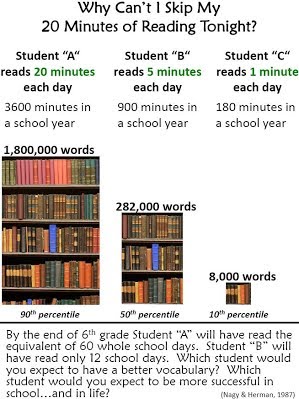
Obviously from the name of my blog I am a proponent in building momentum towards positive outcomes for kids. When I was learning to read in elementary school it was laborious and boring at first. Then as time went on I discovered the Tin Tin Series of comics and have loved reading ever since.
When I sit in meetings talking about certain students who struggle with their reading I often ask if they have books that are for fun and leisure around to practice with at home for down time. Quite often the answer is kinda. So, I think it is a worthy pursuit to find those interesting books, comics, and magazines to build that inertia of reading practice.
California recently adopted Transitional Kindergarten (TK).
TK is the first year of a two-year kindergarten program that uses a modified kindergarten curriculum that is age and developmentally appropriate. Pursuant to law, EC 48000(c), a child is eligible for TK if a child will have his or her fifth birthday between September 2 and December 2 (inclusive).
Behavioral adjustments are a natural phenomena with entering Kindergarten. It is especially so for our TK kiddos.
The dream team from the University of South Florida Rochelle Lentini and Lise Fox have developed a great simple to use Guide to making visual supports.