More COVID 19 Family and Educator Resources

Family/Educator Resources

Social-Emotional Support for Students

Social Stories

  • The Yucky Bug – Link
  • My Coronavirus Story – Easterseals – Link
  • Time to Come In, Bear: A Children’s Story about Social Distancing – Link
  • YouTube Channel with various social stories – Link
    • The New Rules of Keeping My Body in the Group and Out of the Group
    • The Rules of Wearing a Mask
    • Rules! Rules! Rules! Rules for Learning Online!
    • When My Parents are Working From Home
    • My Home is My School
  • Video Chatting – A New Way to Communicate Link
    • Social story to describe video chatting, related emotions, and conversation starters

Social-Emotional Learning 

  • Social Thinking – Free Stuff to Use and Home and School – Link
    • Free resources on social skills and how to teach them! 
      • Read Aloud Books and Thinksheets
      • Video Lessons
      • Free Articles 
      • Free Webinars and Aha! Moments to Teach or Core Concepts and Products
    • New added resources each week!
  • Second Step Social-Emotional Learning Curriculum – Link
    • Free social-emotional learning resources for mental health professionals, educators, and parents to support skill-building for themselves and/or students 

Coping – Parent and Staff Guides

  • Large-Scale Natural Disasters: Helping Children Cope – Link
    • Handout – How to support children
  • Parent/Caregiver Guide to Helping Families Cope with the Coronavirus Disease 2019
  • Age-Related Reactions to a Traumatic EventLink
  • Supporting Children During Coronavirus (COVID19) – Link
  • Coping in Hard Times: Fact Sheet for Community Organizations and LeadersLink
  • Coping in Hard Times: Fact Sheet for Youth High School and College AgeLink
  • Coping in Hard Times: Fact Sheet for Parents – Link
  • Pandemic Flu Fact Sheet: A Parents’ Guide to Helping Families Cope with a Pandemic Flu
  • Helping Children Cope with Changes Resulting from COVID-19
  • Anxiety: Helping Handout for School and Home – Link
  • Depression: Helping Handout for Home – Link
  • Sleep Problems: Helping Handout for Home – Link
  • Addressing Grief – Link
    • Brief Facts and Tips, and Related Resources
  • Grief: Helping Handout for School and Home – Link

Healing After Disasters

  • PFA: Parent Tips for Helping Adolescents after Disasters – Link
  • PFA: Parent Tips for Helping Infants and Toddlers after Disasters – Link
  • PFA: Parent Tips for Helping Preschool-Age Children after Disasters – Link
  • PFA: Parent Tips for Helping School-Age Children after Disasters – Link
  • After a Crisis: Helping Young Children Heal – Link

Educational Activities and Supports

Lessons/ Activities

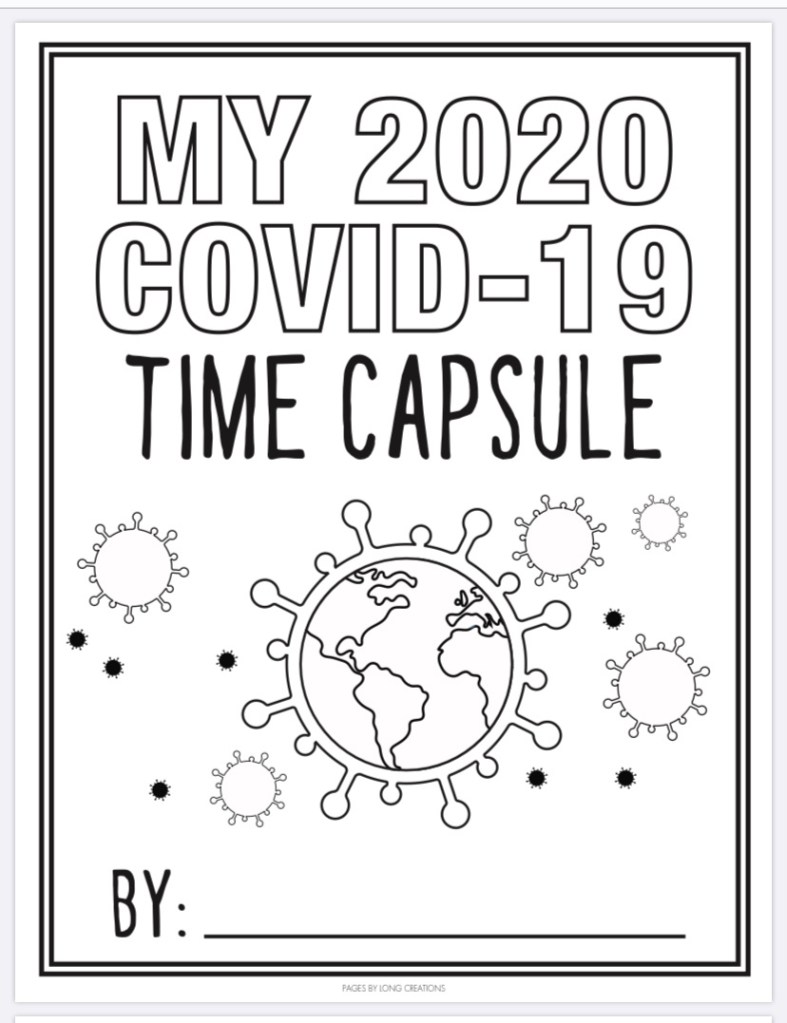
  • My 2020 COVID-19 Time CapsuleLink
    • Printable activity book for kids!
  • Simple Activities for Children and Adolescents – Link
  • Seesaw – Remote Learning – Link
    • Trainings/PD and Resources
  • BrainPOP – Remote LearningLink
    • Lessons and Activities for various subjects
  • Epic! – Remote Learning Link
    • Parent and educator access
    • Books, learning videos, quizzes and more

Teaching Students about Coronavirus – Videos and Fact Sheets

  • Coronavirus Outbreak: How to protect yourself – Kids Learning Cartoon – Dr. Panda Tototime – Link
  • What is Coronavirus? Coronavirus Outbreak  – The Dr. Binocs Show – Peekaboo Kidz – Link
  • Talking to Children About Coronavirus: A Parent Resource
    • English
    • Spanish
    • Amharic, Chinese, Korean, French, Vietnamese, Bahasa, and Udu available on:

Parent/Guardian Distance Learning Supports

  • Parent Guide – Creating a Home Learning Environment (Handout) – Link
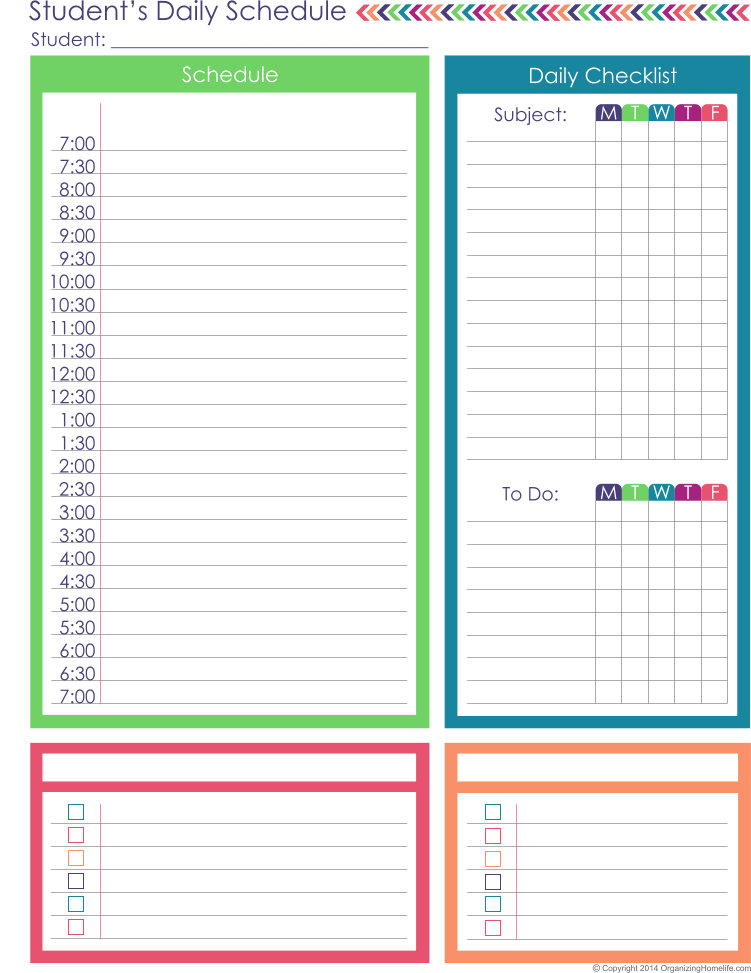
  • Daily Schedule (Blank, Printable)Link
  • Engagement and Motivation: Helping Handout for Home – Link
  • Using Praise and Rewards Wisely: Helping Handout for School and Home – Link

Self-Care for Adults

  • Free Guide to Living with Worry and Anxiety Amidst Global Uncertainty – Psychology Tools (Adults) – Link
    • Offered in many languages!
  • Self-Care: Dangers of “motivational” pressure – Link
  • Staff ResourcesLink
    • Self-Care Strategies, Meditation and Mindfulness, Free Exercise Opportunities, Arts and Entertainment, and Free Educational Opportunities!
  • Teacher Survival Tips – Dealing with Physical Distancing (Short Handout)Link
  • Care For Your Coronavirus Anxiety ToolkitLink
    • Online toolkit/website with information and activities (e.g., meditations) to address anxiety
  • That Discomfort You’re Feeling is Grief  – Harvard Business Review Article Link
  • Teacher NewsletterLink
    • Tips for Managing Stress and Anxiety (for you, students, or parents)
    • Talking about COVID-19 With Students
    • Examples of Child-Friendly Language You Can Use about COVID-19
  • FACE COVID – How to respond effectively to the Corona crisis (e-book) – Link
  • Wellness: 6 tips for taking care of yourself during this stressful time – Link
  • Taking Care of Yourself – Link
  • Coping with the COVID-19 Crisis: The Importance of Care for Caregivers – Tips for Administrators and Crisis Teams – Link
  • Care for Caregivers: Tips for Families and Educators – Link
  • Support for Teachers Affected by Trauma (STAT) Training Program Link
    • Geared toward pre-k through 12th grade teachers
    • Five online modules that explore the concepts of secondary trauma, risk factors associated with susceptibility to STS, the impact of STS across multiple life domains, and tangible self-care skills.
    • Self-paced training 

Distance Learning Supports (Teachers/Staff)

  • Learning and Teaching Online and From HomeLink
    • Expert advice, tips, and resources from Connections Academy online school educators
  • Using Praise and Rewards Wisely: Helping Handout for School and Home – Link
  • Anxiety: Helping Handout for School and Home – Link
  • Grief: Helping Handout for School and Home – Link
  • Seesaw – Remote Learning – Link
    • Trainings/PD and Resources
  • BrainPOP – Remote LearningLink
    • Lessons and Activities for various subjects

Addressing Harassment and Bullying

  • US Department of EducationLink
    • Letter and resources to address stereotyping, harassment and bullying
  • Countering Coronavirus Stigma and Racism: Tips for Teacher and Other Educators – Link
  • Countering Coronavirus Stigma and Racism: Tips for Parent and Caregivers

Crisis Supports

Suicide

  • Comprehensive School Suicide Prevention in a Time of Distance Learning – Link
  • Preventing Youth Suicide: Tips for Parents and Educators
  • Suicidal Thinking and Threats: Helping Handout for Home – Link

Emergency Management and Response

  • Readiness and Emergency Management for Schools (REMS)Link
    • Guidance, resources, tools, and training 
  • The PREPaRE Model, Crisis Intervention, and Global Pandemic –

Source

Source found on FaceBook: Copy of Family and Educator Resources for COVID-19 (PDF)

Family Conflict Resolution Strategies

In this time of COVID-19, we are spending nearly every waking hour quarantined with our whole family. Conflicts are surely inevitable. Here are some ideas and resources to work through your home conflicts.

Articles

Resolving family conflict-From Beyond Blue (Very Good)

Family conflicts: types and how to solve them

The 8 Keys to Resolving Family Conflict

Create Family Unity

Activity Books

THE BIG BOOK OF CONFLICT-RESOLUTION GAMES

10 Lessons for Teaching Conflict Resolution Skills

The Conflict Management Skills Workbook

One Sheet tips

triggers

Relationship Conflict Resolution – Strategies

Restorative Questions for Family Conflicts

5-tips-for-dealing-with-family-conflict-rgb

Miscellaneous

This collection of links caught my eye because the activities help to deepen the understanding of your individual family.

Parenting and Family Life

  •  7 Days of Deliciousness7 Days of delicious, home-made dinners, all under 8 ingredients and 15 minutes of prep time.  Great for new caregivers, new parents, or anyone facing a particularly grueling week. Inclues menu plan, recipes, and a shopping list
  • Would You Rather: Here’s a fun way to help your children with VALUES CLARIFICATION. Use it while you are in the car, waiting in line, or just enjoying a quiet moment together.
  • Problem Solving for Kids: Here’s a nice worksheet to help you teach your child how to work through tough situations.
  • You can use this Family Schedule Worksheet to help organize your new routine and post it for everyone to see.
  • Family Night Cards: Print out this handy set of activity cards to make planning family night a breeze.  There are 10 pre-filled cards to get you started as well as a set of blank cards to hold all your family favorites!
  • Family Values and Rules:  Here is a great idea for your next family night – create a set of values and rules that are a unique reflection of your family.  This worksheet makes the process run smoothly.
  • The Four Styles of Communication: Learn about effective communication.
  • Family conflict resolution worksheet: Try out this worksheet the next time you are faced with a family fight.
  • Identifying Family Stress Triggers: Figure out what specific trigger heat things up at your house
  • The Family Mission Statement: Here’s a great way to build family cohesiveness.  Start creating your family mission statement at your next family meeting!
  • Family Safety Card: Make sure everyone is on the same page in an emergency
  • Family Emergency Plan Template: Make sure everyone is on the same page in an emergency

Source


Some content on this page was disabled on July 17, 2020 as a result of a DMCA takedown notice from PsychPoint.com. You can learn more about the DMCA here:

https://wordpress.com/support/copyright-and-the-dmca/

Anxiety App (Free)

So you like the rest of us you are cooped up because of COVID-19 and might be feeling anxiety. Here is an App that helps you log what you are feeling, the accompanying symptoms, and solutions to help manage your feelings.

MINDSHIFT CBT

Link for Android

MindShift™ CBT

MindShift CBT for iOS and AndroidFree Evidence-Based Mental Health Relief

Is anxiety getting in the way of your life? MindShift™ CBT uses scientifically proven strategies based on Cognitive Behavioural Therapy (CBT) to help you learn to relax and be mindful, develop more effective ways of thinking, and use active steps to take charge of your anxiety.

Get the tools to tackle:

  • Worry
  • Panic
  • Perfectionism
  • Social Anxiety
  • Phobias

MindShift™ CBT Features:

CBT-BASED TOOLS

Interactive cognitive-based tools to help you reorient your thinking, and behavioural strategies to help you take action and make lasting positive change.

QUICK RELIEF

When you need anxiety help fast, use these quick and easy tools to help you take a breath, ground yourself, shift your thinking, and take steps to cope.

THOUGHT JOURNAL

Transform your worries into balanced and helpful thoughts by identifying and challenging thinking that keeps you trapped in anxiety.

COPING CARDS

Ease your anxiety in the moment by re-adjusting your thinking with helpful coping statements.

BELIEF EXPERIMENTS

Learn how to set up experiments to test out beliefs that fuel anxiety.

FACING FEARS

Overcome your fears by gradually facing them in small manageable steps.

EXPANDING YOUR COMFORT ZONE

Build your confidence by consistently doing new and challenging things.

CHILL ZONE

Listen to audio recordings of guided relaxation and mindfulness meditations to help you get, and stay, in a more relaxed and mindful headspace.

CHECK-IN

Keep track of your anxiety and mood over time with graphs and journal entries.

HEALTHY HABITS

Tips to set the stage to better manage anxiety by taking better care of yourself.

GOAL SETTING

Tools and tips to help you set and accomplish important life goals and keep anxiety in check. Reminders to keep you motivated and on track.

Mark This Time of COVID 19 With A Time Capsule Activity

Link- COVID 19 Time Capsule Activity Pack
PDF

Homeschool Art Ideas in the time of COVID-19

Hello Homeschool Artists! 

Ready to stay creative from the couch? Here is your guide to enjoying art at home! 

  1. Art Contests: submit your art for cash prizes

  2. Museums: take a virtual field trip to museums around the world and even stream Operas on your TV

  3. Art Games: compete against yourself and others

  4. Digital Art: create art on your device

  5. Art Education: learn about art

  6. Art at Home: Art tutorials and prompts for you to create where you are 

Art Contests Museums Art Games Digital Art Art Education  Art at Home
The Really Great Outdoors Google Arts & Culture: Virtual Museums Quick, Draw!  Just a Line Interactive Color Wheel  How to Draw / Free Daily LIVE webcasts 
Doodle for Google Online Tours: The Louvre  Mondrian Squares Challenge  Mandala Creator  Color Theory  Illustration Drawing 
No Limits Foundation  The Museum of the World Autodraw Silk  KQED Art School  Daily LIVE art activities
Science without Borders Guggenheim Online Collection  Color  Digital Sand Art  Cubism  Tate at Home
Impact of Conflict Museum of Natural History Kern  Create Comics Pintura Cassie Stephens
Sustainable Shipping  Salvador Dali Museum  ArtistToolkit Picasso Head The Caves of Lascaux  Make an Art Studio 
State Fish Art Contest Air Force Museum  Mondrimat Matisse Drawing Room METKids Time Machine  Drawing at home prompts 
Guadalupe Mountains Nightly Met Opera Streams Street Art  Patterns of Infinity  National Gallery of Art Interactives Youth Art Month Creative Sprint
National Fossil Day  Digital Concert Hall Art Puzzle Haring Coloring Book Destination Modern Art Watercolor Tutorials
Ocean Awareness Moma Learning Hieronymus Bosch Invaders  Patterns  Tate Kids Bullet Journaling 
Embracing Our Differences Museum of Web Art Queensland Art Games Psykopaint Art Quizzes Procreate Tutorials 

Boardmaker COVID 19 Visual Resources

what is corona

Boardmaker is a complete special education platform that supports education, communication, access and social/emotional needs of more than six million students in 51 countries. Source

Boardmaker created these printable PDFs to support your district during this time:
 

How to talk to your kids about COVID-19 – from NASP

Talking to Children About COVID-19 (Coronavirus): A Parent Resource

A new type of coronavirus, abbreviated COVID-19, is causing an outbreak of respiratory (lung) disease. It was first detected in China and has now been detected internationally. While the immediate health risk in the United States is low, it is important to plan for any possible outbreaks if the risk level increases in the future.

Concern over this new virus can make children and families anxious. While we don’t know where and to what extent the disease may spread here in the United States, we do know that it is contagious, that the severity of illness can vary from individual to individual, and that there are steps we can take to prevent the spread of infection. Acknowledging some level of concern, without panicking, is appropriate and can result in taking actions that reduce the risk of illness. Helping children cope with anxiety requires providing accurate prevention information and facts without causing undue alarm.

It is very important to remember that children look to adults for guidance on how to react to stressful events. If parents seem overly worried, children’s anxiety may rise. Parents should reassure children that health and school officials are working hard to ensure that people throughout the country stay healthy. However, children also need factual, age appropriate information about the potential seriousness of disease risk and concrete instruction about how to avoid infections and spread of disease. Teaching children positive preventive measures, talking with them about their fears, and giving them a sense of some control over their risk of infection can help reduce anxiety.

Specific Guidelines

Remain calm and reassuring.

  • Children will react to and follow your verbal and nonverbal reactions.
  • What you say and do about COVID-19, current prevention efforts, and related events can either increase or decrease your children’s anxiety.
  • If true, emphasize to your children that they and your family are fine.
  • Remind them that you and the adults at their school are there to keep them safe and healthy.
  • Let your children talk about their feelings and help reframe their concerns into the appropriate perspective.

Make yourself available.

  • Children may need extra attention from you and may want to talk about their concerns, fears, and questions.
  • It is important that they know they have someone who will listen to them; make time for them.
  • Tell them you love them and give them plenty of affection.

Avoid excessive blaming.

  • When tensions are high, sometimes we try to blame someone.
  • It is important to avoid stereotyping any one group of people as responsible for the virus.
  • Bullying or negative comments made toward others should be stopped and reported to the school.
  • Be aware of any comments that other adults are having around your family. You may have to explain what comments mean if they are different than the values that you have at home.

Monitor television viewing and social media.

  • Limit television viewing or access to information on the Internet and through social media. Try to avoid watching or listening to information that might be upsetting when your children are present.
  • Speak to your child about how many stories about COVID-19 on the Internet may be based on rumors and inaccurate information.
  • Talk to your child about factual information of this disease—this can help reduce anxiety.
  • Constantly watching updates on the status of COVID-19 can increase anxiety—avoid this.
  • Be aware that developmentally inappropriate information (i.e., information designed for adults) can cause anxiety or confusion, particularly in young
  • Engage your child in games or other interesting activities instead.

Maintain a normal routine to the extent possible.

  • Keep to a regular schedule, as this can be reassuring and promotes physical health.
  • Encourage your children to keep up with their schoolwork and extracurricular activities, but don’t push them if they seem overwhelmed.

Be honest and accurate.

  • In the absence of factual information, children often imagine situations far worse than reality.
  • Don’t ignore their concerns, but rather explain that at the present moment very few people in this country are sick with COVID-19.
  • Children can be told this disease is thought to be spread between people who are in close contact with one another—when an infected person coughs or sneezes.
  • It is also thought it can be spread when you touch an infected surface or object, which is why it is so important to protect yourself.
  • For additional factual information contact your school nurse, ask your doctor, or check the https://www.cdc.gov/coronavirus/2019-ncov/index.html website.

Know the symptoms of COVID-19.

  • The CDC believes these symptoms appear in a few days after being exposed to someone with the disease or as long as 14 days after exposure:
  • Fever
  • Cough
  • Shortness for breath
  • For some people the symptoms are like having a cold; for others they are quite severe or even life threatening. In either case it is important to check with your child’s healthcare provider (or yours) and follow instructions about staying home or away from public spaces to prevent the spread of the virus.

Review and model basic hygiene and healthy lifestyle practices for protection.

  • Encourage your child to practice every day good hygiene—simple steps to prevent spread of illness:
    • Wash hands multiple times a day for at least 20 seconds (singing Twinkle, Twinkle Little Star slowly takes about 20 seconds).
    • Cover their mouths with a tissue when they sneeze or cough and throw away the tissue immediately, or sneeze or cough into the bend of their elbow. Do not share food or drinks.
    • Practice giving fist or elbow bumps instead of handshakes. Fewer germs are spread this way.
  • Giving children guidance on what they can do to prevent infection gives them a greater sense of control over disease spread and will help to reduce their anxiety.
  • Encourage your child to eat a balanced diet, get enough sleep, and exercise regularly; this will help them develop a strong immune system to fight off illness.

Discuss new rules or practices at school.

  • Many schools already enforce illness prevention habits, including frequent hand washing or use of alcohol-based hand cleansers.
  • Your school nurse or principal will send information home about any new rules or practices.
  • Be sure to discuss this with your child.
  • Contact your school nurse with any specific questions.

Communicate with your school.

  • Let your school know if your child is sick and keep them home. Your school may ask if your child has a fever or not. This information will help the school to know why your child was kept home. If your child is diagnosed with COVID-19, let the school know so they can communicate with and get guidance from local health authorities.
  • Talk to your school nurse, school psychologist, school counselor, or school social worker if your child is having difficulties as a result of anxiety or stress related to COVID-19. They can give guidance and support to your child at school.
  • Make sure to follow all instructions from your school. 

Take Time to Talk

You know your children best. Let their questions be your guide as to how much information to provide. However, don’t avoid giving them the information that health experts identify as critical to ensuring your children’s health. Be patient; children and youth do not always talk about their concerns readily. Watch for clues that they may want to talk, such as hovering around while you do the dishes or yard work. It is very typical for younger children to ask a few questions, return to playing, then come back to ask more questions.When sharing information, it is important make sure to provide facts without promoting a high level of stress, remind children that adults are working to address this concern, and give children actions they can take to protect themselves.

Information is rapidly changing about this new virus—to have the most correct information stay informed by accessing https://www.cdc.gov/coronavirus/2019-ncov/index.html.

Keep Explanations Age Appropriate

  • Early elementary school children need brief, simple information that should balance COVID-19 facts with appropriate reassurances that their schools and homes are safe and that adults are there to help keep them healthy and to take care of them if they do get sick. Give simple examples of the steps people take every day to stop germs and stay healthy, such as washing hands. Use language such as “adults are working hard to keep you safe.”
  • Upper elementary and early middle school children will be more vocal in asking questions about whether they truly are safe and what will happen if COVID-19 comes to their school or community. They may need assistance separating reality from rumor and fantasy. Discuss efforts of school and community leaders to prevent germs from spreading.
  • Upper middle school and high school students are able to discuss the issue in a more in-depth (adult-like) fashion and can be referred directly to appropriate sources of COVID-19 facts. Provide honest, accurate, and factual information about the current status of COVID-19. Having such knowledge can help them feel a sense of control.

Suggested Points to Emphasize When Talking to Children

  • Adults at home and school are taking care of your health and safety. If you have concerns, please talk to an adult you trust.
  • Not everyone will get the coronavirus (COVID-19) disease. School and health officials are being especially careful to make sure as few people as possible get sick.
  • It is important that all students treat each other with respect and not jump to conclusions about who may or may not have COVID-19.
  • There are things you can do to stay health and avoid spreading the disease:

o   Avoid close contact with people who are sick.

o   Stay home when you are sick.

o   Cover your cough or sneeze into your elbow or a tissue, then throw the tissue in the trash.

o   Avoid touching your eyes, nose, and mouth.

o   Wash hands often with soap and water (20 seconds).

o   If you don’t have soap, use hand sanitizer (60–95% alcohol based).

o   Clean and disinfect frequently touched objects and surfaces using a regular household cleaning spray or wipe.

Additional Resources

Talking With Children: Tips for Caregivers, Parents, and Teachers During Infectious Disease Outbreaks, https://store.samhsa.gov/product/Talking-With-Children-Tips-for-Caregivers-Parents-and-Teachers-During-Infectious-Disease-Outbreaks/SMA14-4886

Coping With Stress During Infectious Disease Outbreaks, https://store.samhsa.gov/product/Coping-with-Stress-During-Infectious-Disease-Outbreaks/sma14-4885

Centers for Disease Control and Prevention, Coronavirus Disease 2019 (COVID-19), https://www.cdc.gov/coronavirus/2019-ncov/about/transmission.html

Handwashing and Hand Sanitizer Use at Home, at Play, and Out and About, https://www.cdc.gov/handwashing/pdf/hand-sanitizer-factsheet.pdf

For more information related to schools and physical and mental health, visit www.nasponline.org and www.nasn.org.

© 2020, National Association of School Psychologists, 4340 East West Highway, Suite 402, Bethesda, MD 20814, 301-657-0270

Related COVID-19 Resources

COVID 19 Resources for Parents and Schools

Children nerds

Parent Resources for supporting learning at home

Let’s face it teaching your kids at home is difficult. So where to start? Kids need a predictable schedule that will need frequent check-ins to get it up and going. Post a Schedule and use it as your daily to guide the day. Be open to being flexible with adjusting times and inserting breaks to match your student’s needs.

Schedule for Kids (Example)

free-printable-homeschool-schedule-template

My Districts Resources for Learning Activity Ideas for Parents this is organized by grade. Here is a similar link geared towards teachers: LEARN FROM HOME RESOURCES FOR TEACHERS

If you have more than one student cooperative projects are a must to include activities like; cooking, building, art projects, journaling etcetera. My son used FaceTime to read with a friend yesterday and it was a hit! Also, for downtime check out my post on Loose Things and Play.

Online:

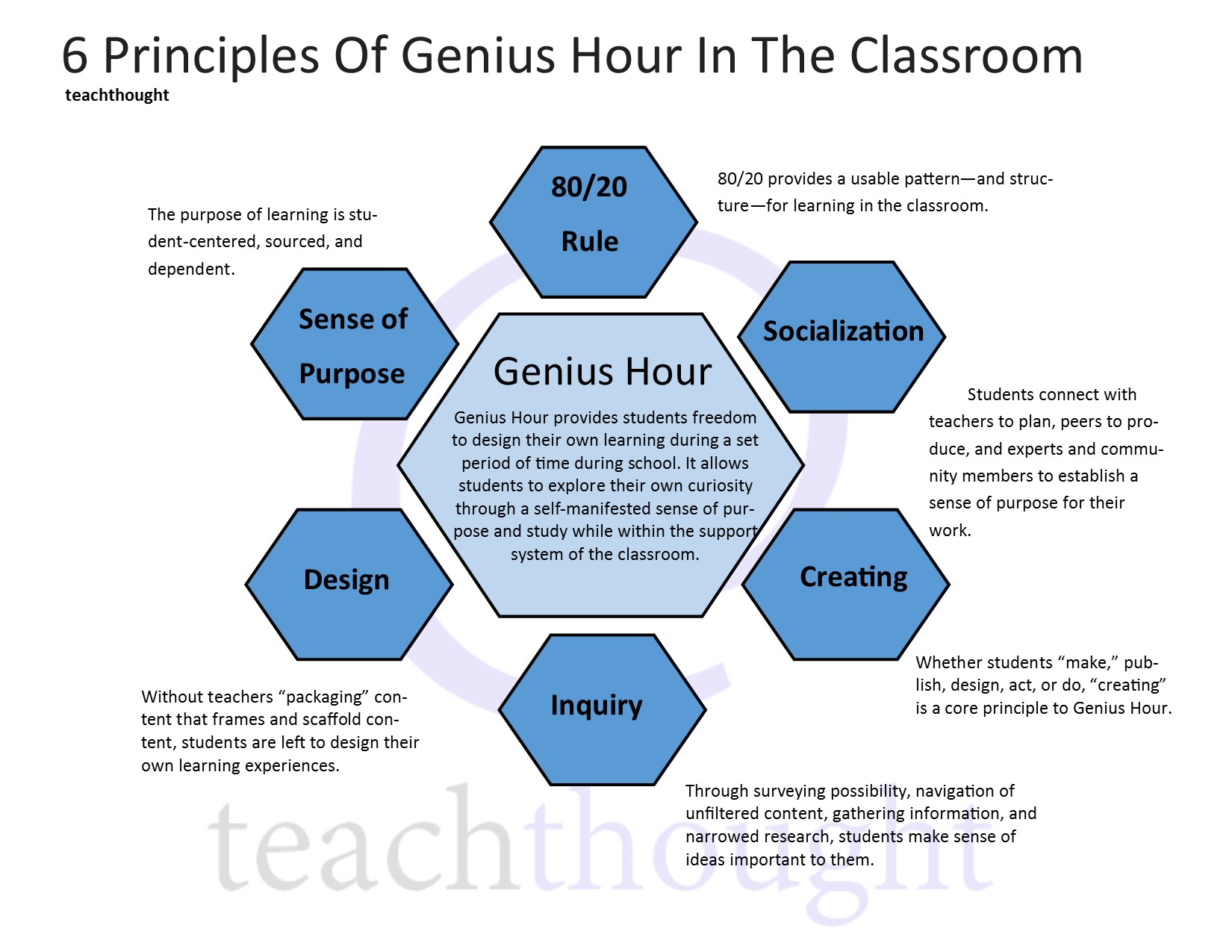
If you want to get away from the traditional approach one idea is to introduce a “Genius Hour”  is an approach to learning where students are guided by their own interests, background knowledge, and curiosity to learn.

genius-hour-in-classroom

Finally, Talk to your kids about the COVID-19 virus with this Tip Sheet Talking with your Kids COVID

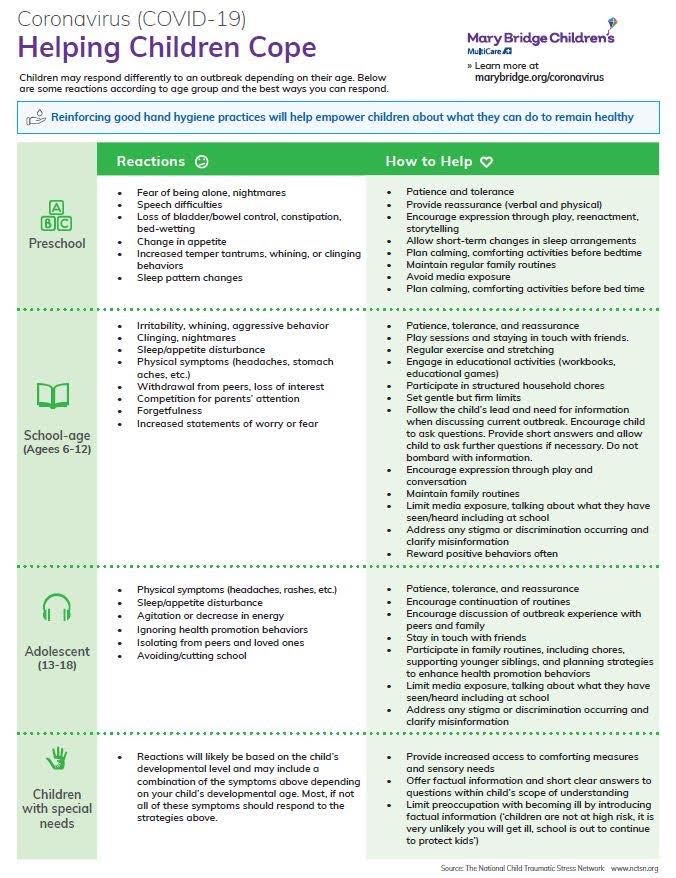
Helping Children Cope with Covid 19

School-related resources from the ASCD

COVID-19 & School Closure Resources for K-12 Educators and School Leaders

With more and more schools across the country shutting down for an extended period of time, we wanted to provide you with information about some of the policy implications and questions you may have regarding lengthy school closures, some resources and tips for online learning, and other things school leaders should consider during this challenging time.

Interim Guidance for Administrators of U.S. Childcare Programs and K-12 Schools to Plan, Prepare and Respond to Coronavirus Disease 2019 – Centers for Disease Control (CDC)

Considerations for School Closures ­- Centers for Disease Control (CDC)

Fact Sheet: Impact of COVID-19 on Assessments and Accountability Under the Elementary and Secondary Education Act – U.S. Department of Education

Questions and Answers on Providing Services to Children with Disabilities During the Coronavirus Disease 2019 Outbreak – U.S. Department of Education

FERPA & Coronavirus Disease 2019 (COVID-19) Frequently Asked Questions (FAQs) – U.S. Department of Education

Protecting Civil Rights of Students During COVID-19 – U.S. Department of Education

Transitioning to Online Learning: What You Need to Know – ASCD

The Resilient Leader – ASCD

A Whole School, Whole Community, Whole Child Approach to Responding to Health Crises – ASCD

Keep Calm and Wash Your Hands – ASCD

Summertime Strategies Can Help Schools Respond to Coronavirus – ASCD

School Communities Rely on Calm and Thoughtful Leadership – ASCD


COVID-19 aka The Corona Virus Just Shut Down Our School District

Schools are closed now county wide in Santa Cruz California starting next week. This pandemic just got really real. Wash your hands and stay out of crowds here comes the Corona Virus. Here is the note from our Superintendent.

Good Evening PVUSD staff, 

The safety and wellness of students, families, and school personnel are the highest priorities of all Santa Cruz County schools and districts. Yesterday, we received notification of the first confirmed case of COVID-19 at Rio Del Mar Elementary School. In advance of more COVID-19 cases that are anticipated to follow, School District Superintendents and the Santa Cruz County Office of Education have decided in concurrence with the Santa Cruz County Health Services Agency to close all public Santa Cruz County schools for the week of March 16-20. We will reassess at the end of next week whether an extension of school closures beyond March 20th will be necessary. Santa Cruz County Public Health Officer, Dr. Gail Newel, reported that while the number of cases in our county remains small at this time, the Santa Cruz County Public Health Division expects those numbers to grow significantly in the coming days and weeks which may require a continued response. Schools will remain in session tomorrow, March 13, 2020. Please see the attached community letter with more information. A staff letter will follow with additional information regarding the upcoming week.
Thank you,
Michelle Rodriguez, Ed.D.
Superintendent

Resources

Education based COVID-19 (“Coronavirus”) Information and Resources for Schools and School Personnel

Social Distancing

Emotional Disturbance a starting point for Teachers

ed2

Students with Emotional Disturbance in the regular education classroom can be a challenge to support. I have collected some good articles and tools in this post as a way to adopt the right mindset to prepare to differentiate to this special population. My best advice in finding the most success is to stay curious and build relationships with; the student, the parents, the special education team.

11_work_with_parents

Start here and read this article from National Dissemination for Children with Disabilities (NICHCY) …print and revisit: Teaching Students with Emotional Disturbances: 8 Tips for Teachers 

Then if you like lists to remind and/ or inform your practice this is a helpful link from DoLearn: ED Strategies

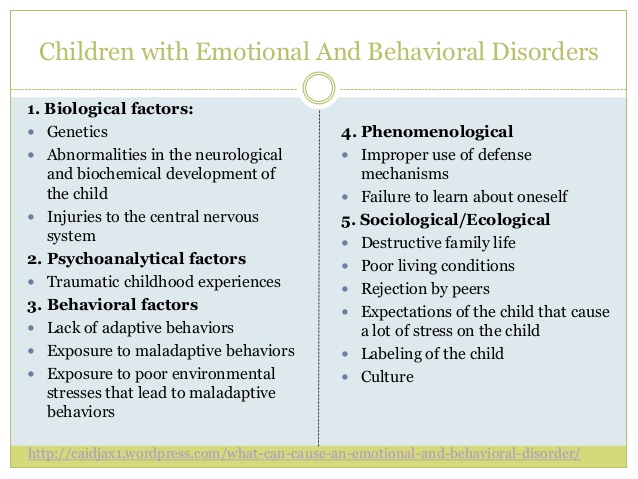
Reasons why Emotional Disturbance occurs:

children-with-emotional-and-behavioral-disorders-5-638

ASCD has some good insights from this article and below is a good chart to consider for your students showing behaviors in your classroom.

What Emotional Disturbance looks like-

Some emotional problems you can see—others you cannot. If a student has internalized her emotional problems, for example, she may become withdrawn or depressed, and the teacher may not be aware of the student’s distress. If a student has externalized emotional problems, however, the teacher is likely to know. This student puts emotions on display and may become disruptive, even antagonistic, in class. It’s important, therefore, that teachers know the early warning signs for both kinds of emotional problems.

A student may have internalized emotional problems if he

  • Appears isolated from peers.
  • Seems overly dependent on others.
  • Is moody.
  • Exhibits feelings of helplessness.
  • Shows an interest in cults.
  • Has an inordinate attraction to fantasy.
  • Is apathetic.
  • Is a bully victim.
  • Is frequently absent because of illness.
  • Cries inappropriately and too often.
  • Abuses himself.
A student may have externalized emotional problems if she

  • Becomes a chronic discipline problem.
  • Exhibits a lack of empathy or compassion.
  • Has temper tantrums.
  • Is truant often.
  • Experiences poor academic performance.
  • Has conflicts with authority figures.
  • Bullies others.
  • Damages the property of others.
  • Becomes noncompliant.
  • Becomes impulsive.
  • Becomes aggressive.

Source: Compiled from Gresham, F. M., MacMillan, D. L., & Bocian, K. (1996). “Behavioral earthquakes”: Low-frequency salient behavioral events that differentiate students at risk of behavior disorders. Behavioral Disorders 21(4), 277–292.

Behavior Intervention Plans can help to proactively address the issues that are happening in your classroom. Engage with your School Psychologist in fully understanding the plan and don’t hesitate to ask for clarity and/ or strategies that may be challenging to implement in your particular classroom.