
Separation Anxiety and School Refusal

getty_girl_mom_stress_sick_stomachache_large_kidstock

Recently, my little girl started in a home daycare. Initially, she struggled with separation anxiety.  She has since settled down (whew!). This post has some good pointers on Separation Anxiety.

Daycare/ Preschool

Easing the Separation Process for Infants, Toddlers, and Families

Helping Your Toddler with Separation Anxiety

Positive Goodbyes

Transitional Kindergarten and Kindergarten

Understanding school refusal

-A child may exhibit each behavior on this spectrum at different times

Common symptoms that could signal school refusal behavior

INTERNALIZING/COVERT SYMPTOM EXTERNALIZING/OVERT SYMPTOM
Depression Aggression
Fatigue/tiredness Clinging to an adult
Fear and panic Excessive reassurance-seeking behavior
General and social anxiety Noncompliance and defiance
Self-consciousness Refusal to move in the morning
Somatization Running away from school or home
Worry Temper tantrums and crying

Source

School Refusal: Information for Educators (NASP)

School Refusal Behavior: From Terminology to Treatment

Working Through School Refusal

what can I do when my child refuses to go to school

Anxiety and School Refusal PPT

Dealing With Separation Anxiety In Teens

Criteria for Differential Diagnosis of School Refusal and Truancy

SCHOOL REFUSAL TRUANCY

Severe emotional distress about attending school; may include anxiety, temper tantrums, depression, or somatic symptoms.

Lack of excessive anxiety or fear about attending school.

Parents are aware of absence; child often tries to persuade parents to allow him or her to stay home.

Child often attempts to conceal absence from parents.

Absence of significant antisocial behaviors such as juvenile delinquency.

Frequent antisocial behavior, including delinquent and disruptive acts (e.g., lying, stealing), often in the company of antisocial peers.

During school hours, child usually stays home because it is considered a safe and secure environment.

During school hours, child frequently does not stay home.

Child expresses willingness to do schoolwork and complies with completing work at home.

Lack of interest in schoolwork and unwillingness to conform to academic and behavior expectations.

How parents can help children at home

There are things parents can do to help children and adolescents learn to manage their anxious feelings. Parent support plays a key role in helping kids learn to cope independently. Try these strategies at home to help your child succeed outside of the home:

-Make a plan to help your child transition to school in the morning (arrive early, act as the teacher’s helper before the other kids arrive, get some exercise on the playground before the bell rings)

-Help your child reframe anxious thoughts by coming up with a list of positive thoughts (it even helps to write these on cards and put them in the backpack)

-Write daily lunchbox notes that include positive phrases

-Avoid overscheduling. Focus on playtime, downtime, and healthy sleep habits

-Alert your child to changes in routine ahead of time

-Empathize with your child and comment on progress made

– Teach relaxation strategies

Kids need to learn a variety of tools to use when feeling anxious and overwhelmed. It’s nearly impossible to use adaptive coping strategies when you’re dealing with intense physical symptoms of anxiety, so the first step is with work on learning to calm the anxious response.

  • Deep breathing is the best way to calm rapid heart rate, shallow breathing and feeling dizzy. Teach your child to visualize blowing up a balloon while engaging the diaphragm in deep breathing. Count your child out to help slow the breathing (4 in, 4 hold, 4 out).
  • Guided imagery: Your child can take a relaxing adventure in her mind while engaging in deep breathing. Tell a quick story in a low and even voice to help your child find her center.
  • Progressive muscle relaxation: Anxious kids tend to tense their muscles when they’re under stress. Teach your child to relax her muscles and release tension beginning with her hands and arms. Make a fist and hold it tight for five seconds, then slowly release. Move on to the arms, neck and shoulders, and feet and legs.

– Teach cognitive reframing

Kids with social anxiety disorder are often overwhelmed by negative beliefs that reinforce their anxious thoughts. Their beliefs tend to fall into the following categories:

  • Assuming the worst case scenario
  • Believing that others see them through a negative lens
  • Overreacting
  • Personalizing

Teach your child to recognize negative thoughts and replace them with positive ones. If your child tends to say things like, “My teacher thinks I’m stupid because I’m bad at reading,” help him recognize the negative thought, ground it in reality (a teacher’s job is to help kids learn not judge them on what they already know), and replace it with a positive thought (“I’m having a hard time reading but my teacher will help me get better.”)

– Teach problem-solving skills

Children with social anxiety disorders tend to become masters of avoidance. They do what they can to avoid engaging in situations that cause the most anxiety. While this might seem like the path of least resistance, it can actually make the social anxiety worse over time.

Teach your child to work through feelings of fear and anxiety by developing problem-solving skills. If a child fears public speaking, for example, she can learn to practice several times at home in front of a mirror, have someone videotape her and watch it back, find the friendly face in the room and make eye contact, and use deep breathing to calm anxious feelings.

Help your child identify her triggers and brainstorm potential problem-solving strategies to work through those triggers.

– Work on friendship skills

While you can’t make friends for your child, you can help your child practice friendship skills. Practice these skills using role play and modeling to help your child feel at ease with peers:

  • Greetings
  • Sliding in and out of groups
  • Conversation starters
  • Listening and responding
  • Asking follow up questions/making follow up statements

Books

What to Do When You Worry Too Much: A Kid’s Guide to Overcoming Anxiety (What to Do Guides for Kids) by Dawn Huebner

The Kissing Hand by Audrey Penn

Wemberly Worried by Kevin Henkes

First Day Jitters by Julie Danneberg

Llama Llama Misses Mama by Anna Dewdney

Love You All Day Long by Francesca Rusackas

When I Miss You by Cornelia Spelman

If things progress-

How to get help for your child

The best treatment to help children struggling with school refusal includes a team approach. While children tend to focus on what they don’t like or worry about at school, the truth is that the underlying issues can include stress at home, social stress, and medical issues (a child who struggles with asthma, for example, might experience excessive worry about having an asthma attack at school). It helps to have a strong team that includes the classroom teacher, family, a school psychologist (if available), and any specialist working with the child outside of school.

  1. Assess: The first step is a comprehensive medical and psychological evaluation. Given that school refusal is generally related to an underlying anxiety or depressive disorder, it’s important to get to the root of the problem and begin there. This will likely include both family and teacher questionnaires or interviews.
  2. Cognitive Behavioral Therapy: This highly structured form of therapy helps children identify their maladaptive thought patterns and learn adaptive replacement behaviors. Children learn to confront and work through their fears.
  3. Systemic desensitization: Some children struggling with school refusal need a graded approach to returning to school. They might return for a small increment of time and gradually build upon it.
  4. Relaxation training: This is essential for children struggling with anxiety. Deep breathing, guided imagery, and mindfulness are all relaxation strategies that kids can practice at home and utilize in school.
  5. Re-entry plan: The treatment team creates a plan to help the student re-enter the classroom. Younger children might benefit from arriving early and helping the teacher in the classroom or helping at the front desk. The plan also includes contingencies to help the student during anxious moments throughout the day (i.e., using fidget toys, taking a brain break to color, a walk outside with a teacher’s aide, etc.)
  6. Routine and structure: Anxious children benefit from predictable home routines. Avoid over-scheduling, as this can increase stress for anxious kids, and put specific morning and evening routines in place.
  7. Sleep: Sleep deprivation exacerbates symptoms of anxiety and depression. It also makes it difficult to get up and out to school in the morning. Establish healthy sleep habits and keep a regular sleep cycle, even during holidays and on the weekends.
  8. Peer buddy: Consider requesting a peer buddy for recess, lunch, and other less structured periods as anxiety can spike during these times.
  9. Social skills training: Many students who struggle with making and keeping friends feel overwhelmed in the school environment. Social skills groups can help kids learn to relate to their peers and feel comfortable in larger groups.

There isn’t a quick fix for school refusal. You might see periods of growth only to experience significant setbacks following school vacations or multiple absences due to physical illness. Acknowledge your child’s difficulty, engage in open and honest communication about it, empathize with your child, and pile on the unconditional love and support.

References

https://www.psycom.net/social-anxiety-how-to-help-kids

http://www.educationandbehavior.com/strategies-schools-help-children-separation-anxiety/

https://www.psychologytoday.com/us/blog/worry-free-kids/201710/how-help-child-overcome-school-refusal

Autism and the Holidays

Twelve Tips for Helping Individuals with Autism Have a Happy Holiday Season

While many happily anticipate the coming holiday season, families of people on the autism spectrum also understand the special challenges that may occur when schedules are disrupted and routines broken. Our hope is that by following these few helpful tips, families may lessen the stress of the holiday season and make it a more enjoyable experience for everyone involved. The following tips were developed with input from the Autism Society, the Indiana Resource Center for Autism, Easter Seals Crossroads, the Sonya Ansari Center for Autism at Logan and the Indiana Autism Leadership Network..

1. Preparation is crucial for many individuals. At the same time, it is important to determine how much preparation a specific person may need. For example, if your son or daughter has a tendency to become anxious when anticipating an event that is to occur in the future, you may want to adjust how many days in advance you prepare him or her. Preparation can occur in various ways by using a calendar and marking the dates of various holiday events, or by creating a social story that highlights what will happen at a given event.

2. Decorations around the house may be disruptive for some. It may be helpful to revisit pictures from previous holidays that show decorations in the house. If such a photo book does not exist, use this holiday season to create one. For some it may also be helpful to take them shopping with you for holiday decorations so that they are engaged in the process. Or involve them in the process of decorating the house. And once holiday decorations have been put up, you may need to create rules about those that can and cannot be touched. Be direct, specific and consistent.

3. If a person with autism has difficulty with change, you may want to gradually decorate the house. For example, on the first day, put up the Christmas tree, then on the next day, decorate the tree and so on. And again, engage them as much as possible in this process. It may be helpful to develop a visual schedule or calendar that shows what will be done on each day.

4. If a person with autism begins to obsess about a particular gift or item they want, it may be helpful to be specific and direct about the number of times they can mention the gift. One suggestion is to give them five chips. They are allowed to exchange one chip for five minutes of talking about the desired gift. Also, if you have no intention of purchasing a specific item, it serves no purpose to tell them that maybe they will get the gift. This will only lead to problems in the future. Always choose to be direct and specific about your intentions.

5. Teach them how to leave a situation and/or how to access support when an event becomes overwhelming. For example, if you are having visitors, have a space set aside for the child as his/her safe/calm space. The individual should be taught ahead of time that they should go to their space when feeling overwhelmed. This self-management tool will serve the individual into adulthood. For those who are not at that level of self-management, develop a signal or cue for them to show when they are getting anxious, and prompt them to use the space. For individuals with more significant challenges, practice using this space in a calm manner at various times prior to your guests’ arrival. Take them into the room and engage them in calming activities (e.g., play soft music, rub his/her back, turn down the lights, etc.). Then when you notice the individual becoming anxious, calmly remove him/her from the anxiety-provoking setting immediately and take him/her into the calming environment.

6. If you are traveling for the holidays, make sure you have their favorite foods, books or toys available. Having familiar items readily available can help to calm stressful situations. Also, prepare them via social stories or other communication systems for any unexpected delays in travel. If you are flying for the first time, it may be helpful to bring the individual to the airport in advance and help him/her to become accustomed to airports and planes. Use social stories and pictures to rehearse what will happen when boarding and flying.

7. Know your loved one with autism and how much noise and activity they can tolerate. If you detect that a situation may be becoming overwhelming, help them find a quiet area in which to regroup. And there may be some situations that you simply avoid (e.g., crowded shopping malls the day after Thanksgiving).

8. Prepare a photo album in advance of the relatives and other guests who will be visiting during the holidays. Allow the person with autism access to these photos at all times and also go through the photo album with him/her while talking briefly about each family member.

9. Practice opening gifts, taking turns and waiting for others, and giving gifts. Role play scenarios with your child in preparation for him/her getting a gift they do not want. Talk through this process to avoid embarrassing moments with family members. You might also choose to practice certain religious rituals. Work with a speech language pathologist to construct pages of vocabulary or topic boards that relate to the holidays and family traditions.

10. Prepare family members for strategies to use to minimize anxiety or behavioral incidents, and to enhance participation. Help them to understand if the person with autism prefers to be hugged or not, needs calm discussions or provide other suggestions that will facilitate a smoother holiday season. If the individual becomes upset, it might also be helpful to coach others to remain calm and neutral in an effort to minimize behavioral outbursts.

11. If the person with autism is on special diet, make sure there is food available that he/she can eat. And even if they are not on a special diet, be cautious of the amount of sugar consumed. And try to maintain a sleep and meal routine.

12. Above all, know your loved one with autism. Know how much noise and other sensory input they can take. Know their level of anxiety and the amount of preparation it may take. Know their fears and those things that will make the season more enjoyable for them.

Don’t stress. Plan in advance. And most of all have a wonderful holiday season! Source

Articles for Parents

Great Resource- Thriving During the Holidays

Reducing Holiday Stress for Families of Children with Autism

Holiday Road Trips: Five Tips to Reduce Stress

7 TIPS FOR A HAPPY HOLIDAY SEASON WITH YOUR LOVED ONE AFFECTED BY AUTISM

Preparing for the Holidays with Autism

Dealing with the “Back-to-School” Blues: Tips for Parents of Asperger’s Kids

Back to School with ASD

Social Stories

Visiting Family at Christmas

Going to Visit Santa

What to Expect at Christmas (PowerPoint) edit to meet your needs*

Airplane Trip (good example)

page01

Holiday/Winter Break Social Stories & Visual Supports

Calendar Icons

Christmas Presents A social narrative to help individuals understand social expectations when receiving presents.


Dads are Important

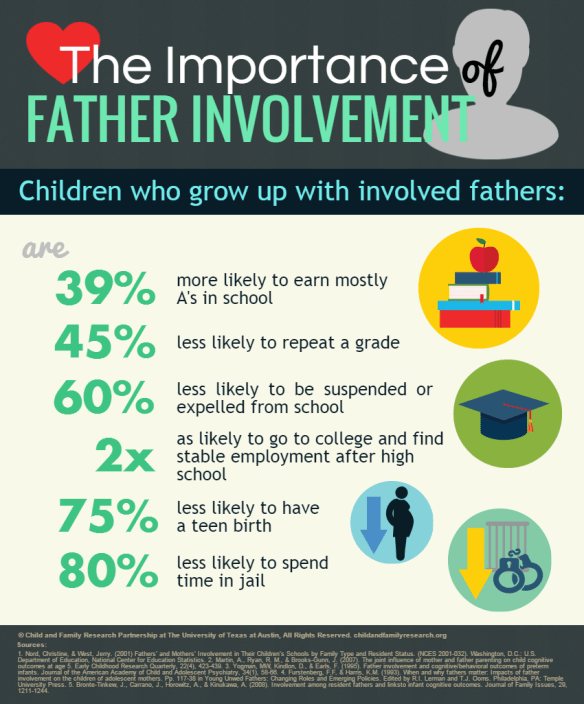
Recently, I worked with a father who was reluctant to take part in his child’s life after being incarcerated. He felt a lot of shame over not being there for his son and didn’t know if he could get passed his feelings of guilt and reestablish ties. Long story short he moved through his feelings of guilt and started with weekend visits and things are going great. So, we looked into it being a Dad together and I have to say it was a fun and empowering activity here is what we found.

infographic_importanceoffathers_062015

The Importance of Fathers (According to Science)

The Important Role of Dad

The Science of Dad: Engaged Fathers Help Kids Flourish

SECOND CHANCES: A HANDBOOK FOR PARENTS WISHING TO RECONNECT WITH THEIR CHILDREN

Parent-Child Reunification After Alienation Strategies to Reunite Alienated Parents and Their Children

Why Dads Matter : A third of American children are growing up in homes without their biological fathers.

Book: Do Fathers Matter?: What Science Is Telling Us About the Parent We’ve Overlooked

Parents should take stock in media consumption

Given that we grew up with a low tech experience we need to on purpose seek out information as Parents to equip ourselves to address the issues that come with Social Media.

We do not want our kids to de-evolve with communication and social skills we have to put time a side with our families to help ground kids with the limits and boundaries that support positive communication and relationships.

A How-To Guide for Monitoring Social Media & Smartphones

Teens, Technology and Romantic Relationships From flirting to breaking up, social media and mobile phones are woven into teens’ romantic lives

Teens, Technology and Friendships Video games, social media and mobile phones play an integral role in how teens meet and interact with friends

A Leader’s Guide to Words Wound

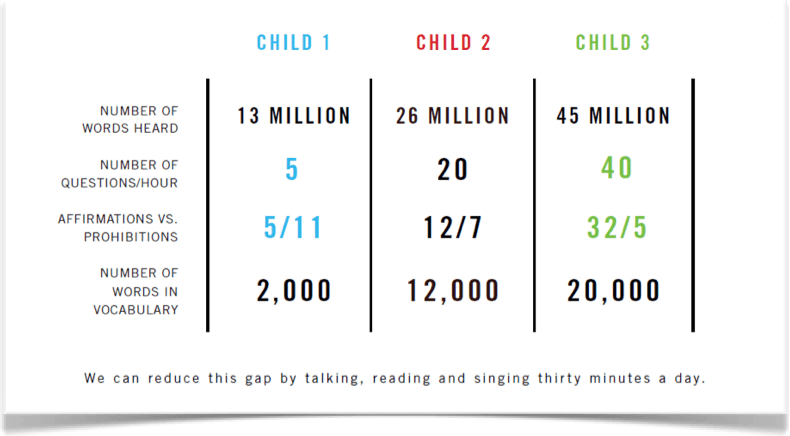
Anne Fernald suggests talking to your infants increases intelligence

I know that this seems like a no brainer, but I cannot stress that if you have access to a parent of a young child it is important to convey that talking and interacting with their child as much as possible is crucial for their development. Despite all the pressures and stresses that we endure to make ends meet financially. We should be reminded that cultivating shared time and activity with our children can help fuel our energies and be renewed to take on the difficult tasks that face us daily.
Anne Fernald is an American psychologist, the Josephine Knotts Knowles Professor in Human Biology at Stanford University,[1] and has been described as “the leading researcher in infant-directed speech”.[2]

Fernald specializes in children’s language development, investigating the development of speed and efficiency in children’s early comprehension in relation to their emerging lexical and grammatical competence. Recently, she has also begun to study language development in bilingual Spanish-English speaking children and children who are learning Spanish in addition to English. Her research has shown that infants prefer baby talk to adult speech and that it plays an important role in their language development,[3]and that baby talk has universal features that span multiple cultures and languages.[4][5] She has also studied the effects of television on infants, showing that young TV viewers echo the emotional responses of the actors they see.[6][7]

Fernald received a Ph.D. in psychology from the University of Oregon in 1982,[8] where she studied under the mentorship of Patricia K. Kuhl. As well as her position as a psychology professor, Fernald has taken an administrative role at Stanford as Vice Provost for Faculty Development.[9] Her husband, Russell Fernald, is the Benjamin Scott Crocker Professor in Human Biology at Stanford. Source

Stanford psychologist shows why talking to kids really matters

SES differences in language processing skill and vocabulary are evident at 18 months

Speech and Language Developmental Milestones

How to work towards change according to Tandem™ who promotes early literacy and family engagement programming in the Bay Area.

Kids that are exposed to domestic violence

Domestic Violence and Children – Fact Sheet

Behind Closed Doors The Impact of Domestic Violence on Children

Children’s Exposure to Domestic Violence- Academic Research and Resource Guide

30 Shocking Domestic Violence Statistics That Remind Us It’s An Epidemic

Books

Mommy’s Black Eye: Children Dealing With Domestic Violence

Ibby’s Feelings

Migrant Community- fact sheet

Ways to help

Early intervention is one of the best ways to counteract the effects of witnessing abuse. Ways to help children who have witnessed domestic abuse include:

  • Arrange school age children to receive counseling from professionals at their school, often school counselors.
  • Experiment with various types of counseling: play therapy, peer support groups, anger management classes and safety programs to teach kids how to extract themselves from dangerous situations.
  • Help children find a loving and supportive adult to introduce to the child and encourage the child to spend as much time regularly with the adult. This may include a trusted family member or community advocate. Family Violence Defense Fund reports that the single most important ingredient to help children heal and develop resiliency is the presence of a loving adult.
  • Provide a safe environment that does not include violence in any form after a child has witnessed domestic violence.
  • Find ways to discipline that do not involve hitting, name-calling, yelling, or any form of verbally aggressive behavior.
  • Help children create a sense of safety by having scheduled routines, such as regular meals and homework times.

Happy Kids!

Image

Happy kids is what we universally want to see. Check out this info-graphic on what lends to that happiness.

Developing a personal relationship with your innerself

“In the depth of winter; I finally learned that within me there lay an invincible summer”

–Albert Camus

I really like to help develop the concept with students, adults, and myself of self awareness through a process of checking in with ones self. That important swing inward to ask “Where do I stand on this topic?” is an important skill to developing a good relationship with yourself.

“Our greatness lies not so much in being able to remake the world as being able to remake ourselves.” -Gandhi

We can let the circumstances of our lives harden us so that we become increasingly resentful and afraid, or we can let them soften us and make us kinder and more open to what scares us. We always have this choice. ~ Pema Chodron

Building Self-Trust

Maintaining a good relationship with yourself is no different than maintaining a good relationship with a partner, a friend, or a family member. All relationships take time, effort, and good communication. Could it be that you have lost communication with yourself? Poor communication with yourself can lead to the perception that you have abandoned yourself. It can lead to a distorted perception of other relationships in your life.

Developing Self Talk

Self-talk can have a really great impact on your self-esteem and confidence. There is positive and negative self-talk and they both have an impact on how you feel. There are a few ways you can develop better self-talk including just listening to what you’re saying to yourself each day. It’s worth practicing self-talk as feeling good about yourself is worth the effort.

Self-Compassion Guided Meditations and Exercises

Dialectical Behavioral Therapy (DBT) has the concept of Wise Mind which can be a helpful tool in understanding what a inner dialog should touch upon. Finding The Balance in Opposing Forces: Dialectical Behavioral Therapy

Exploring feelings with your kids

https://youtu.be/hAckcoesj4s

Activities:

20 minute fun activities for parents and children that promote resilience by encouraging flexible thinking.

Emotional Intelligence Activities for Kids

Navigating Your Child’s Emotional Ups and Downs

Video:

Amygdala Hijack & Emotional Intelligence

How can we build flexibility into every day parenting?

  • Involve children in making decisions when possible.
  • Inventory the current needs to make a decision based on the present moment.
  • don’t get stuck on musts and should’s if something is not working don’t be afraid to change it.
  • Trust children to do things for themselves, even if it doesn’t turn out perfectly or quite how you wished it would.
  • Have routines for predictability not as a means to reward, punish or control.
  • Plan on extra time whenever possible so that special moments don’t have to be lost or abandoned all the time.
  • Ask questions and welcome cooperation instead of making demands.
  • Take time to care for yourself – you can only give as much love and care to others as you have for yourself! (That’s the elastic thing again – when we give too much we SNAP!)
  • Accept your child’s feelings as authentic expression, not something you must control or squash.
  • Dare to do things differently, be ridiculous and cultivate laughter – this will help you relax and let go!
  • Say YES when you can and say NO with kindness.

Source

Communication:

Improving Family Communications

Parent/Child Communication

Teaching Internet Safety

The internet, cell phones, and modern communication technology is a new area of learning for us parents. Especially, as it applies to our kids and their use of it communicating with others. What is your stance on monitoring, educating, and setting boundaries with these technologies in your family?

A great resource that I have use as a tool to help filter and understand this topic of teaching technology safety has been Common Sense Media.

Common Sense is dedicated to helping kids thrive in a world of media and technology.  We empower parents, teachers, and policymakers by providing unbiased information, trusted advice, and innovative tools to help them harness the power of media and technology as a positive force in all kids’ lives.

The Parent  Concern page on Common Sense Media really helped me understand how to get to answers for our family. Similarly the Advice page is informative as well.

For educators they offer a Digital Citizenship curriculum for K-12. Also content in Spanish.

Cell Phone Video

Set some ground rules with a Family Media contract.

Teen/ Tween Quiz and Games to educate on Digital literacy, Inappropriate content, Online privacy, Online predators, Cyberbullying. Estimated running time: 20 minutes.

Digital Compass is the only educational game that gives kids the freedom to explore how decisions made in their digital lives can impact their relationships and future.

Articles

Super Duper Article-Teaching Children Internet Safety by Becky L. Spivey, M.Ed

Technology is not ruining our kids. Parents (and their technology) are ruining them

CDC Tips